We caught up with the brilliant and insightful Nelly Hutchinson (formerly Sandeep) a few weeks ago and have shared our conversation below.
Hi Nelly, thank you so much for joining us today. There are so many topics we could discuss, but perhaps one of the most relevant is empathy because it’s at the core of great leadership and so we’d love to hear about how you developed your empathy?
The adversities my parents faced throughout their lives profoundly shaped their values, and they instilled a deep sense of empathy in my brothers and me. From a young age, I witnessed this in small yet impactful ways. For instance, if someone mistreated us, my mom would remind us that they were likely having a bad day rather than being a bad person. These moments of perspective and understanding built a foundation for my own empathy. They taught me that people’s lives extend far beyond our one-on-one interactions, and maintaining this mindset requires a commitment to empathizing with the unknown. I learned to pause, assume there might be unseen struggles in someone’s life, and approach them with compassion instead of judgment.
My work with vulnerable and marginalized populations further deepened my empathy. Seeing firsthand how complex and nuanced people’s challenges are illuminated just how limited our understanding can be when we view situations solely through a political or abstract lens. Talking about someone’s circumstances without truly understanding the full scope of their experiences can create distance instead of connection. I learned that to truly begin to understand someone’s situation, you must listen to learn and empathize—not just to respond. This kind of active, intentional listening is grounded in the ability to empathize with someone’s unique circumstances, struggles, and lived experiences.
My personal experiences also played a crucial role in the development of my empathy. Experiencing loss early in life gave me a deeper capacity to understand the pain others endure. There were also times when life’s stressors prevented me from accomplishing all I wanted, and the empathy of those around me carried me through those difficult moments. On the flip side, there were moments when I failed to fully grasp someone else’s perspective. The consequences of those shortcomings taught me the importance of stepping outside my own biases to truly hear and understand others.
These collective experiences—shaped by my upbringing, my work, and my personal challenges—continue to refine my capacity for empathy and remind me of its vital role in building meaningful connections.
Appreciate the insights and wisdom. Before we dig deeper and ask you about the skills that matter and more, maybe you can tell our readers about yourself?
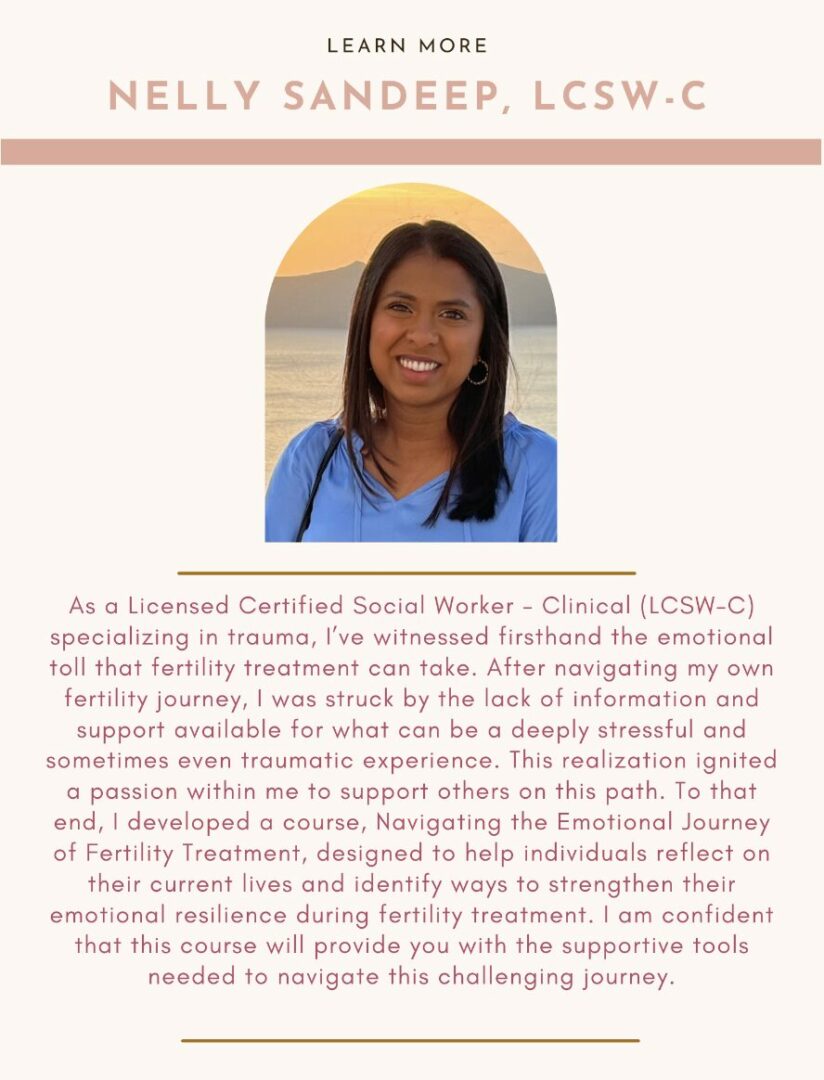
Hi there! I’m Nelly. I was born and raised in New Jersey, where I lived before heading to Penn State University to earn my bachelor’s degree in Psychology. After that, I moved to New York City to complete my Master’s in Social Work at Columbia University. Once I graduated, my partner’s career brought us to Maryland, where I began working full-time as a therapist—and I’ve been doing this incredibly rewarding work ever since!
My training and experience have led me to specialize in trauma, and I’m deeply passionate about helping children process traumatic experiences. I also work with adult survivors, supporting them as they navigate ongoing stressors or process childhood traumas.
Over the last few years, inspired by personal experiences, I’ve also delved into the world of infertility. I was struck by the lack of emotional support available to this vulnerable population, and I became dedicated to creating resources that help people care for their emotional health during fertility treatment.
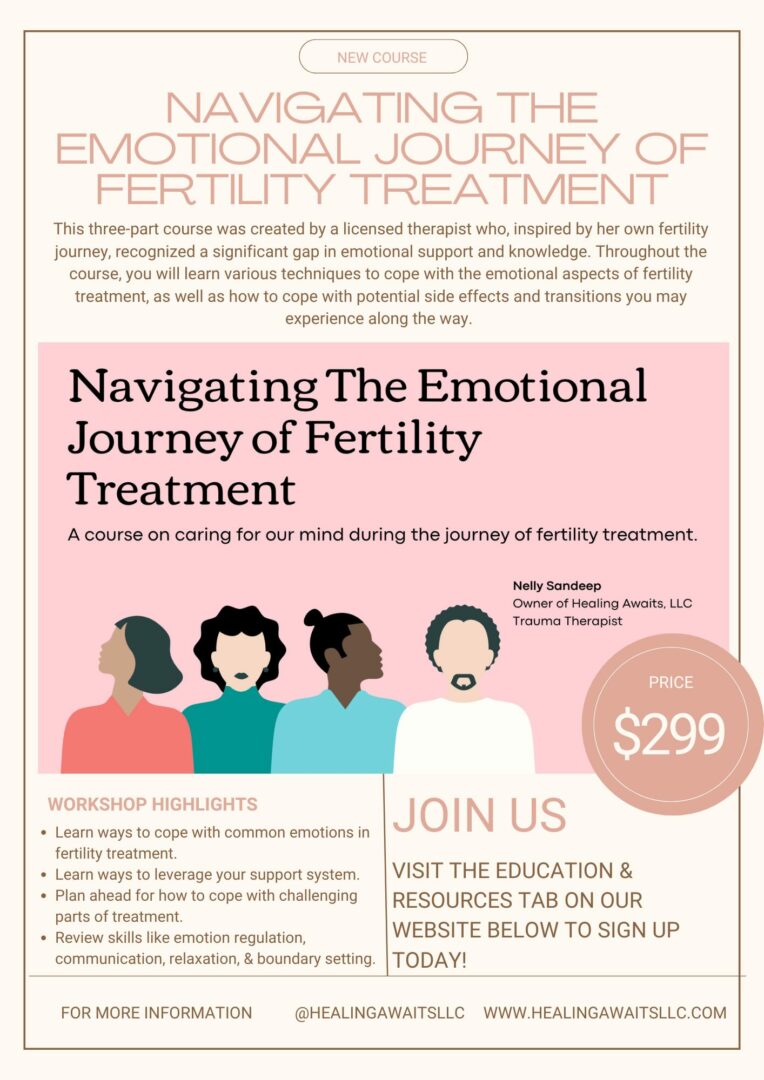
To address this need, I recently launched a course called Navigating the Emotional Journey of Fertility Treatment. This self-paced course offers over four hours of recorded content, broken into smaller, manageable videos to make it easier for people to absorb the information and skip to the topics they need most. The course covers a wide range of essential topics, including coping with common emotions during fertility treatment, improving communication strategies, supporting yourself and leveraging support from others, managing physical symptoms, and navigating life changes brought on by treatment. We also dive into how to handle difficult parts of the process, like waiting periods, frequent doctor’s appointments, administering shots, and so much more.
This course is something I wish I’d had during my own fertility journey. Since I couldn’t find anything like it at the time, I decided to create it myself! My hope is that it provides others with the emotional tools and support they need to feel more empowered and less alone as they navigate their path.
Looking back, what do you think were the three qualities, skills, or areas of knowledge that were most impactful in your journey? What advice do you have for folks who are early in their journey in terms of how they can best develop or improve on these?
Three qualities, skills, or areas of knowledge that have been most impactful in my journey as a therapist are my passion for helping others, my commitment to advocating for and supporting marginalized communities, and my expertise in working with individuals who have experienced trauma. These elements have shaped my approach and allowed me to connect with clients in meaningful and transformative ways.
For those who are early in their journey, my advice is to embrace your authentic self. Trying to conform to a stereotypical image of what you think you should be can be limiting—not just for you, but for the people around you as well. Authenticity fosters genuine connections and helps build trust. While being true to yourself may not resonate with everyone, that’s okay. Those who aren’t the right fit will naturally move on, leaving space for the people who truly align with your approach and can benefit most from your unique perspective. Focus on those connections, and let your authenticity guide you.
Before we go, any advice you can share with people who are feeling overwhelmed?
Owning my own practice has made me well-acquainted with the feeling of being overwhelmed! Balancing the responsibilities of running a business with my personal life has been a significant learning experience, and it’s pushed me to quickly develop strategies for managing stress.
My first line of defense is creating a clear list of what needs to get done versus what I want to get done. I’ve noticed that I often add unnecessary pressure by blurring the line between the two. Once I have clarity, I activate my support system. I take time to consider who I feel comfortable sharing my feelings with and then communicate what I need. Sometimes it’s as simple as saying, “I’m feeling overwhelmed, but I think I’ve got it under control—I just wanted to acknowledge it.” Other times, it involves a specific ask, like “I’m feeling overwhelmed and not sure if I can make it to blank. Could we reschedule?”
Lastly, I prioritize reconnecting with myself. This might mean taking a long, warm shower, going to bed early, or diving into a good thriller (my favorite genre!). These small, grounding activities remind me that not everything is as stressful as it may feel in the moment. Reconnecting with the simpler joys in life helps me reset and approach challenges with a clearer perspective.
Contact Info:
- Website: https://www.healingawaitsllc.com
- Instagram: @healingawaitsllc
- Linkedin: Neldina Sandeep
Image Credits
Canva was used to create two of these images and the third is a screenshot taken from our website run by Squarespace.
so if you or someone you know deserves recognition please let us know here.