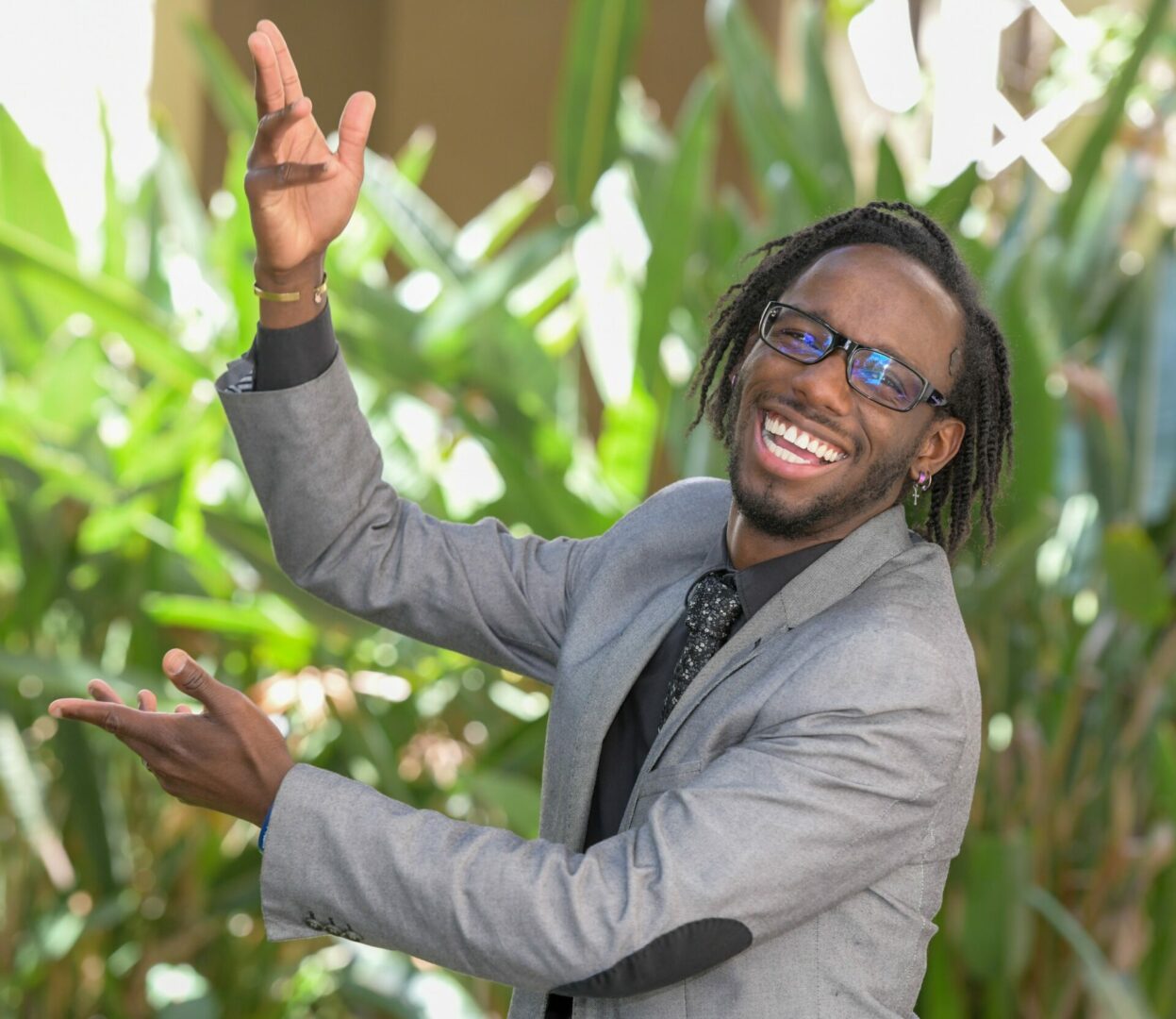
We caught up with the brilliant and insightful Nick Daily (He/They) a few weeks ago and have shared our conversation below.
Hi Nick, thank you for being such a positive, uplifting person. We’ve noticed that so many of the successful folks we’ve had the good fortune of connecting with have high levels of optimism and so we’d love to hear about your optimism and where you think it comes from.
My relationship with optimism began with my cultural and religious upbringing as the child and grandchild of Black women pastors in a non-denominational protestant Black church. And while I do not believe in the religious tenets of Christianity at this point in my life, the core teachings of Black theological thought including the centering of joy, love, justice, community, optimism, and liberation. These concepts guide me through my personal and professional life, especially as a Diversity, Equity, and Inclusion (DEI) and professional development consultant. Optimism is also built into the work that I do everyday. The idea that individuals, teams, leaders, and organizations are committing time and resources to moving closer to their actual and stated values is one that helps maintain my belief in this work. While the topics and work that I do with clients are often difficult to engage, the possibilities that each of us is striving for a better way of being, is one that makes optimism an easy place to move from.
Still, because I know that systems are intricately designed to produce the outcomes that they get (a quote that I first encountered from Dr. Shakti Butler), I often say that my optimism manifests as “hope rooted in pessimism” (a quote from a dear friend Amy Killoran). I recognize that these systems work hard to maintain the inequitable outcomes we see. On top of that, many of our well-intended interventions (especially in DEI realms) have negative or worse impacts on the most marginalized people within our companies (as Lily Zheng, who uses they/them pronouns, and others have noted).
Thanks for sharing that. So, before we get any further into our conversation, can you tell our readers a bit about yourself and what you’re working on?
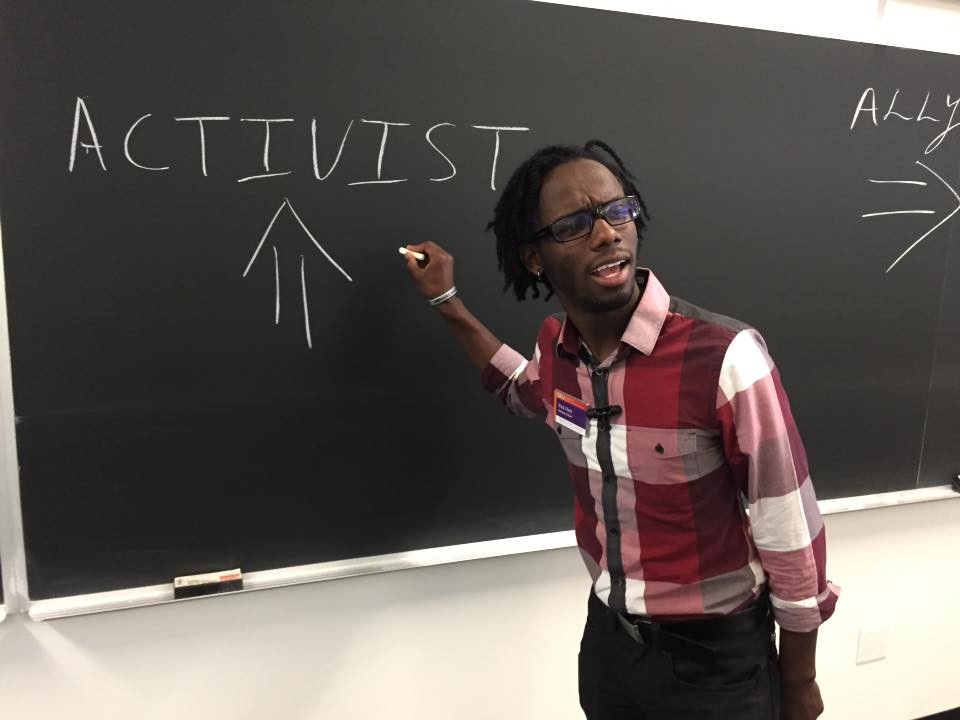
“Hi Friends, My name is Nick Daily, I happen every day, the pronouns I use are He or They” is how I generally introduce myself when meeting a new client or beginning a workshop or consulting session. I want to highlight that I take my work seriously, but I try not to take myself too seriously. I find it often helps to bring some lightness to a conversation when discussing DEI topics or facilitating a professional development space, which often are mandatory. A child of the IE (Inland Empire), I am an identical twin, a momma’s boy, child number 4 out of 5, and the favorite. I am a Black queer, non-binary consultant who centers love, joy, and liberation in my work leading myself and others to live closer to our values. I earned a Bachelor’s in Women’s and Gender Studies with a minor in Religious Studies from University of Redlands, and an M.Ed. in College Student Services Administration with a focus on the intersections of oppression from Oregon State University. While at OSU, I created what has become the Masculinities Explorations program seeking to unlearn the traits and characteristics often referred to as “toxic masculinity”. I worked in higher education for over a decade focused on creating access and support spaces for marginalized students and employees beginning in residential life and “ending” with my work as a senior-level diversity officer at a large community college in central California. There, I helped build the Office of Equity and Inclusion, oversaw the Professional Development and Training department with a focus equity-minded principles, supported the creation of the Black Student Success Center & Men of Color Success Initiatives, and handled all things discrimination related to Title IX, Title V, and Title VII (among other things). Throughout my career I have received numerous trainings in dialogue, conflict management and resolution, human relations facilitation, and most recently, racial equity facilitation from the Equity Literacy Institute. I say all of this to share what it took for me to reach the place where I am today!
As a DEI and professional development consultant, my foci are on conflict management, trans and queer inclusion, racial equity, practicing DEI from a place of love, creating inclusive workplaces, sexual harassment prevention (and healthy relationships), equitable hiring practices, and executive leadership consulting.
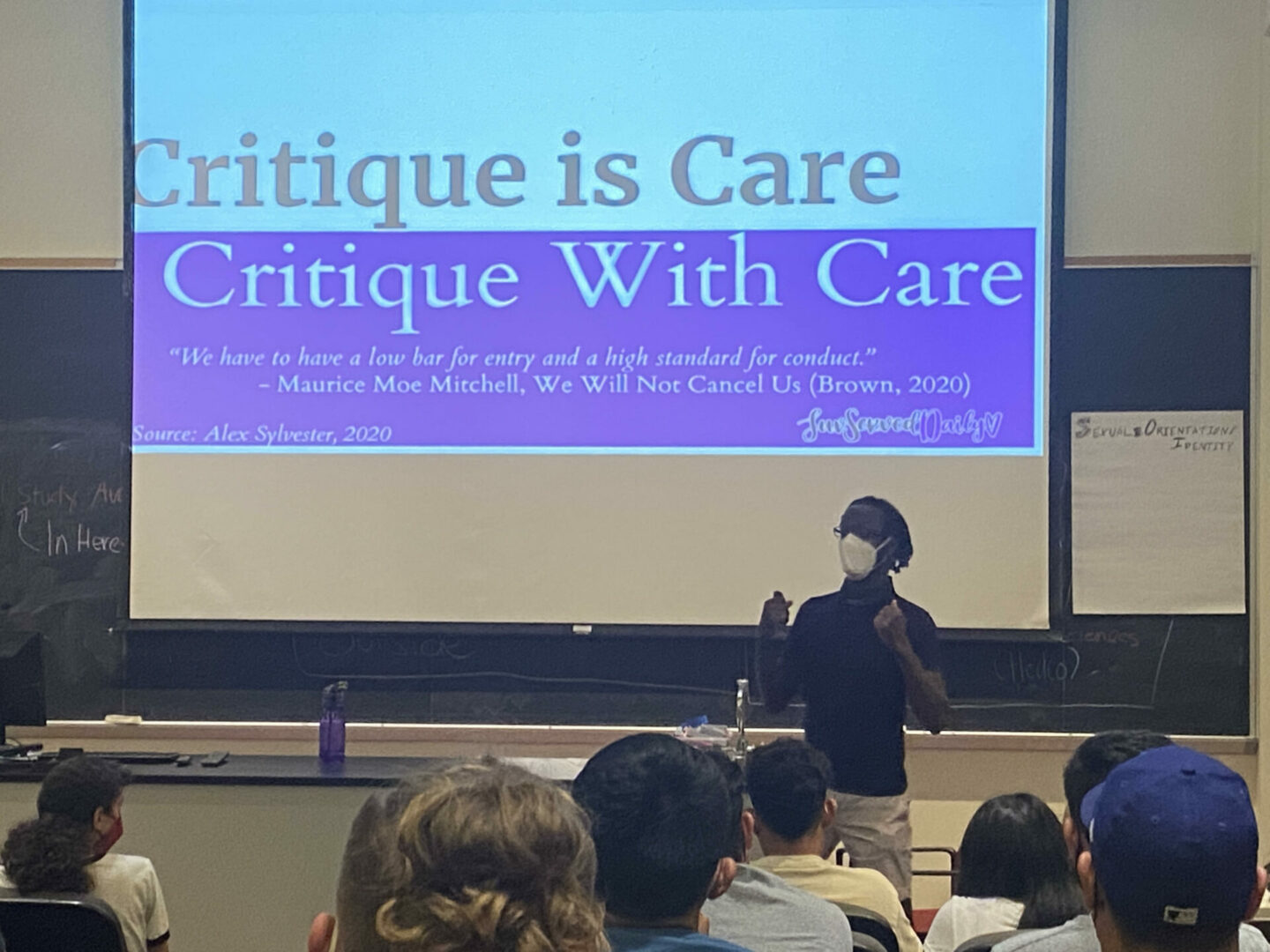
LuvServedDaily Consulting really is about supporting organizations and individuals through a lens of love and combating the shame and guilt that often comes up when embarking on the journey toward change. A workshop and keynote that I often offer to my clients when just beginning a new endeavor is titled “The Joy of Considering What Can Be…” it is my most highly requested program and has been shown to garner energy, buy-in, and results for clients across the country.
Looking back, what do you think were the three qualities, skills, or areas of knowledge that were most impactful in your journey? What advice do you have for folks who are early in their journey in terms of how they can best develop or improve on these?
This is a challenging question. In all types of work, it is imperative that we’re always learning and growing. I just heard a story of a congressman (Representative Don Beyer, going back to school to get an Artificial Intelligence (AI) Master’s degree at 72 (even though he has deep knowledge of science, he wants to deepen his understanding in a way that will support his work as a congressman. So yeah, the trait of always wanting to learn more and grow in areas that I have deep knowledge of has been so important for me. Additionally, I have found it is helpful to learn more about areas that I don’t feel I know ANYTHING about. Sometimes a friend will write a paper about Computational Chemistry and I’ll read it even though I may understand about 50% of it, maybe I’ll understand 55% of the next paper as a result. It can often showcase how so much of our work and the things we’re interested in overlap. If someone’s goal is to be a DEI consultant, I would say they should develop a deep area of knowledge in one or two areas they feel most connected to (e.g. race and gender), but to always have learning spaces for areas that they may have less knowledge of (e.g. size, disability, and colonialism). All of these systems are connected and rely on each other in order to perpetuate themselves and a trap that we can sometimes fall into is knowing a lot about one or two, but not being able to make the connections across many in order to build solidarity, power, and possibility.
So developing a sense of life-long learning is a quality to model, and developing a deep area of knowledge and a breadth of awareness is an essential practice, and lastly, a skill to hone is humility.
The way I think of humility as a skill is reminding yourself, “I don’t know everything, I’ve not lived everything, and I’m human, meaning I’m fallible.” Modeling humility helps us develop our comfort with conflict, stay grounded when we have been rightly (or wrongly) called out or called in, and offer grace to others when they make a misstep or need to be held accountable.
I developed my commitment to life long learning at home and honed it at University of Redlands when I learned about interdisciplinary and integrative studies. I got deep specialization in gender and sexual oppressions in college and graduate school (where I also learned about religious oppression, sizeism, ablism, colonization, racism and other dynamics), but most of my expertise in racism, organizational leadership, facilitation, sexual violence prevention and response, policy and practice, and more was developed through personal reading and documentaries, attendance at workshops & conferences, and what my mom calls “YouTube University.” Over a decade, I was able to build-out expertise in many of these areas. And humility is a skill that I am constantly attending to. Graduate school was a place where I first acknowledged the importance of humility, they say that “the more you learn the more you realize you know nothing” and that was very true for me. As a consultant, I invite participants to push and challenge me so that I can better serve my clients and I use those missteps to help others recognize that we all have places to learn and grow.
How would you describe your ideal client?
My ideal client is an organization that is ready for organizational change at multiple levels. An organization that invites me to support executive leadership in understanding their role in creating, maintaining, and resourcing DEI initiatives through direct and supportive actions. An organization interested in empowering employees to share their experiences with DEI-related dynamics within the organization *and* committed to doing something about it (with actual or intended resources set aside and actual or developing accountability processes for handling personnel, policy, or practice concerns). An organization committed to a developmental training series that builds internal capacity for all employees (including executive leadership) and infusing DEI in performance reviews, promotion considerations, and hiring decisions. An organization devoted to policy and practice change, developing metrics, evaluating outcomes, identifying those responsible for each metric and communicating successes and failures. Some characteristics that resonate with me for future clients would be:
Curiosity (“Why do we care about doing this work? What are we doing? What could we be doing? What should we be stopping? What resources and accountability structures do we need to get there?”;
Commitment (“What are the limits of our commitment? What is our budget for consulting, Employee Resource Groups, DEI training initiatives, etc.?);
Humility (“What don’t we know? What do we need in order to learn that? What if feedback about our culture doesn’t seem to align with what we *think* we know about our organization? Do we have the commitment to make necessary changes to build capacity, trust, and accountability?); and
Outcome oriented (Who is responsible for each of these outcomes? How will we know we have successfully made a change? How will we know if we failed? What will we do with that information? How will we communicate that information to our employees and stakeholders?)
Contact Info:
- Website: [email protected]
- Linkedin: https://www.linkedin.com/in/nickdaily/