Alright – so today we’ve got the honor of introducing you to Nicole Lightbourne. We think you’ll enjoy our conversation, we’ve shared it below.
Alright, so we’re so thrilled to have Nicole with us today – welcome and maybe we can jump right into it with a question about one of your qualities that we most admire. How did you develop your work ethic? Where do you think you get it from?
Growing up, I struggled in school. I chatted a lot. I laughed even more. I was a distraction. A troublemaker. And, a title I was proud to achieve in yearbook year after year: A class clown. Primary and secondary school didn’t click for me. By time I got to college, it didn’t really there either. In fact, I completed my bachelors by the skin of my teeth – earning the exact GPA required for graduation. My Dad always said finishing college shows you can complete assigned tasks. It took me longer to do that, about six years in total. So, I think he was trying to motivate me to get it done. It worked. Another thing growing up: I spent most of my life living on or in housing provided by the U.S. military. Everyone had pretty much the same house. If you lived in an apartment, your finishes were the same as your neighbors, too. Most of the time we lived overseas, so we’d have to get the standard issued furniture, from base housing because shipping those heavy items could be expensive. A bed was a bed. A couch was a couch. And a roof covered where you would lay your head every night. Just before my senior year in high school, we moved back to the U.S., our “home” state of Texas. We were stationed at a base on the far south side of San Antonio. And for the first time in years, I’d be going to a public high school. We wore uniforms, which I thought was strange. My first day was the biggest culture shock I had ever experienced. And I had been places like biking through mountain towns in Austria, stopping in shops where no one spoke English. Or, walking the streets of downtown Kyoto, Japan, with people who were fascinated to see an American, especially a Black one. The first day of high school I saw ranges. There were cliques: the athletes, the nerds, the pretty girls, and so on. Since we wore uniforms, everyone wore the same color. But, there were differences you could easily pick up on. Some khakis looked fringed and worn, even though it was the first day. Others were crisp, clean and maybe even tailored. The shoes were also a big tell. There wasn’t any regulation there and kids knew it was where they could channel their expression. Some shoes were bargain, others were high end. The bus ride home was also a wonder. We’d go through different neighborhoods and the houses were all different. Then, there was my stop. The bus pulled onto the base and passed by street after street of cookie cutter ranch style homes. Did I know the world, and how each person experiences it, varied? Of course. It just wasn’t as apparent growing up in a microcosm that made up family life on most military bases. That south side high school changed my perspective forever. And graduating college, stepping into the real world I pulled on that perspective to shape my motivation going forward. I knew then, if I wanted anything in life, I’d have to work for it. If I didn’t, I wouldn’t have anything to fall back on. There wasn’t base housing, or a broad group of people who would befriend you because it was either that, or social isolation. The world is huge! It is so much to do, see, accomplish, create and experience. All of these things, and the pull – which I can never explain – to create, motivates me, drives me and inspires my work ethic.
Appreciate the insights and wisdom. Before we dig deeper and ask you about the skills that matter and more, maybe you can tell our readers about yourself?
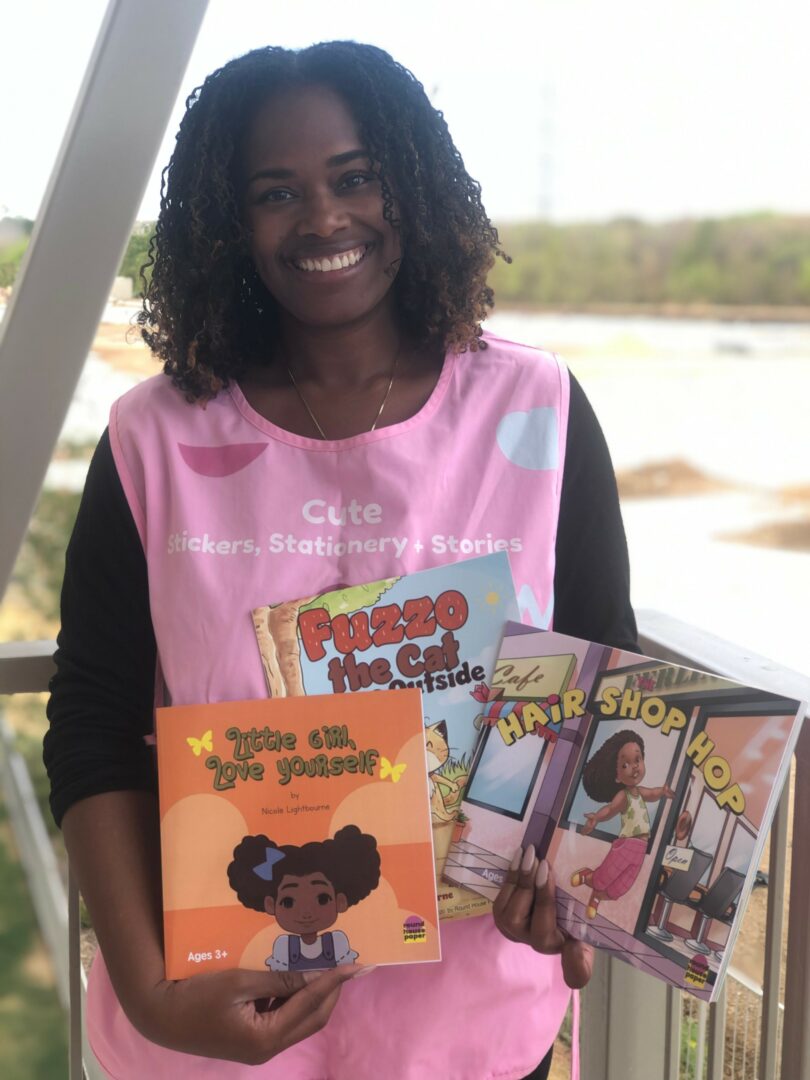
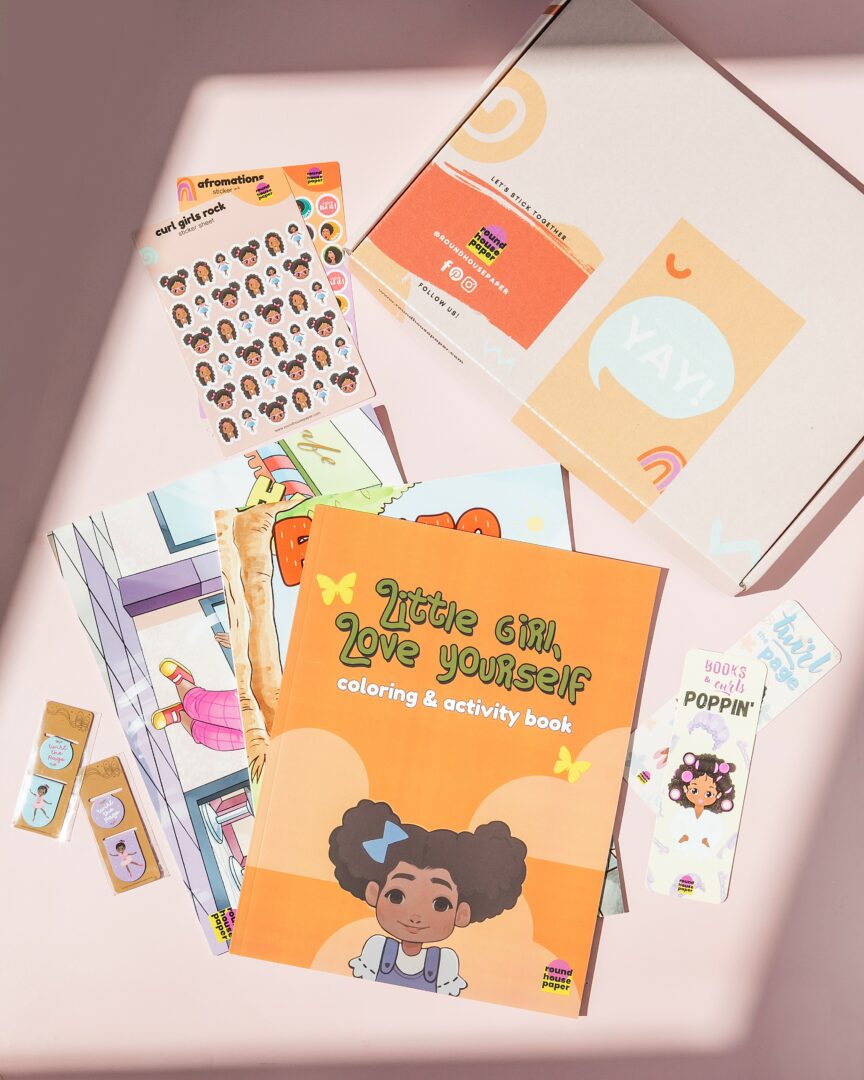
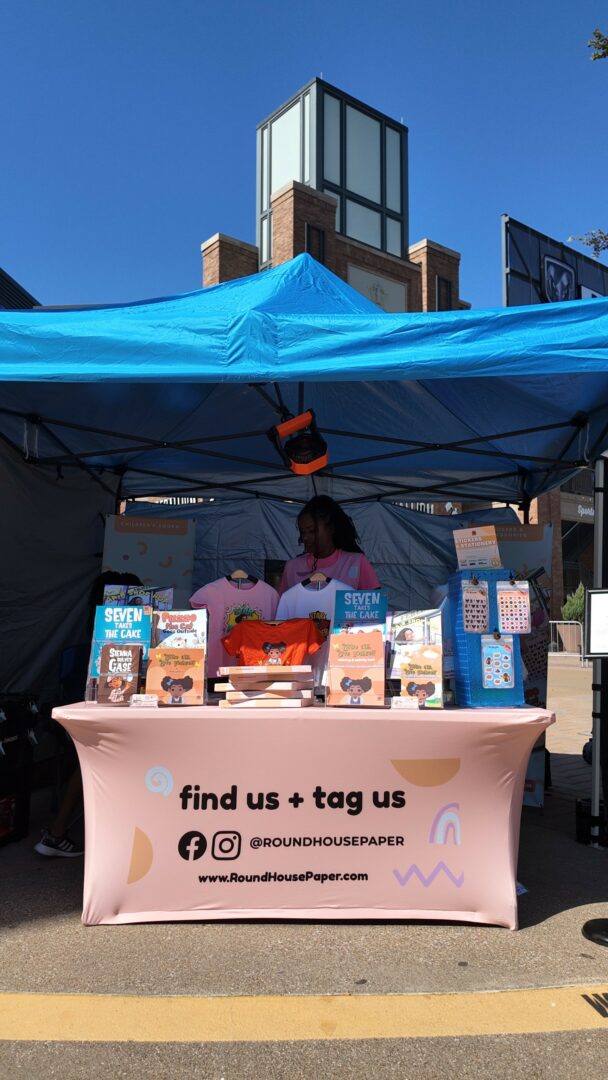
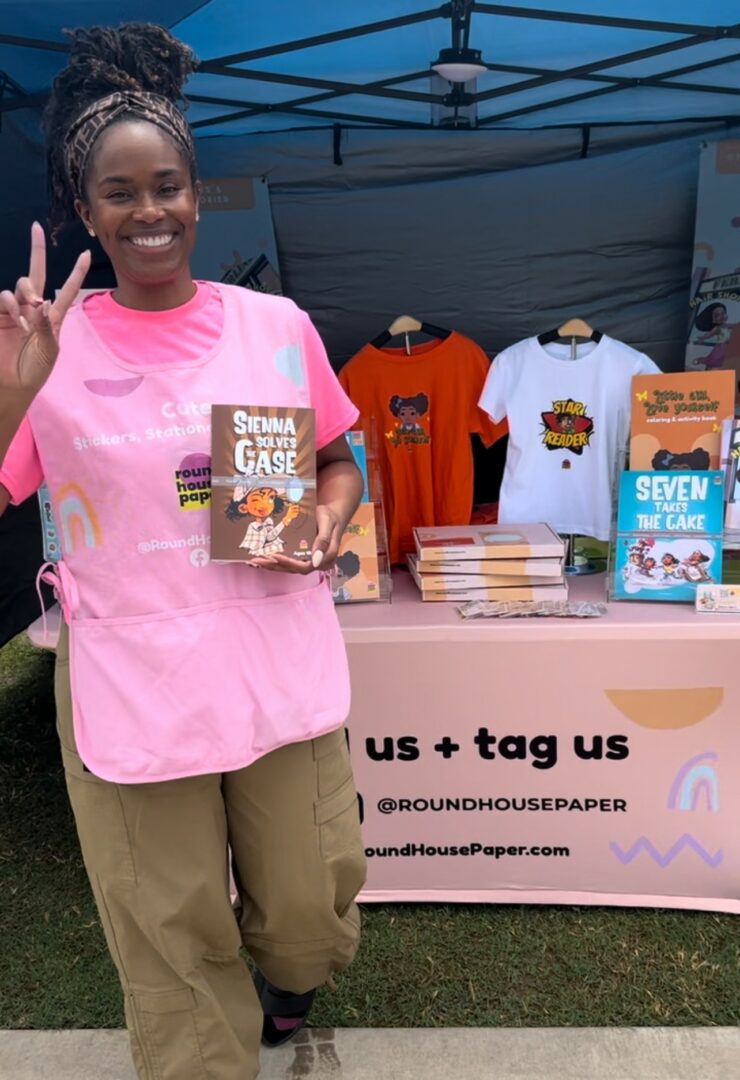
Deciding to tell stories for the rest of your life usually is embedded from a young age. No matter what was happening in real life, there was an intricate and more compelling story happening in my head. It could be the most mundane thing. I’d play and replay things and my head, making them progress and end over and over until I was satisfied. Oh, let’s say a teacher asked me a question. In real life, I got it wrong. In my head, I’d recite the most elaborate details around the question to astound the teacher and amaze my classmates. Or, let’s say I’d be walking down the street alone. I’d imagine the most colorful and coordinated dance party to erupt across the streets. People popping out from the sewer, from the shops. All dancing and singing the same song. I could think of anything and see it as if it were real. My dreams are the same way. I’d always be so excited for sleep, because I could create any world I wanted. Of course, this dream world, whether I was sleeping or not, didn’t gel well with institutions like school. And sometimes even work. But, what if I could create my own institution? One where I could dream while waking and share those dreams with the world without repercussions? I knew there was only one broadly-accepted medium to do this in: books. I couldn’t do this in class. Sure couldn’t during a meeting at work. In a book, though? It’s perfectly acceptable, and expected. I didn’t start with books, though. I like words that sounded like each other and pulling those together to express abstract ideas and thoughts. I learned this was called poetry. And I would write and express through poetry any time I could. I would never force it, though. I never force any idea. Most of the time, an idea pops up and I go for it. So, when poetry went quiet for a few years for me, I didn’t stress. I had school. I was moving a lot. It would come back to me. It always does. And it did. It just took a really long time. Two of the most momentous events in my life so far brought writing back: the death of my grandmother and the birth of my twin girls. My grandmother was an entrepreneur, owning her own salon and employing other salon professionals. Most weekends, when I still lived in the United States, I would spend at her shop. It was bustling, and extremely entertaining. I’d hear the latest gossip. I’d see women be transformed and walk out with more pep in their step than when they came in. Since my grandmother spoiled me, I rarely would have to help. I only had to be a fly on the wall and take everything in. I learned a lot about my grandmother, watching her work. Seeing her earn money and turnaround to provide for her family with what she had just earned only moments ago. When she died, I felt compelled to encapsulate those moments and express them in a way a lot of people, especially young girls, could relate to. I created “Hair Shop Hop” to share the journey of a young girl who goes to a hair shop and sees all the ways people styled their hair. I focused on hair styles I saw my grandmother perfect, and included representative images young girls could relate to. Mothers, grandmothers and aunties could also relate as the images pay homage to the open-shop format more customary before the 90s. Then, after years of struggling with infertility, I got some news. I was expecting. Twins. We chose not to know the gender prior to their birth because through the IVF process we knew every detail. This would be a nice surprise. Once they were delivered we finally knew we had two baby girls. In that moment, I knew they would be joining a world where they would question themselves, their worth, their value. Not because we would raise them to be insecure. They would question it because the messages and visual cues would not be in their favor simply because the color of their skin. I needed for them, and all little girls, to understand their self-worth lies in their own control and not dictated by anyone else. I also wanted to capture some of what I gained through my military base experience which was a huge miss during my year at public high school: People are valuable no matter where they are from, do, or what they look like. Then came what turned out to be my most popular title: Little Girl, Love Yourself. It was my ode to my girls and I knew other young girls, and despite the title, young boys, too, could use the message. Putting those two titles together and ruminating thoughts about impact and legacy led me to think how I could bring my creativity together. Over time, I knew I loved making stories and seeing them come to life. Of all of my entrepreneurial efforts, I had the most confidence creating a company around my storytelling could be the most sustainable. In 2020, against the backdrop of modern day civil rights movement with George Floyd’s murder, I formed Round House Paper. I took things a step further by getting together everything from a legal formation standpoint. I got trademarks, formed an LLC, and made sure to formally copyright my works. Then, there was the hardest part: Getting my work out there. My background in marketing and communications for major U.S. brands would do me some favors, but I was soon to learn having a large budget and years of brand equity made it much easier to see success than launching something from the ground up. The tactics I used every day at work simply did not work. After much trial and error, I found my own voice and began putting myself out there. At work, I was so used to being the person behind the brand. Now, with Round House Paper I had to be the brand. It was, and still isn’t, comfortable. I sought out vendor events where I got to meet with potential customers directly. I could hear their feedback and see their reaction as they touched everything on my table. I started off with three titles. Then, I expanded to complementary coloring books and sticker sheets. Now, I have five titles, including one a lot of people I meet asked for: a book for boys. Most of my books are for readers ages 8 and under so, last year I released my first chapter book for readers ages 12 and up. This year, I’m looking for more partnership opportunities with school districts and organizations would like to propel my mission to get more young people reading.
Looking back, what do you think were the three qualities, skills, or areas of knowledge that were most impactful in your journey? What advice do you have for folks who are early in their journey in terms of how they can best develop or improve on these?
I hate to be cliché, but every part of my journey has led me to today. The learning from and learning to relate to people, no matter what walk of life they’re from, to leading communications for big brands. I can apply all of those cornerstones to growing my business. Through my life’s journey, I can create stories that resonate across age ranges and cultures. Through my education and experience, I can create an appealing presence and create a consistent brand. And through my wandering mind, the one that used to cause so much friction in tightly structured institutionalized spaces, I can bring my imagination to life in a productive and fruitful way. For entrepreneurs, the resonating claim is to solve a problem and you’ll have success. This is true, but not all encompassing. At one point in my personal entrepreneurial journey, my brain would be so overcome with trying to identify a problem to solve that I’d forget to focus on what I had to offer. Just as it took years and tiny steps to bring me to create Round House Paper, the same can be true for other entrepreneurs. You don’t have to have it all figured out or figure out someone else’s problems. Just create, iterate and once things feel right for you, you’ve finally got “it.”
All the wisdom you’ve shared today is sincerely appreciated. Before we go, can you tell us about the main challenge you are currently facing?
When I first launched Round House Paper, my girls were newborns and, in retrospect, didn’t need as higher level of care as they demand now. I’m also a wife, a sister, a cousin and a friend. In my professional life, I lead a high-performing team in a demanding environment. In all of this, my outlet, my burgeoning company begs for the same level of care and attention. It’s rough to balance so many important things while trying to fuel a dream. There are times I can go weeks, or even months, without making any developments in my business. It’s why I’ve decided to focus on the movement makers. At one point, I’d be doing vendor markets half the weekends of each month. Now, with the girls soccer practice or cheer competitions, that isn’t’ sustainable. Oh, and don’t forget there is date night or dinner with friends! Now, I focus on high-impact public events where I’m more likely to either generate a high volume of sales or make meaningful connections. I also bulk create social media content when I can, so I can keep the light on there. I’m also looking for interns to support those channels while I can impart my expertise to them along the way. When I do public events, my entire family comes along. My husband helps with setup and my girls love to help sale and be apart of my social media videos. It’s just like how my grandmother would bring me along to her shop.
Contact Info:
- Website: https://www.roundhousepaper.com
- Instagram: https://instagram.com/roundhousepaper
- Facebook: https://Facebook.com/roundhousepaper
- Other: also on TikTok as RoundHousePaper
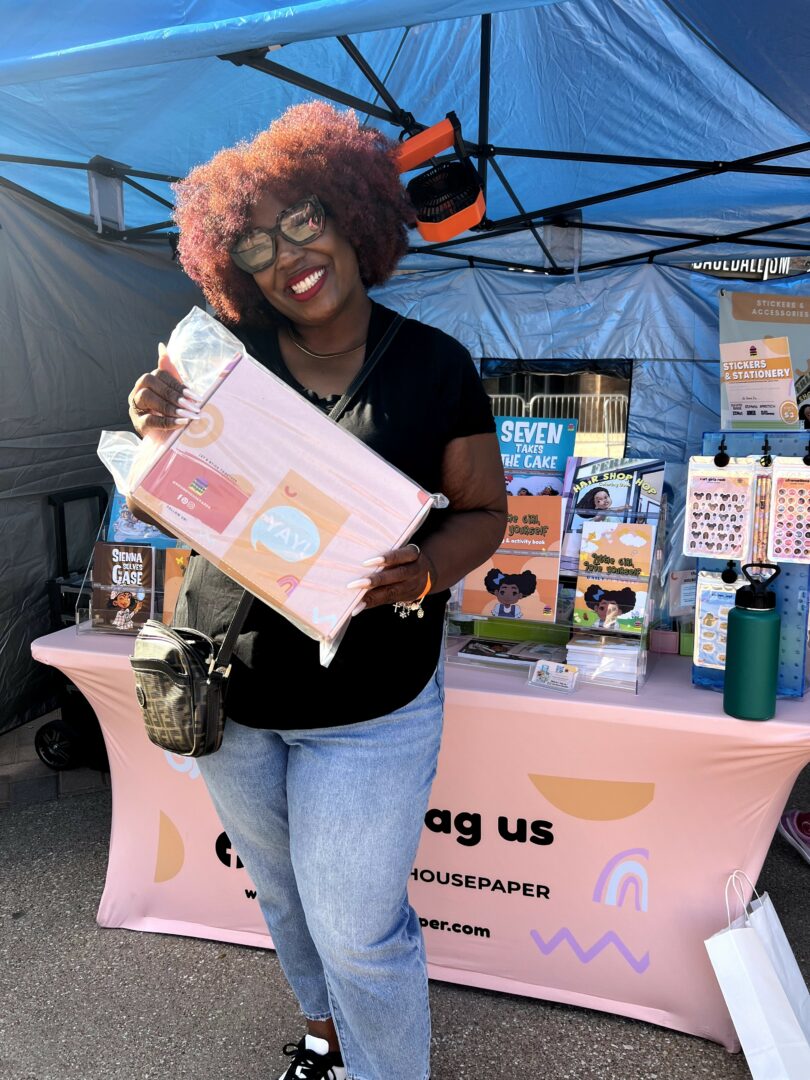
Image Credits
Girl with afro holding book: Round House Paper customer, Latrice Staten, poses with her purchase at a vendor event.
so if you or someone you know deserves recognition please let us know here.