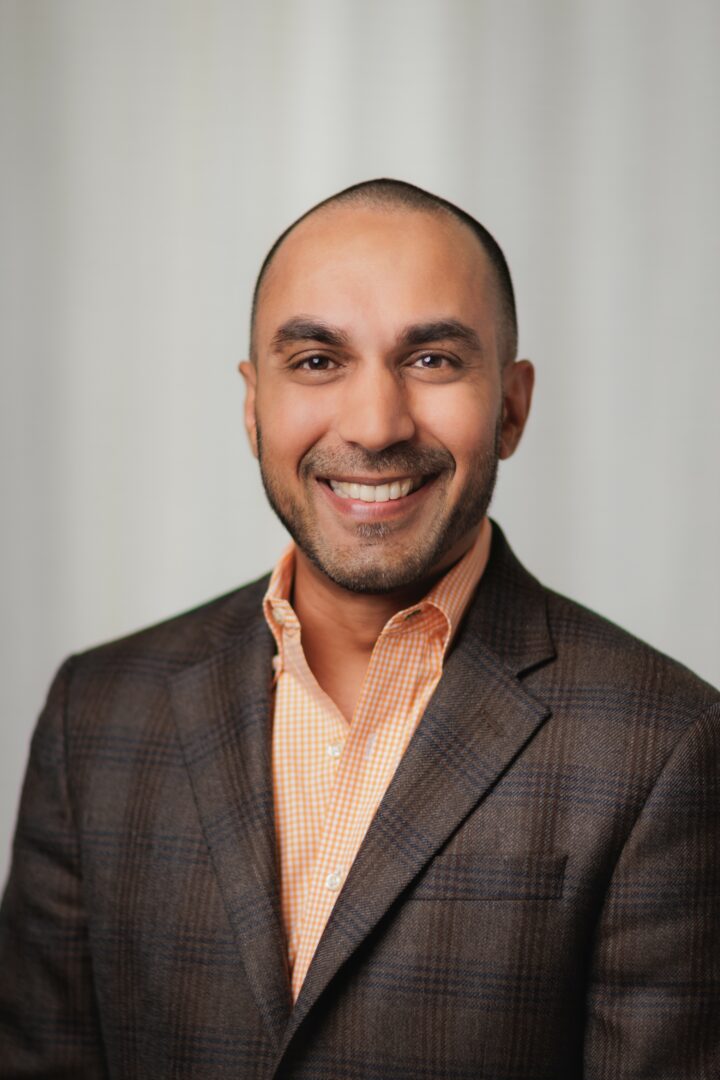
We caught up with the brilliant and insightful Nishant Mehta a few weeks ago and have shared our conversation below.
Nishant, thank you so much for joining us today. Let’s jump right into something we’re really interested in hearing about from you – being the only one in the room. So many of us find ourselves as the only woman in the room, the only immigrant or the only artist in the room, etc. Can you talk to us about how you have learned to be effective and successful in situations where you are the only one in the room like you?
I wasn’t a race until I came to America.
Growing up in Mumbai, I lived in a sea of people who looked like me. Same accents, same rhythms, same assumptions about the world. I never questioned difference because I didn’t have to. Then at sixteen, I boarded a plane to the United States, and within weeks I became the Other—someone with a foreign accent, clothes that didn’t quite fit, subtle reminders daily that I was not quite like everyone else. The table was never set for me because I was the guest.
That was nearly thirty years ago. I’ve since led an independent school, served on national boards, and built a consulting practice working with mission-driven organizations across the country.
When I became head of school in Atlanta, there were no other South Asian heads I could turn to for peer-ship. My friends and mentors were mostly white or Black, and while I learned to embrace their principles and their histories and traditions, you can’t fully claim what isn’t yours. Wherever I went in this profession, what remained unsaid but always felt was that I was either not white enough or not brown enough. The space in the middle was mine to figure out alone.
So how have I learned to be effective in those rooms?
I learned to become fluent in reading rooms. Every person of color in America develops this skill to some degree. We learn to code-switch, to anticipate what’s not being said, to pick up signals others miss. When you’ve spent your career as the only one in the room, you develop a kind of situational awareness that others simply don’t have. That’s an asset, even when it’s born from discomfort.
I also let my competence do the talking. When you’re the only one, you learn quickly that you can’t phone it in. A mediocre day doesn’t get overlooked the way it might for someone who looks like they belong. And eventually, I built rooms where I wasn’t the only one. That took time. A conference conversation with three other South Asian educators finally gave me what I didn’t know I was missing: people who saw all of me, who understood the dual displacement of being an immigrant here and a foreigner back home. You can be effective in rooms where you’re the only one. I’ve done it for years. But you also need spaces where you can exhale. Both things matter.
What I’ve gained over these years is harder to name but easier to feel: the ability to walk into any room, read it quickly, and figure out how to be useful. That’s a skill that doesn’t develop when everything is handed to you.
This is who I’ve become: someone who learned to belong by not waiting for permission.

Great, so let’s take a few minutes and cover your story. What should folks know about you and what you do?
I run MehtaCognition, a leadership and strategy consultancy that works with K-12 independent schools and nonprofits across the United States and internationally. We help mission-driven organizations make better choices—and that last part matters. Strategy, the way we think about it, isn’t a glossy document or a rebranding exercise. It’s a coherent set of choices about what you will do, what you’ll stop doing, and how you’ll win as yourself.
I never set out to become a consultant. I’ve spent over two decades leading schools, the last seven as head of The Children’s School in Atlanta. When I left in 2020, consulting felt like what one colleague called “the graveyard of former heads.” Those who can’t lead, consult? Maybe. But I’d also spent those twenty years hiring or working with consultants, and I was disappointed more often than not. The work was siloed, the outcomes predictable, and the processes divorced from culture. Everyone wanted to help you write a strategic plan, but nobody wanted to sit with the messiness of why most of those plans fail.
So when I finally did start this practice, I built it around what I wished I’d had as a leader: a partner who understood my reality, who could sit with complexity without rushing to solutions, and who would challenge my thinking rather than validate it. We don’t do strategy separate from culture. We don’t deliver a plan and disappear—because implementation is where the real work happens. And we help you see what you already know but haven’t yet named.
What excites me most right now is two things. First, we’ve partnered with NAIS—the National Association of Independent Schools—on their long-range strategic planning process. It’s a significant engagement, and it represents the kind of work I care most about: helping an organization understand itself clearly enough to make choices that will shape the next decade. Second, I’ve been doing a lot of work helping school leaders figure out how to use AI as their strategic collaborator and thought partner. Not the hype or the panic—just the practical question of how these tools can accelerate your judgment without replacing it. My framework is simple: human at the beginning to define purpose and boundaries, AI in the middle for synthesis and speed, human at the end for judgment and responsibility. The institutions that will thrive are the ones learning to hold that balance now.
We also launched something two years ago that I’m very proud of: an Impact Fund for Independent School Leaders that takes a percentage of our net profits each year and gives it directly to educators who need professional development resources their schools can’t afford. No strings attached—just an investment in the people doing the work. I’ve had incredible “who-luck” in my career: people who took chances on me when I wasn’t sure of myself. This is one big way I’m paying that forward.
If there’s a through-line in what we do, it’s this: we help leaders build strategic muscle: understand the principles, and execute them under pressure. That’s the gap I kept seeing as a leader—smart people who knew what they should do but couldn’t make it happen when it mattered. We try to close that gap.

There is so much advice out there about all the different skills and qualities folks need to develop in order to succeed in today’s highly competitive environment and often it can feel overwhelming. So, if we had to break it down to just the three that matter most, which three skills or qualities would you focus on?
Three Qualities That Have Shaped My Journey So Far
1. Agency Over Intelligence
When I arrived in the United States at sixteen—alone, for boarding school in North Carolina—I had plenty of book smarts but almost no practical wisdom about how this country worked. What I did have was what I now recognize as agency: the capacity to shape my circumstances rather than be shaped by them.
Agency is more powerful and more scarce than intelligence. Someone with high agency doesn’t just let life happen to them; they act on the world rather than waiting for the world to act on them. It’s an internal locus of control paired with the will to follow through.
This showed up early for me. I turned down Wall Street in 2001 to become a teacher—against my family’s wishes—because alignment mattered more than prestige. I left positions in 2019 and 2022 when the values broke down, even with contractual guarantees in hand. I’ve been described as “a dog with a bone,” and I take that as a compliment. Persistence without agency is just stubbornness. Agency without persistence is just talk.
For those early in their journey: Stop waiting for permission. Ask for what you want. Most people never try to bend the world to their will—they accept things as they are. A surprising percentage of the time, simply asking changes the outcome. Start small: ask for the meeting, the introduction, the role. The muscle compounds from there.
2. Cultivating “Who-Luck”
Jim Collins introduced me to this concept, and it immediately explained something I’d intuited but never named. Who-luck is the fortune of the people who cross your path and choose to invest in you—often before you’ve proven anything.
I can trace my career to specific people who bet on me: Jay, my honors English teacher at Asheville School, who taught me that ideas mattered. Shaun and Susie, who gave me leadership roles at twenty-four when I had no business holding them. Jay and Caroline at NAIS, who pulled me into faculty roles that shaped my thinking on equity and belonging. Tony, Billy, Rich, Ray—each one saw potential I couldn’t yet see in myself. I think they saw future-me before I did.
The reciprocal obligation is real. Impact is not unidirectional; it’s measured by my reach, and also by those who took time to reach me. I’ve built an Impact Fund for Independent School Leaders, mentored emerging heads of school, and tried to pay forward what I received. This is how I’m helping others create their “who-luck,” based on how others did for me.
For those early in their journey: You cannot manufacture who-luck, but you can create conditions for it. Show up. Be useful. Ask good questions. And critically: never worry alone. Build a “go-to five”—people inside and outside your organization who will check your assumptions, tell you the truth, and lift you when you falter. Isolation is the enemy of growth.
3. Positioning Over Preparation
In October 2013, barely five months into my first headship at The Children’s School, I attended the NAIS Leadership Through Partnership conference. The NAIS Board President then, also a head of school, opened with two lessons:
Lesson #1: When the head screws up, the head gets fired.
Lesson #2: When the board screws up, the head gets fired.
In a few months following the conference, I invited a financial planner to our home, and his first question was, “Why do you want to build your wealth?” I replied without hesitation: “We value our freedom and flexibility. I want to live and work on our terms. Tomorrow, I could lose my job—not because of something I did or deserved. I just want the same power to leave that the board has over me.”
That conversation launched what I call my Freedom Fund—five years of intentional building from 2014 to 2019.
Fast forward now to January 2019. After seven years leading The Children’s School, I knew it was time for me to go. The alignment, and our board’s ambition, had shifted in ways I couldn’t ignore. My first call wasn’t to a recruiter or a family member. It was to our financial planner: “Kenny, do we have our Freedom Fund?” When he said yes, Neeti and I began making plans.
When I considered another headship, mentor after mentor told me some version of the same thing: “Nishant, the challenges are the same from one school to the next. The story’s the same; just the actors are different. It looks like you need a different challenge.” They were right. The Freedom Fund made that choice possible. I didn’t have to take the safe job. I could afford to say no to good opportunities while waiting for the right one. In 2022, I made the same calculation again—walking away from contractual guarantees because the fund meant I could.
The distinction matters: positioning is different from preparation. Preparation is what you do when you know what’s coming. Positioning is building capacity for unknown futures—creating options before you know which ones you’ll need. I spent five years building reserves for opportunities I couldn’t yet imagine. That felt excessive at times. But positioning is always short-term suboptimal. The longer your timespan, the more optimal it becomes. Freedom gives you that control, and control gives you choice: to work on your terms, to stay or leave, to live authentically, to build for the long term.
For those early in their journey: Focus on your costs too, not just your income. The fastest path to freedom isn’t just earning more—it’s also needing less. Earning more won’t fix or build your fund if your needs are high. Every dollar of an unnecessary fixed cost you don’t add is a dollar of freedom you can invest. Build your Freedom Fund before you know you need it, because by the time you need it, it’s too late to build.
I believe simply that I’ll do well if I do good. Doing well, to me, is an outcome, not a motivation, of a life spent doing good. The Freedom Fund enables that choice.
Tell us what your ideal client would be like?
Client selection is my most important strategic lever. Every wrong-fit client costs more than the revenue they bring—they drain the cognitive bandwidth I need for strategic work and compound into the kind of stress that shows up at 11 PM when I should be sleeping.
The filter I use now comes down to one question: Are they seeking insight or validation?
Clients seeking insight are curious. They ask clarifying questions. When I push back on their assumptions, they lean in rather than get defensive. They want to understand why their strategic plan isn’t working, not confirmation that it should be. They metabolize feedback—you can see them processing it in real time, connecting it to other observations, revising their thinking. These conversations generate energy.
Clients seeking validation already know what they want to hear. They’re shopping for a consultant who will package their existing conclusions in professional language. When you surface a tension or name an uncomfortable truth, they argue with the data or seek exceptions. These relationships are exhausting—not because the people are bad, but because you’re constantly navigating around what they don’t want to see.
Beyond that orientation, my best client relationships share a few characteristics. They’re leaders at inflection points—new heads of school or executive directors in their first two years, boards navigating succession, organizations facing a strategic choice they’ve been avoiding. Something has shifted, and they know the old playbook won’t work. They’re mission-driven, which means the stakes feel real. Independent schools, nonprofits, community foundations—organizations where “why we exist” isn’t a line in a marketing document but an actual constraint on decision-making.
And they trust process over shortcuts. The leaders I work best with understand that I’m not a tollbooth operator—I don’t have answers I’m waiting to dispense once they pay the fee. I’m a thought partner. My job is to create containers for their strategic thinking, surface patterns they can’t see from inside the system, and help them build the capacity to keep doing this work after I’m gone. That requires patience and a certain humility about what external help can actually accomplish.
The wrong-fit relationships have taught me to trust early signals. If someone’s reactive in the first conversation, they won’t become reflective later. If they’re managing up to their board while asking me to deliver bad news, we’re already misaligned on who I’m serving. These are clear indicators that what they need isn’t what I provide.
The best compliment I receive is when a client says, “You helped me see what I couldn’t see on my own.” That’s the work. And it only happens when both sides are genuinely curious about what we might discover together.
Contact Info:
- Website: https://www.mehtacognition.com
- Linkedin: https://www.linkedin.com/in/nishantnmehta
- Twitter: https://x.com/mehtacognition.
- Other: https://mehtacognition.substack.com


so if you or someone you know deserves recognition please let us know here.