We were lucky to catch up with Noelle Labrie recently and have shared our conversation below.
Hi Noelle, great to have you with us today and excited to have you share your wisdom with our readers. Over the years, after speaking with countless do-ers, makers, builders, entrepreneurs, artists and more we’ve noticed that the ability to take risks is central to almost all stories of triumph and so we’re really interested in hearing about your journey with risk and how you developed your risk-taking ability.
When I was 16 years old, I saw the movie Dead Poet’s Society in the theatre. Carpe diem! Seize the day! Make your life extraordinary! Robin Williams as Professor Keating changed my life.
Then, when I was 20, I got myself kicked out of college. I had been an honor student on a scholarship, and I made some extremely poor choices. I was in the middle of a situation that I didn’t know how to handle, and I was scared to take the necessary steps to rectify what was happening to me and around me. Because I let fear take control, I lost my schooling, lost my scholarship, and lost my job.
Coming out of that situation, I realized that I never wanted to look back on my choices or decisions with regret. Even now, I don’t regret getting kicked out of school. I learned more from that experience than almost any other in my life. Over the next several years, I got into (and out of) a serious relationship. I went back to school and graduated with honors. I moved to a different state where I knew exactly one person, going across country with only a car-full of stuff and no job.
After six weeks in my new hometown, I landed a bartending gig and found a chosen family. With the love and support from that circle of friends, I eventually moved up in the ranks. I was offered an opportunity to move overseas in partnership with one of my company’s first international franchisees. This was 2009, and the job was in Kuwait. Whoa.
After much soul-searching and many in-depth conversations with my parents, I accepted the role.
I lived in the Middle East for four years, and then in Central America for an additional two years. When I came back to the States, many people told me, “you were so brave to go there,” or “how courageous to live/travel/work overseas by yourself.” I never felt that way. I didn’t feel brave or courageous or special at all. When I was presented with the opportunity, I thought to myself, “I don’t want to look back five years from now and wonder what could have happened. I don’t want to think, ‘what if.’ I don’t want to regret not taking the chance.”
My setback in college reinforced the fact that every day is precious. Every decision (or non-decision) has an impact. Every risk comes with reward. Regardless of whether or not it pans out, the reward is the possibility for advancement or for learning, and that is a risk worth taking. Carpe diem!
Let’s take a small detour – maybe you can share a bit about yourself before we dive back into some of the other questions we had for you?
In my 20+ years as a Learning and Development professional, I am fortunate to have lived and worked in several countries, including Kuwait, Turkey, Lebanon, Mexico, Panama, and Costa Rica. I have been employed by multi-billion-dollar corporations as well as family-owned businesses across a variety of industries. While most of my background has been in the hospitality field, I have overseen call centers, focused on guest relations and communication, and acted as an advisor to a real estate brokerage. Every role I’ve undertaken has centered on service – employees serving guests or clients, and me serving my team or my partners.
No matter the country or the industry where I have worked, I noticed a pattern in which the best person in a particular job role gets promoted to the next position and then struggles without the proper guidance, training, or support. I’ve also witnessed managers telling their employees that they will never obtain a certain position because of their background, education, previous experience, or even because of their culture. Observing a young leader questioning themselves because they think they’re not good enough or smart enough is painful and heartbreaking, especially when they’ve never been given the opportunity, provided the necessary materials, or taught the proper competencies to prove themselves capable of achieving the desired results.
I founded Tri-Skill Consulting to help leaders on three fronts – talent, team, and training. In some cases, the individuals need development. In other circumstances, a team or department needs strengthening and unification. For some organizations, the entire training plan needs attention or adjustment. I provide solutions for all three.
I believe in servant leadership. I feel strongly that is my mission and my honor to understand the needs of my client and to serve them by providing the tools and resources they need to be successful. I am passionate about helping leaders tap into potential that they never knew they had and watching them gain the confidence to exceed their own expectations.
In short, I develop Leaders.
As a side note, I’m also passionate about Star Wars, Wonder Woman, books, and my family and my cats, not necessarily in that order.
If you had to pick three qualities that are most important to develop, which three would you say matter most?
I find it difficult to limit myself to three qualities that have truly impacted my story, so I will start with these: humility, resilience, and kindness.
I have learned a few life lessons the hard way. I’ve been given feedback, made apologies, and accepted my shortcomings, and without the grace of humility, I may not have been able (or willing?) to recover from those experiences. Being humble and knowing that I always, always, always have more to learn has allowed me to pause, listen, and assess the situation, and then to determine how best to proceed. How can I pivot? What steps do I take next? Do I need to say, “I’m sorry. I made a mistake, and this is how I’m going to get better”?
Once I’ve acknowledged my opportunity for improvement, I have to be resilient enough to move forward. Eat the humble pie, so to speak, and then move on. One of my favorite coaches often says, “struggling isn’t a sign of weakness. Struggling is a sign of successfully not giving up.” Maybe I’ve tripped up, but I won’t give up. I can choose my next step. I can choose my attitude and recovery. I can choose to be resilient.
Humility and resilience are equally as necessary in successful circumstances. When I perform well, reach a goal, or achieve a positive outcome, I absolutely do celebrate! I accept well-deserved kudos, and I do so with a humble heart. Life is an adventure, and I strive to learn from all of it.
Finally, kindness lies at the core. For years, we have been socialized to associate kindness with weakness or fragility, and nothing is more untrue. Kindness is a superpower. You can deliver feedback, express compassion, hold someone accountable, hold yourself accountable, or have a challenging conversation with kindness.
My advice to someone starting out is this: allow yourself to be open. Recognize that you don’t know everything. Someone will always be smarter, faster, or better than you, and that’s okay. Learn from all people and all situations that present themselves. Accept the fact that you are going to make big, big mistakes (because you will) and that you can recover from anything (because you can). Be kind to yourself, and be kind to everyone you meet, Finally, know that it’s okay to not be okay. Be humble enough, resilient enough, and kind enough to yourself to ask for help.
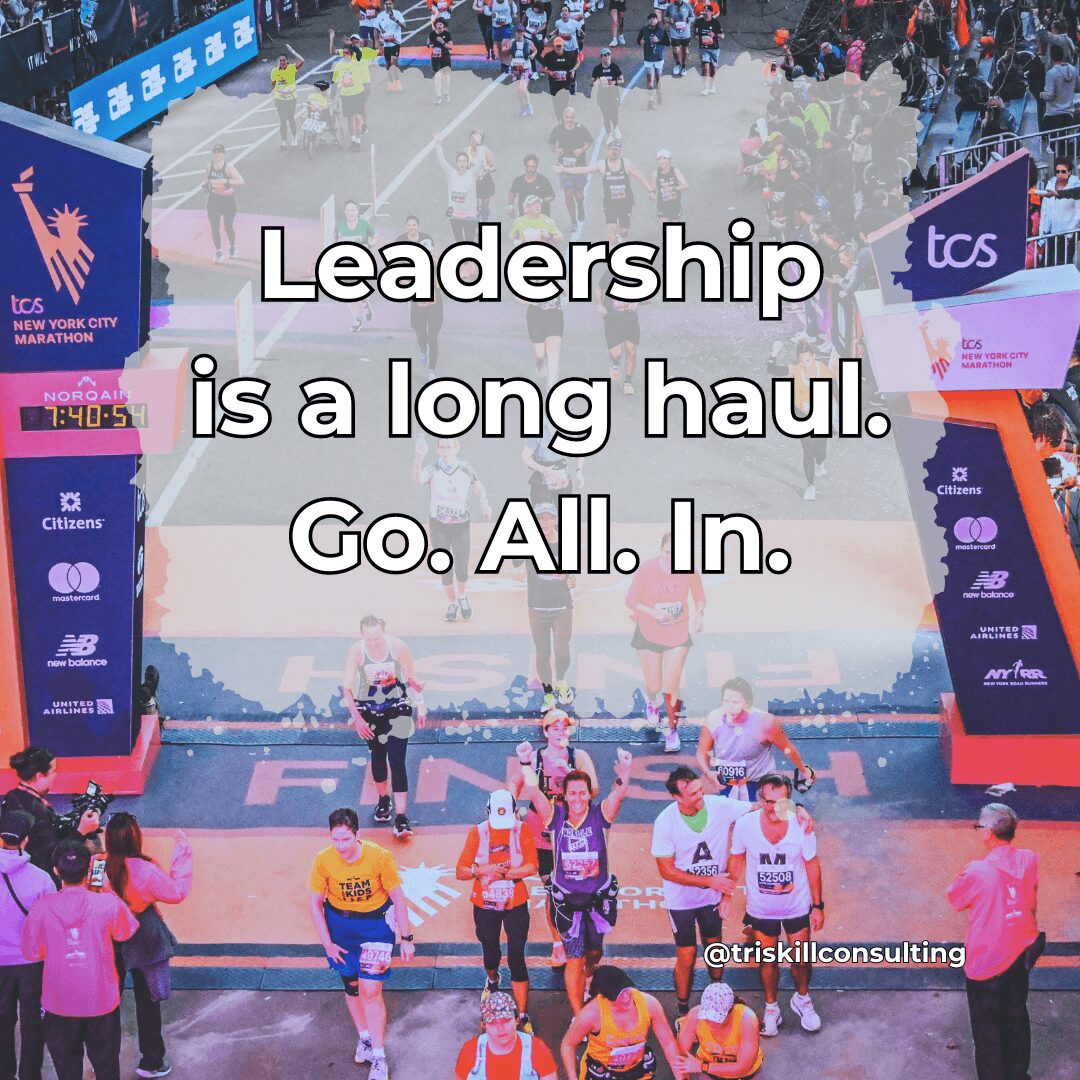
How would you describe your ideal client?
My ideal client is someone who has moved into a leadership position and is struggling to achieve their goals; let’s call them a “young leader” (young in experience, not in age). This person could potentially have been promoted from a particular role and now must manage their former peers. Perhaps they have challenges with self-management – time, energy, discipline, or confidence. Maybe they have trouble communicating clearly, delivering feedback, holding someone accountable, or having a difficult conversation. I truly enjoy working with that leader to identify their strengths and capitalize on them and to explore their opportunities and find the skills or competencies needed to fill the gap. The moment when the individual realizes that they have the potential to be successful is beautiful to witness!
Along those lines, that person’s direct manager or supervisor is also an ideal client. I understand and empathize with the manager who believes in their direct report and recognizes the possibility for success, but doesn’t have the capacity, bandwidth, or knowledge to develop them.
In either circumstance, my client must have the desire to improve and the willingness to put in the work. They must be open to a dialogue of feedback and to sharing their positive and negative experiences. I want to say that the client must be self-aware, but sometimes we don’t know what we don’t know, so instead, the client must have a certain level of emotional intelligence. Above all, they must be a good human – respectful, authentic, positive, and honest.
Contact Info:
- Website: https://www.tri-skillconsulting.com/
- Instagram: https://www.instagram.com/triskillconsulting
- Facebook: https://www.facebook.com/TriSkillConsulting/
- Linkedin: https://www.linkedin.com/company/tri-skill-consulting-llc

Image Credits
MarathonFoto for TCS NYC Marathon
so if you or someone you know deserves recognition please let us know here.