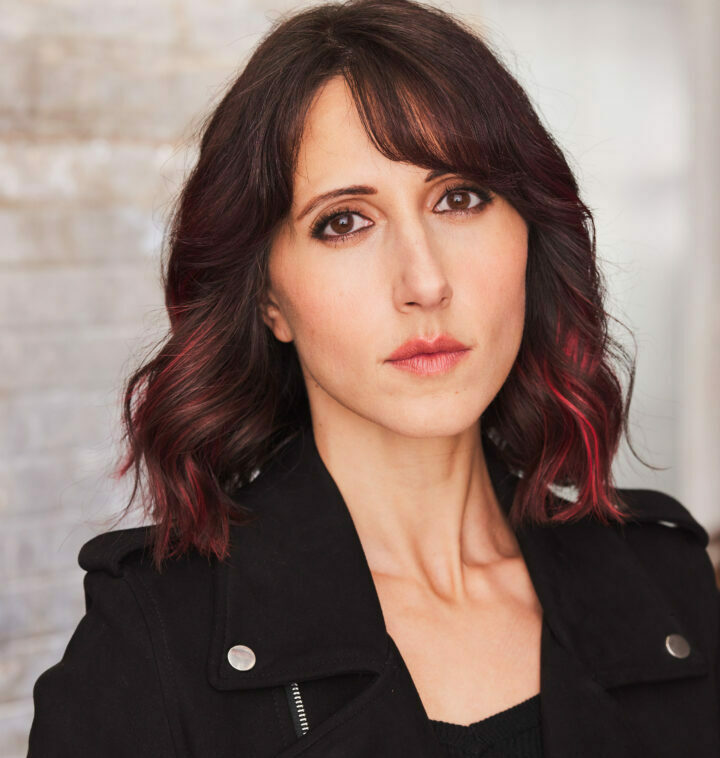
We caught up with the brilliant and insightful Salma Soliman a few weeks ago and have shared our conversation below.
Hi Salma, really appreciate you joining us to talk about a really relevant, albeit unfortunate topic – layoffs and getting fired. Can you talk to us about your experience and how you overcame being let go?
After graduating with a degree in psychology, my first job was at a group home—and I loved it. I worked closely with clients who were trying to build lives worth living, and for the first time I felt both useful and alive in my work. I was able to bring creativity, warmth, and humanity into a system that often felt rigid.
This was around 2010, and while the mental health field has made meaningful advancements since then, I was already witnessing something that deeply impacted me: clients being institutionalized and over-medicated, often to the point of being subdued rather than supported. I felt empowered in that role because I could challenge the status quo in small but meaningful ways. I truly believed I had found my path.
And then—plot twist—I was fired.
One evening, a client needed to be picked up late from the ER, and I agreed to stay beyond my shift. On my way there, I was pulled over and received a ticket that added points to my license. The organization ultimately let me go, citing insurance liability. While I understood the policy, I was devastated. There were options that could have been explored—like taking a driving course to remove the points—but none were offered.
That moment shook me. I didn’t just lose a job; I lost my sense of identity. I began questioning my competence, my judgment, and whether I even belonged in this field. At the time, having points on my license disqualified me from many psychology-related jobs, and opportunities with only a bachelor’s degree were already limited. I felt disempowered, stuck, and deeply unsure of my future.
Eventually, I wondered if this was a sign to pursue graduate school—if I wanted growth and stability, maybe I needed to take the next step. I applied to a local program and was rejected. That rejection hit hard. It felt like confirmation of every doubt I had been carrying.
So I pivoted. I worked part-time as a wedding dress consultant and at a beauty store for about ten months—jobs that had nothing to do with psychology, but taught me a lot about people, presence, and resilience. And then, almost serendipitously, things shifted again.
My dad, who owns a plumbing and heating business, happened to be doing work for a psychiatrist opening a clinic. He casually mentioned that his daughter had a psychology degree, and I was offered an entry-level position. That job became one of the greatest blessings of my career.
I gained an extraordinary amount of clinical experience early on—especially for someone without a master’s degree. I was trained in strong clinical skills, facilitated groups, supported clients directly, and even found myself training master’s-level clinicians. In many ways, I was doing the work of a therapist without the credentials. And while that was empowering, it also made something very clear: I was capable—but limited.
Instead of feeling discouraged, I finally had evidence. Evidence that I could do this work well. Evidence that I belonged. That realization reframed everything.
I applied to graduate school again—and this time, I was accepted into a prestigious program.
Looking back, overcoming that firing wasn’t about bouncing back quickly. It was about rebuilding trust in myself. Sitting with uncertainty. Letting detours shape me instead of define me. The experience forced me to confront self-doubt, expand my definition of success, and ultimately step into my career with clarity, confidence, and intention. What once felt like a failure became the foundation for everything I’ve built since.

Thanks, so before we move on maybe you can share a bit more about yourself?
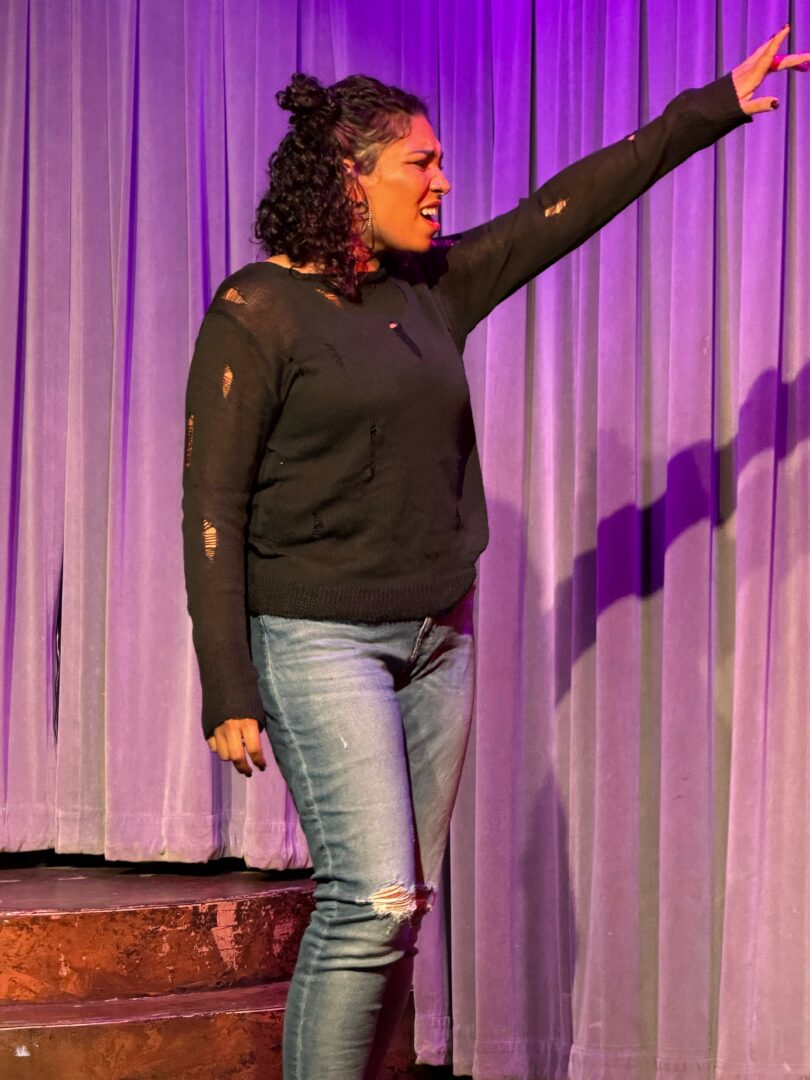
I’m a licensed clinical social worker and the founder of Brave You Therapy, a practice rooted in the belief that healing doesn’t have to be rigid, intimidating, or confined to a couch. At the core of my work is Improv Therapy—a creative, experiential approach that blends evidence-based therapy with the principles of improvisation, play, and embodiment.
What feels most exciting and special about this work is that it invites people back into themselves in real time. Improv therapy isn’t about being funny or performing—it’s about presence, connection, and learning to trust yourself again. Through movement, play, and relational exercises, clients practice emotional expression, boundary-setting, flexibility, and self-compassion in a way that feels alive and human. For many people, it becomes a bridge into therapy—especially for those who feel stuck in their heads, disconnected from their bodies, or intimidated by traditional talk therapy.
My background in both clinical work and the performing arts deeply informs how I show up as a therapist. I specialize in working with anxiety, trauma, eating disorders, and identity-related concerns, and I’m particularly passionate about helping people reconnect with their voice—emotionally, creatively, and relationally. Much of my work centers around regulating the nervous system, reducing shame, and building confidence through safe, playful connection.
Professionally, I’m focused on expanding access to non-traditional therapeutic spaces. In addition to individual and group therapy, I offer Improv Therapy groups and workshops designed to foster emotional resilience, authenticity, and community. I’m currently growing these offerings—bringing Improv Therapy to new audiences through workshops, collaborations, and clinician trainings—while continuing to build Brave You Therapy as a hub for creative, culturally attuned mental health care.
At its heart, my brand is about bravery—not the loud, performative kind, but the quiet courage it takes to show up as yourself. To feel, to try, to risk connection, and to be seen. That’s the work I’m most proud of—and the work I’m committed to growing.
There is so much advice out there about all the different skills and qualities folks need to develop in order to succeed in today’s highly competitive environment and often it can feel overwhelming. So, if we had to break it down to just the three that matter most, which three skills or qualities would you focus on?
1. Building self-confidence
For a long time, my confidence wasn’t innate—it was built through experience, mistakes, and moments of self-doubt. Early in my career, being laid off and rejected from graduate school made me question whether I was capable or cut out for this work. What ultimately changed things wasn’t external validation—it was staying in the work long enough to gather evidence. Confidence grew when I allowed myself to try, to learn, and to be imperfect.
My advice: Don’t wait to feel confident before you begin. Confidence is a byproduct of action, not a prerequisite. Let yourself be a beginner and trust that clarity comes from doing.
2. Learning to trust my instincts and intuition
Some of my most pivotal career decisions came from listening to a quiet inner knowing rather than a perfectly laid-out plan. Over time, I learned that intuition isn’t random—it’s informed by lived experience, pattern recognition, and emotional intelligence. The more I honored it, the more grounded and aligned my choices became.
My advice: Pay attention to what energizes you and what drains you. Your body often knows before your mind does. Build space into your life to slow down and listen—intuition gets louder in stillness.
3. Embracing flexibility and non-linear growth
My path has been anything but linear. Detours, rejections, and unexpected opportunities all played a role in shaping my career. What felt like setbacks at the time often became the very experiences that set me apart later on. Learning to adapt—and to release the pressure of “getting it right” the first time—was essential.
My advice: Resist the urge to compare your timeline to anyone else’s. Growth rarely moves in a straight line. Stay curious, say yes to learning, and trust that every season is building something—even when it doesn’t make sense yet.
At the end of the day, the most important skill I developed was self-trust. Once that foundation was in place, everything else—confidence, direction, and momentum—had somewhere solid to land.

Thanks so much for sharing all these insights with us today. Before we go, is there a book that’s played in important role in your development?
Two books have had a profound influence on both my personal growth and the way I show up professionally.
One is I Thought It Was Just Me by Brené Brown. This book helped me understand shame not as a personal failing, but as a deeply human experience that thrives in silence. One of the most impactful lessons for me was the power of naming shame and sharing our stories in safe spaces. When we bring empathy and language to our experiences, shame loses its grip. That insight fundamentally shaped how I think about healing, connection, and vulnerability—and it continues to inform my work as a therapist.
The second is Burnout by Emily Nagoski. This book reframed how I understand stress and self-care. One of the biggest takeaways was the idea that stress isn’t resolved just by rest or productivity hacks—it has to be completed through the body. That concept validated so much of what I had already observed in myself and in clients: that movement, play, emotional expression, and connection are not luxuries, but necessities for well-being.
Together, these books reinforced something I deeply believe: healing happens in relationship—with ourselves, our bodies, and others. They also helped shape my passion for experiential and embodied approaches to mental health, including improv therapy, where people can move through emotions rather than just talk about them.
Contact Info:
- Website: https://www.braveyoutherapy.com
- Instagram: braveyoutherapy

so if you or someone you know deserves recognition please let us know here.