We caught up with the brilliant and insightful Santina Amato a few weeks ago and have shared our conversation below.
Alright, so we’re so thrilled to have Santina with us today – welcome and maybe we can jump right into it with a question about one of your qualities that we most admire. How did you develop your work ethic? Where do you think you get it from?
I am the child of Italian immigrants who arrived in Australia with little more than a suitcase. Both my parents started life as child labourers, and that work ethic was passed down to me as something deeply ingrained, almost bodily. They prided themselves in their physical capabilities to work.
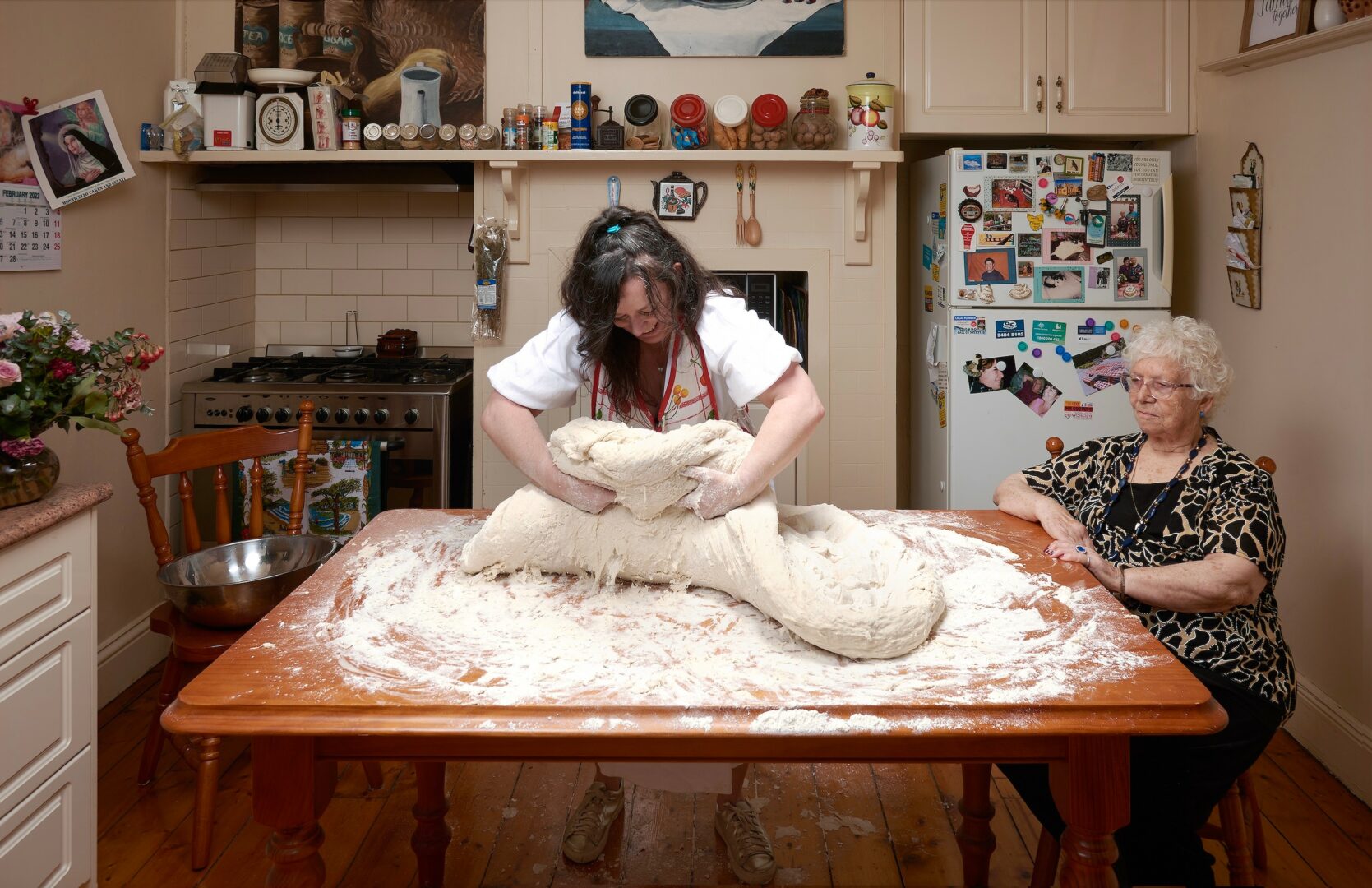
My mother was a homemaker, and as a new immigrant, she made everything from scratch. You couldn’t simply go to the supermarket for the food we ate. Pasta was always being made, drying on racks and across every available surface, including our beds. Our kitchen was a place of constant, quiet industry where I was mums helper from the second I could stand. There was always something curing, pickling, rising, or simmering. Annual rituals like making passata in the summer and salami in winter were family labour, everyone involved, everyone with a role.
My father worked three minimum wage jobs at one point during my childhood, yet he was always home for dinner. That was non-negotiable for him. Sitting at the table together, sharing the fruits of both his labour and my mother’s, was the priority regardless of everything else pressing in on the day.
Labour as an act of service became my love language as a result of that upbringing. I don’t think I know how to work any other way.
Thanks, so before we move on maybe you can share a bit more about yourself?
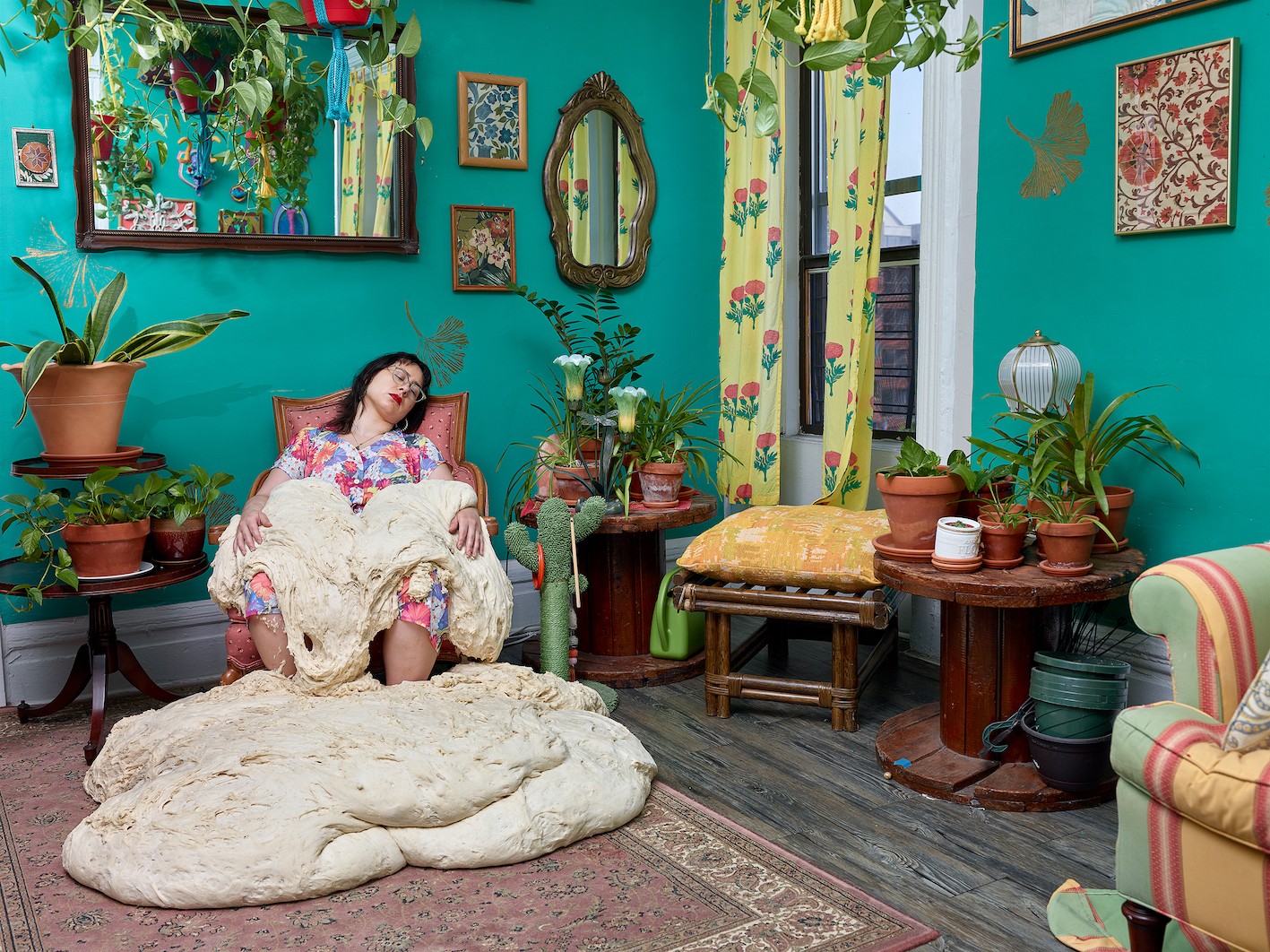
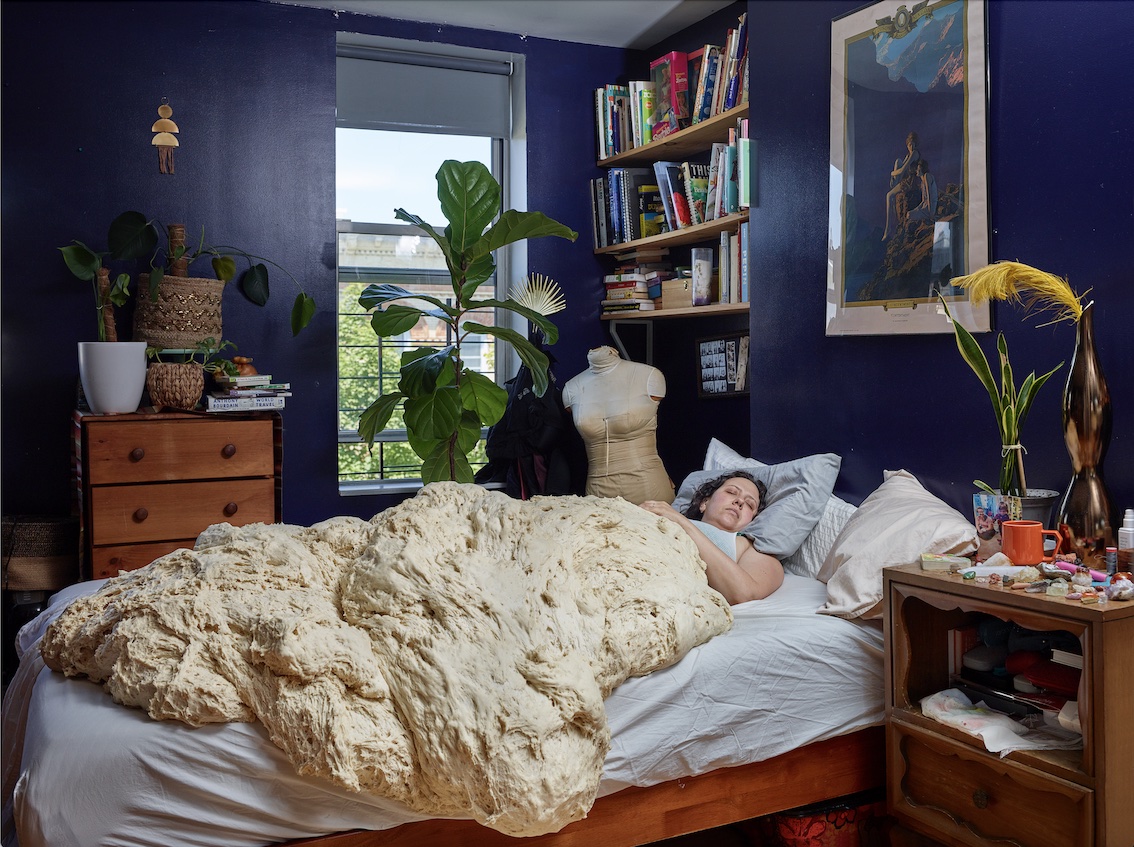
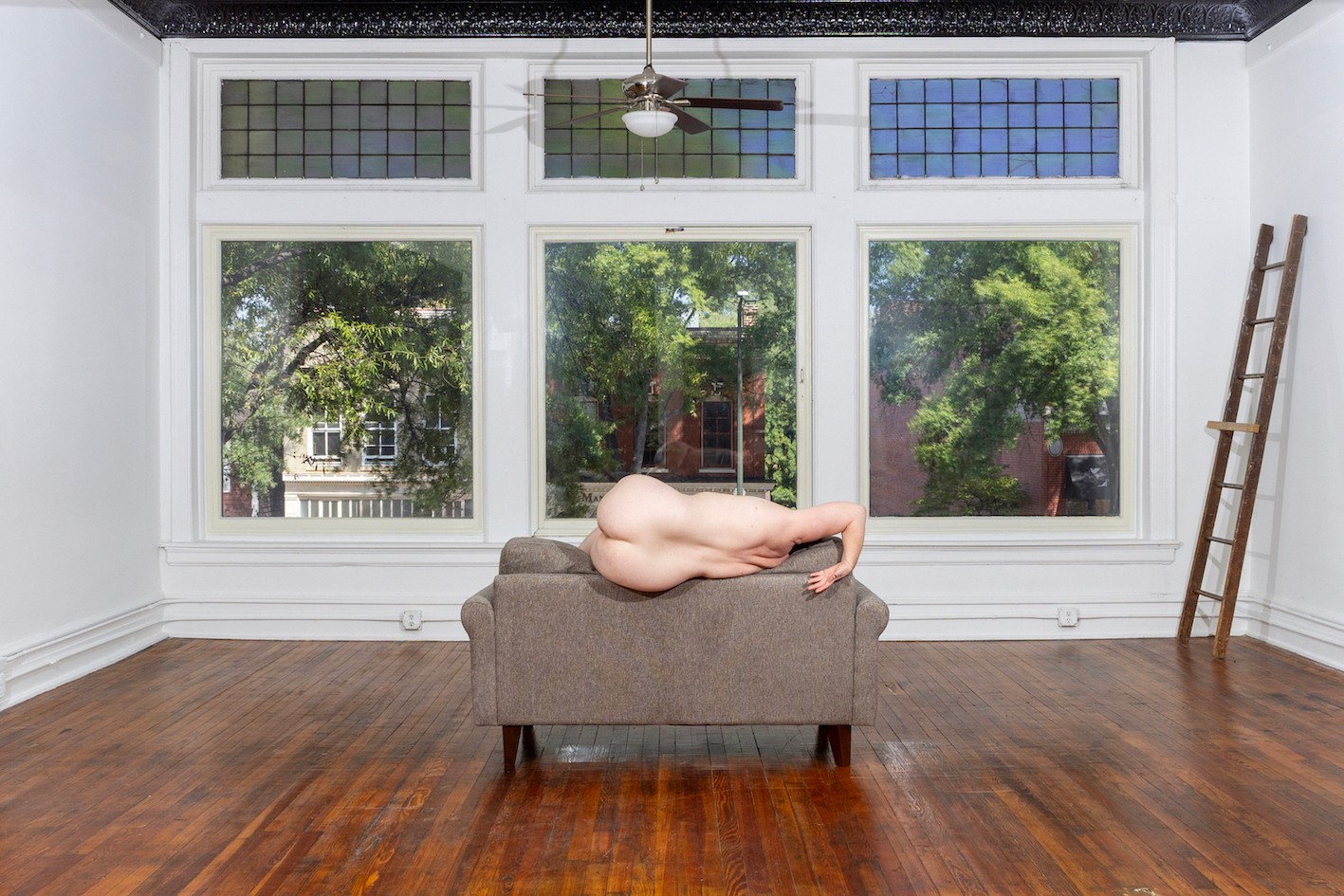
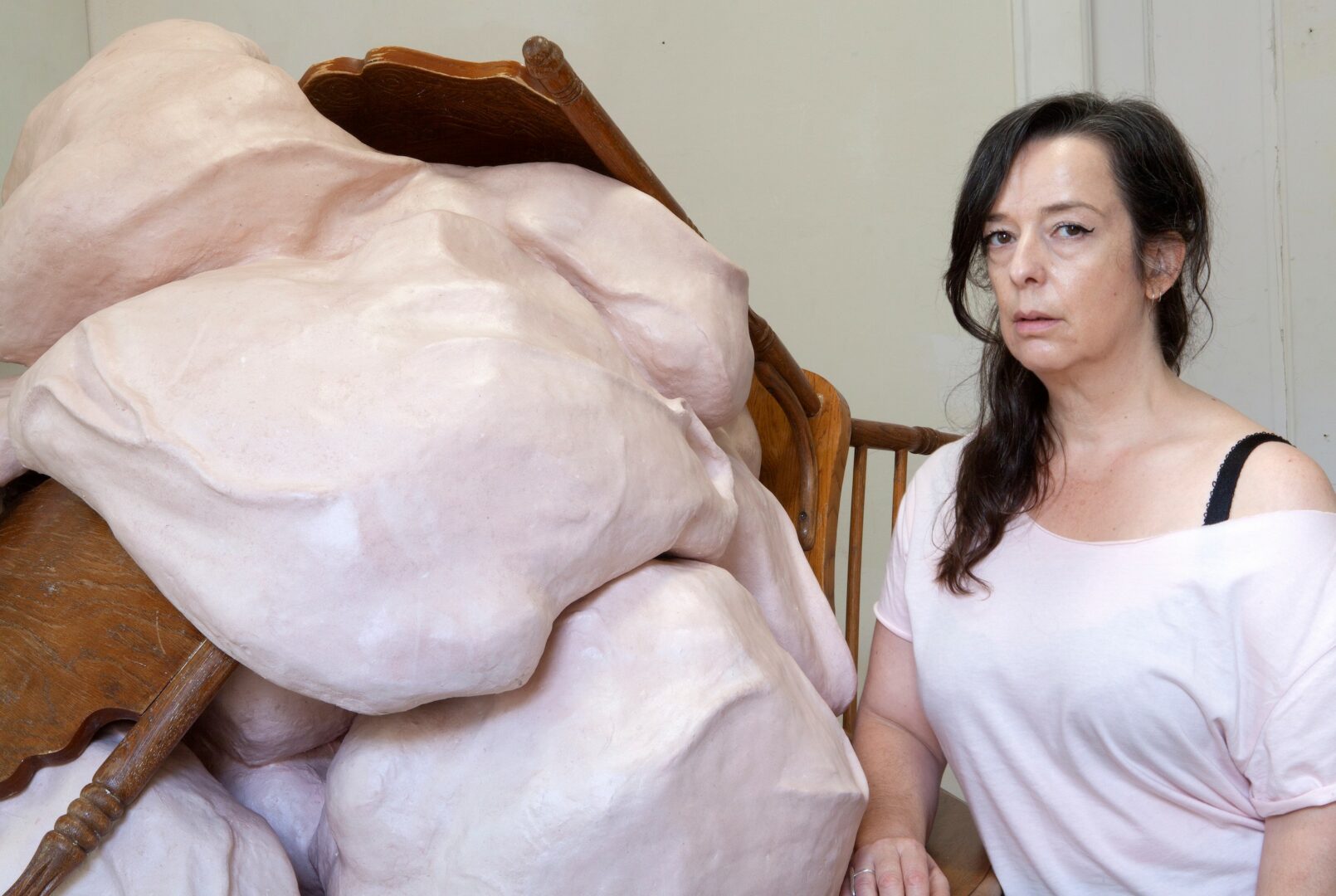
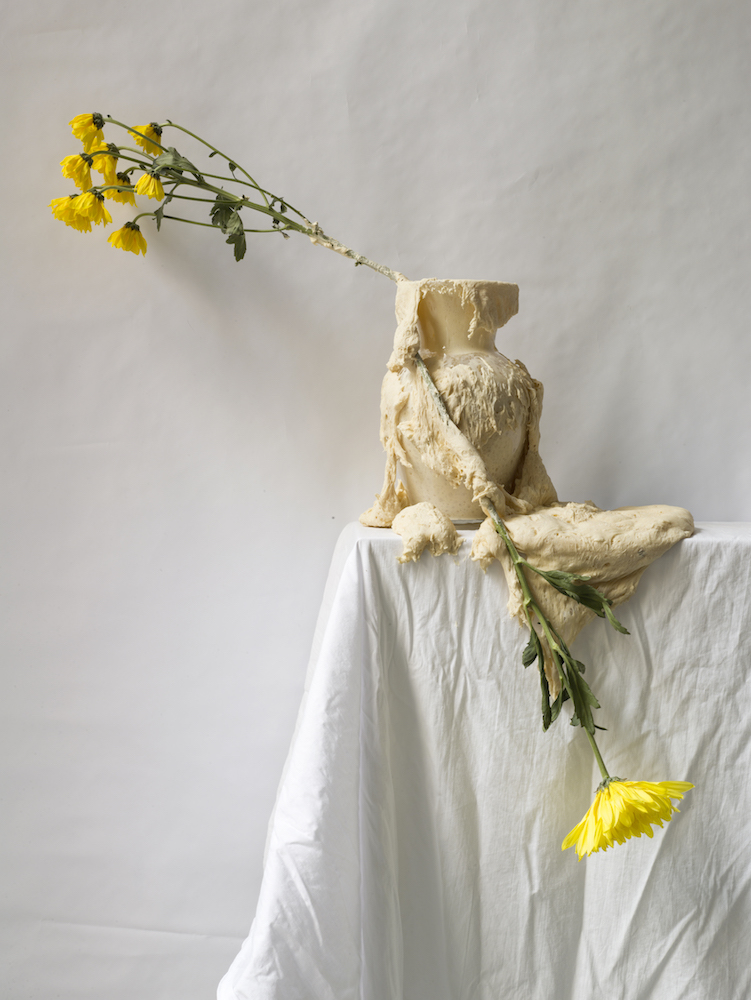
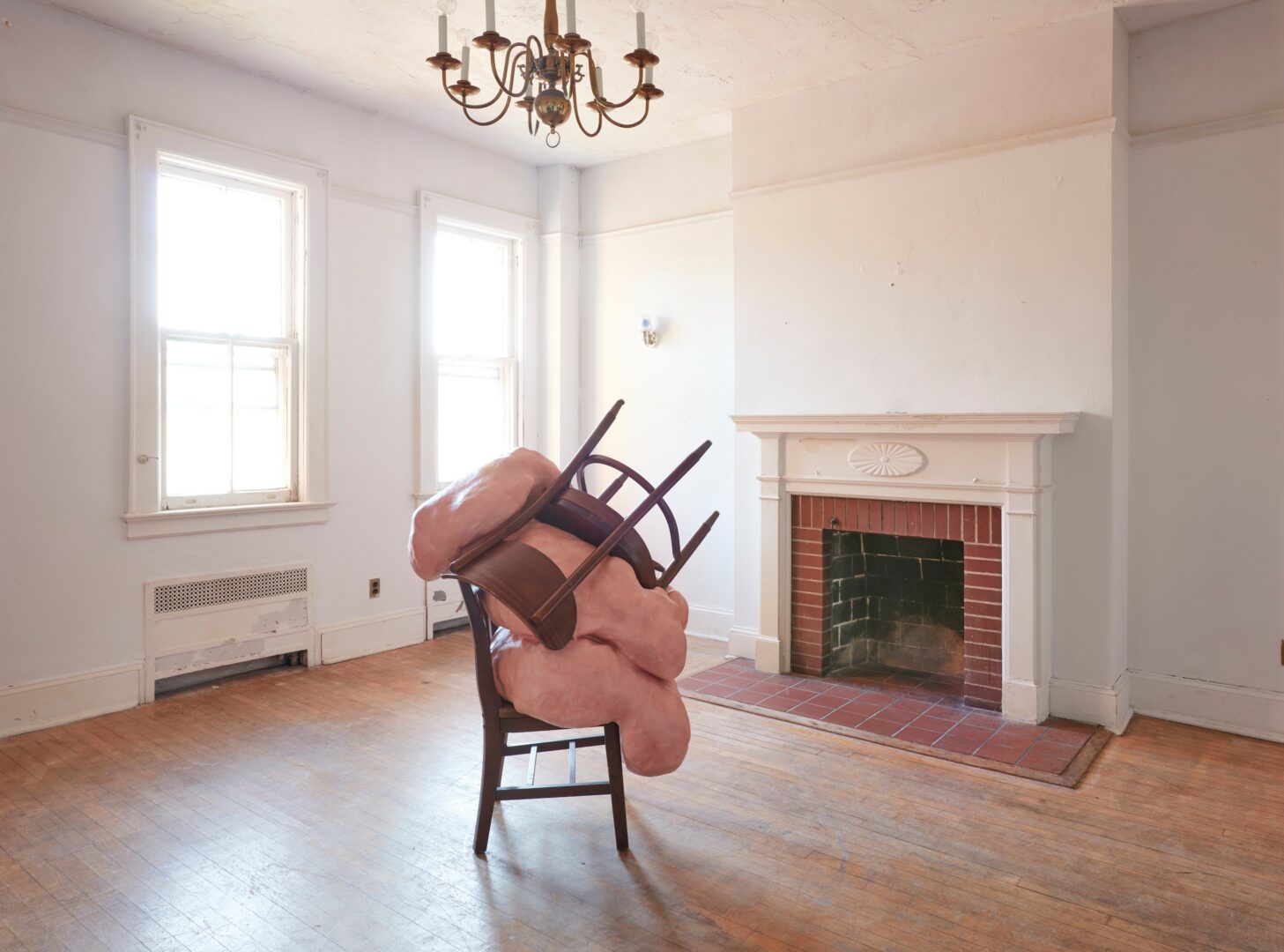
I am a New York-based multidisciplinary artist working across photography, video, sculpture, installation, and performance. My practice examines the domestic sphere as a site where intimacy, labor, and instability converge, using materials drawn from the home — bread dough, used bedsheets, discarded furniture, fresh produce — to trace how private spaces absorb broader social, economic, and political pressures.
Bread dough is at the center of my work, and its presence there is deeply personal. I grew up in a traditional Italian immigrant household in Melbourne, Australia, where gender roles were clearly defined from birth. My earliest memory of femininity and the power of creation was watching my mother knead dough on the kitchen table — her whole body leaning into it, transforming flour and water into a living organism. That image never left me. Dough became my material language: unstable, time-sensitive, and alive, mirroring cycles of nourishment, exhaustion, and collapse.
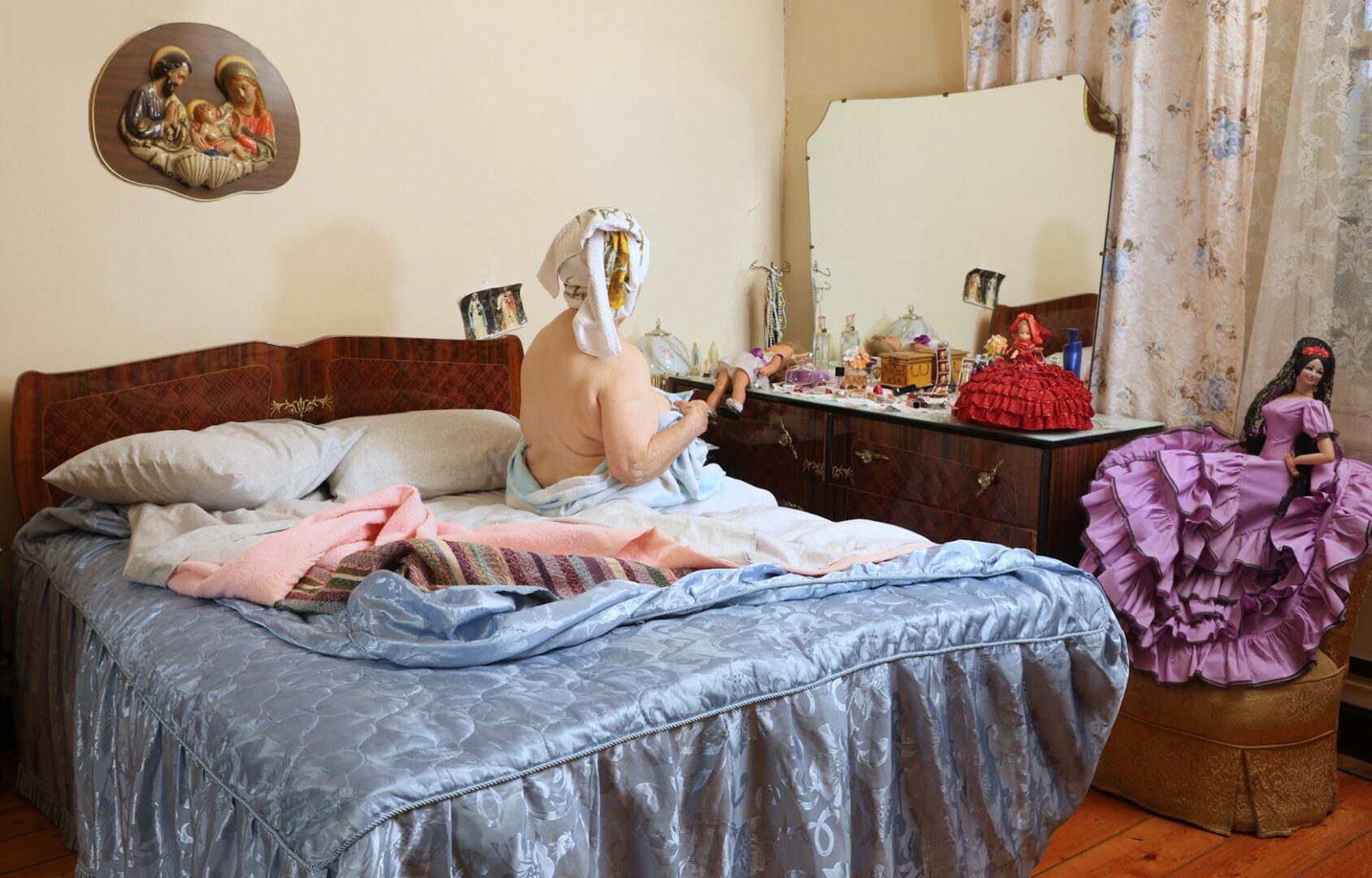
What excites me most about my practice is that it refuses to stay still. It keeps expanding into new territory as my life does. I am currently dividing my time between New York and Melbourne, where my mother has just turned 89 and continues to live alone in our family home. Navigating this stage of life with her — the labour of care, the question of what endures, the objects she refuses to discard — has brought a new tenderness and urgency to the work.
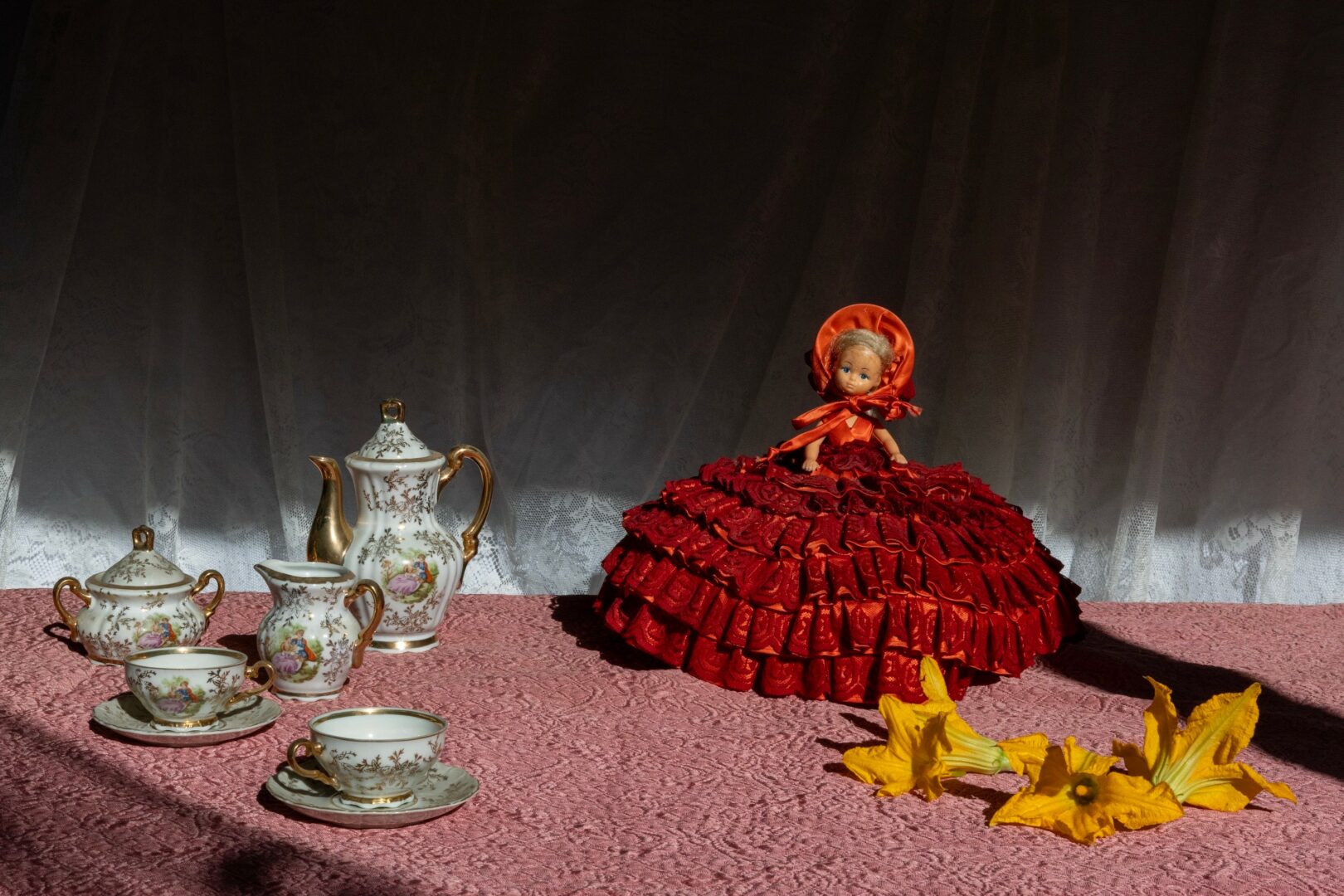
Most recently I have been making still life photographs in my mother’s backyard in Melbourne, composing images with objects from my childhood that have not moved from the same position within her home in decades, alongside organic matter harvested from her garden each morning. The series is governed by the position of the morning summer sun, which has now shifted with the coming of autumn, bringing this chapter of the work to a natural pause. There is an urgency to this project. I do not know how many more summers we will have together, and the camera has become a way of holding time still, of witnessing what is quietly disappearing. I will return to it next year when I’m back in Melbourne for the summer.
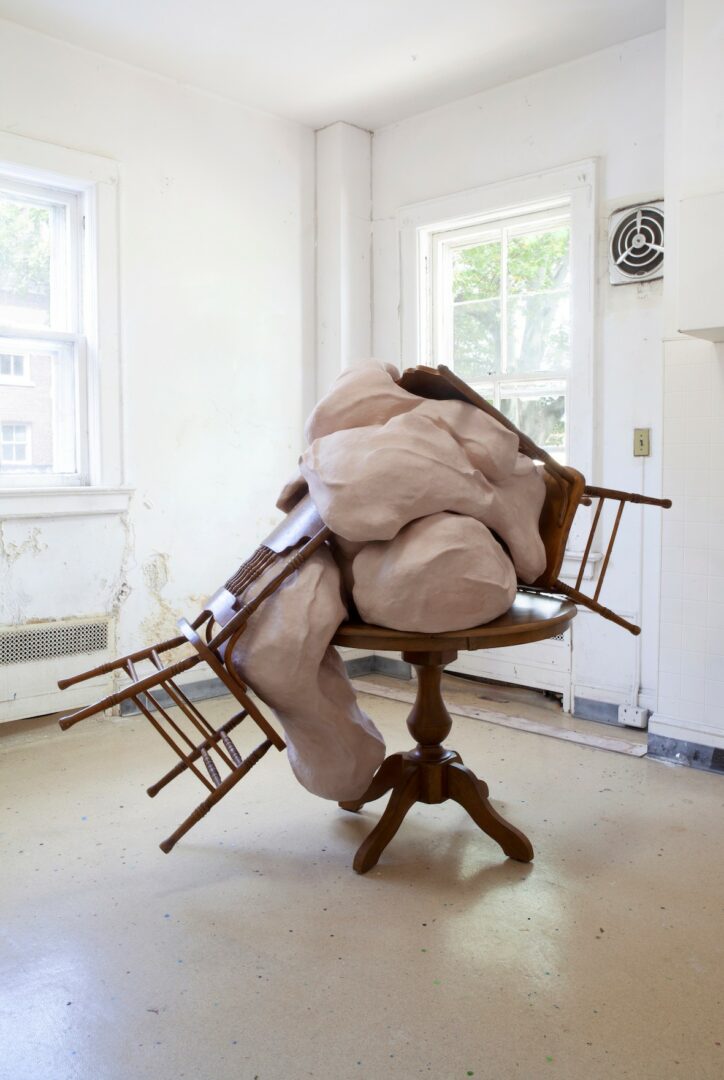
Back in New York, I am preparing to begin Soft Collapse, a new body of large-scale photography and video installations supported by a 2026 Queens Arts Fund Grant. The project explores bread dough rising over and consuming domestic objects, making visible the slow erosion of home under economic and political pressure. I am still in the process of determining the precise direction — whether the objects will come from people in the midst of relocation, or from deceased estates, belongings that outlived their owners and now carry a different, heavier kind of absence. That question feels important, and I am not ready to resolve it yet. The work will tell me what it needs.
Looking back, what do you think were the three qualities, skills, or areas of knowledge that were most impactful in your journey? What advice do you have for folks who are early in their journey in terms of how they can best develop or improve on these?
The first is trusting your instinct. I have been a spontaneous person my entire life, and not every decision I have made has been rational or safe. But my instinct has consistently led me somewhere necessary, even when the destination only made sense in hindsight. That spontaneity has taken me down paths I never would have found by being cautious, and some of the most defining moments of my life have come from saying yes before I had a reason to.
The second is not waiting. I held off travelling when I was young because the people around me were not interested in it. I grew up surrounded by first generation Australians whose primary goal was to marry and settle, a path I knew from a very early age was not mine. I did not travel overseas until I was 28, held back not by lack of desire but by fear of doing it alone. Once I finally went, I could not be stopped. I often wonder what I might have experienced as a twenty-something in 1990s New York — the chaos, the people, the version of myself I might have found sooner. Do not wait for someone to come with you. Go, and the rest will follow.
The third is education, but not in the way people expect me to say it. Formal education was the thing that pulled me off the path that had been laid out for me by my gender, my background, and my position as the child of immigrants. But it took me a long time to get there. I was in my early thirties when I finally completed a bachelor’s degree — the seventh tertiary course I had begun, and the first I finished. I had cycled through every design stream available (and quit), avoiding fine art because my parents’ question hung over me: how would you make money as an artist? I completed my Master’s in my forties. What I want people to understand is that the stumbling, the changing course, the years that looked like failure from the outside — that was the education too. The formal credential matters, but so does the long, unglamorous process of figuring out what you actually need to learn. Give yourself permission to search. It is not wasted time. It is the work.
Thanks so much for sharing all these insights with us today. Before we go, is there a book that’s played in important role in your development?
Julia Kristeva’s Powers of Horror: An Essay on Abjection, published in 1980, has been the most formative text in my development as an artist. It is not an easy read — Kristeva writes at the intersection of psychoanalysis, linguistics, and philosophy — but its central idea has never left me.
Abjection, for Kristeva, describes our reaction to what threatens the boundaries between self and other, between what we are and what we fear we might become. The abject is not simply something disgusting or cast aside. It is the thing that disturbs identity, order, and system. It is what does not respect borders. Her most visceral example is the skin on warm milk — that moment of revulsion that is not quite about the thing itself, but about the boundary it violates. The corpse is her ultimate figure of the abject: it is what we will become, and our horror of it is really a horror of ourselves.
What makes the book so powerful, and so relevant to my work, is its attention to the domestic and the bodily as sites of psychological and cultural tension. Bread dough, for me, is deeply abject in Kristeva’s sense — it is alive, it expands beyond its container, it is nourishing and excessive at once. It troubles the boundary between control and loss, between care and decay.
The most valuable thing Kristeva gave me was permission to take the repulsive, the overlooked, and the humble seriously as sites of profound meaning. She taught me that what we push away or refuse to look at is often where the most important truths live. For an artist working with domestic materials that culture tends to dismiss, that idea has been quietly radical.
Contact Info:
- Website: https://www.santinaamato.com/
- Instagram: https://www.instagram.com/santina_amato/
so if you or someone you know deserves recognition please let us know here.