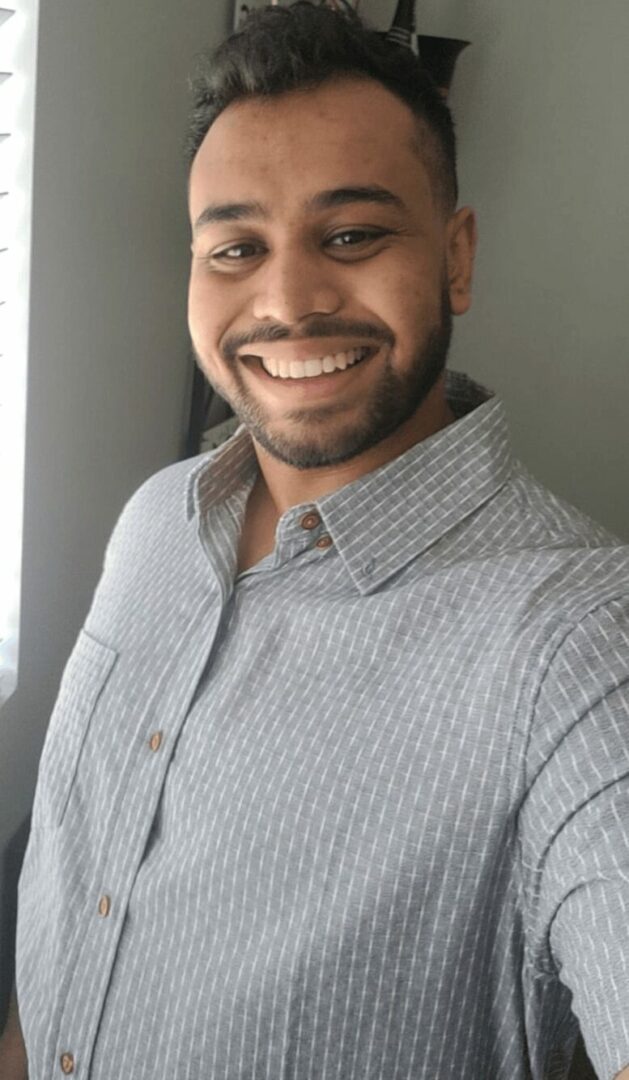
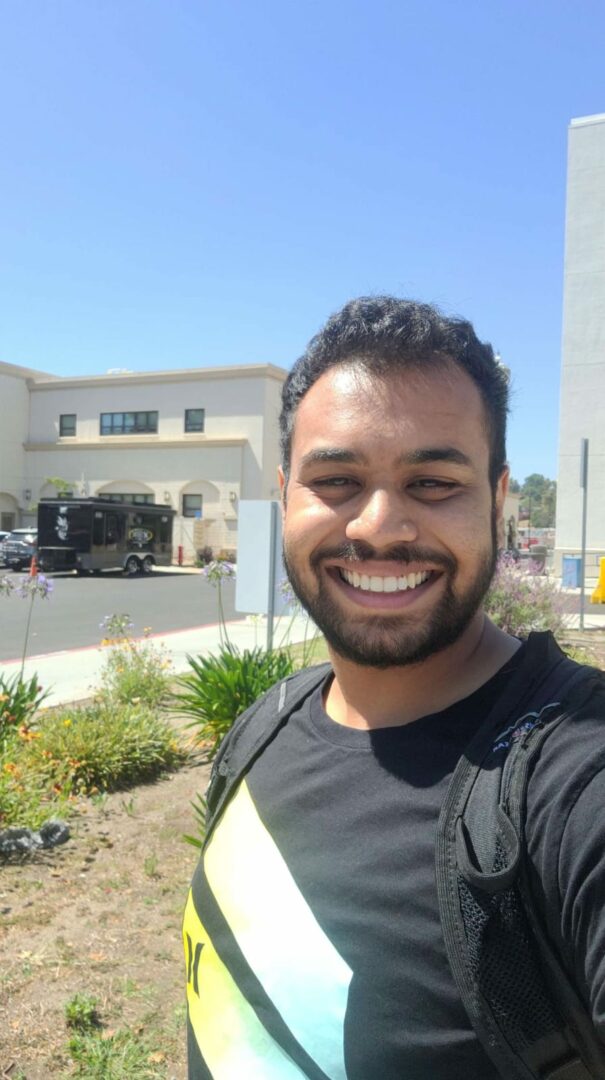
We’re excited to introduce you to the always interesting and insightful Shaan Govind. We hope you’ll enjoy our conversation with Shaan below.
Shaan, thank you so much for taking the time to share your lessons learned with us and we’re sure your wisdom will help many. So, one question that comes up often and that we’re hoping you can shed some light on is keeping creativity alive over long stretches – how do you keep your creativity alive?
For me personally, I have a different meaning of being creative and it might even seem unconventional. I am far from being the traditional artistic creativity, like painting or poetry. I am an analytical person, so creativity to me is finding solutions to a problem within restricted parameters. For example, currently I am working in a physics lab at CSU Dominguez Hills as an Applied Biochar Research Scientist, and we conduct research using biochar to make an electrical storage device called a supercapacitor. So when I joined the lab little over a year ago, my main project within the research is to figure out the chemical profile of our biochar feedstock, determine what chemical reactions are taking place in our EDLC, determine what products are being made from those reactions, determine how fast the reaction is going, and how much energy it is intaking or exerting. Being someone studying molecular biology at the time, this was an interesting challenge for me.
Our research had one constraint: the technologies we are building have to be accessible to everyone, and the materials we use have to be available at big box stores like Target, Walmart, and Home Depot. Now, for my challenge, I need to build something that anyone can run on a modern computer or laptop, lightweight so it will not bog down the computer’s systems, and user-friendly, so that if someone doesn’t really have the specific technical background, they could still operate it. One big puzzle to solve.
That’s where I got to work; machine learning was the way to go. In the first 5 months, I learned all I could about generative AI, machine learning, neural networks, Python for chemistry, and started making different programs. Ten different versions yet none of them worked. But it was not for nothing, I learned a lot. This time around, I had an idea of how this program’s architecture would be built. Fast forward 4-5 months, with a little help from Anthropic’s Claude and another 10 iterations, and I have done it! I built a program that can predict reaction products under various conditions, calculate the reaction rates and their thermodynamic outputs while visualizing the product molecule and other metrics, which I will be presenting at CSUDH’s Student Research Conference in March!
Everyone has some amount of creativity in them. For me, this project kept my creativity alive because it had so many moving components, which forced me to learn new things and apply them in new ways from the ground up. That’s creativity to me, being forced to learn constantly and apply knowledge in completely new ways.
Appreciate the insights and wisdom. Before we dig deeper and ask you about the skills that matter and more, maybe you can tell our readers about yourself?
I’m graduating in a few weeks with my bachelor’s degree in Cellular and Molecular Biology from CSU Dominguez Hills, where I work as an Applied Biochar Research Scientist with BioCharge at CSUDH. My passion lies at the intersection of sustainability and accessibility. Specifically, turning waste materials into advanced fuels and materials that do more with less while minimizing the damage done on the environment.
My journey into this field wasn’t exactly planned. As a molecular biology student, I didn’t know what I wanted to do, let alone find myself working on supercapacitors in a physics lab. But when I joined Biocharge in 2024, I was drawn to a challenge that was like a big head scratch: our team is developing electrochemical double-layer capacitor (EDLC) supercapacitors from biochar made from waste biomass with one critical constraint. Everything had to be accessible. The materials needed to come from big box stores like Target, Walmart, and Home Depot, and our methods had to be reproducible by anyone, anywhere. No expensive equipment, no specialized chemicals, no barriers to entry.
However, to improve the EDLCs we needed to understand the complex chemistry happening inside these devices. What reactions were occurring, what products were forming, how fast, and under what conditions. Before my program Our team was literally slicing open EDLCs to examine crystal formation by eye, hardly a sustainable approach given that we also had no access to advanced chemical analysis machines. That’s when I decided to build something that could change that.
Over the past year, I’ve developed a machine learning platform that predicts biochar formation reactions and their outcomes. The platform integrates four different transformer models and can process reactions, predict their products, calculate reaction rates, thermodynamic outputs, and even visualizing the molecular structures of predicted products. Most importantly, it runs on any modern laptop and guides researchers toward experiments that actually work.
What excites me most about this work is democratizing advanced materials science. Biochar supercapacitors could revolutionize energy storage: they charge faster and last longer than batteries and sequester carbon, but they’ve always required expensive materials and specialized knowledge. We’re proving that’s not necessary. Our recent experimental validation showed consistent 87.5% kinetic efficiency across five different substrate combinations, all using materials you could pick up on a weekend shopping trip.
I’m presenting this research at CSUDH’s Student Research Conference in March, and after graduation, I’m eager to bring this combination of wet lab experience and computational problem-solving to companies working on biochar, precision fermentation, or agricultural biotechnology. The future of sustainability isn’t just about innovation it’s about making that innovation accessible to everyone.
If you had to pick three qualities that are most important to develop, which three would you say matter most?
Interdisciplinary adaptability has been critical because innovation rarely stays in one lane. In the BioCharge lab, I’ve worked on everything from building biochar-based water filters, formulating non-toxic paints, creating electroconductive pen ink to creating fuel gels from eggshells and then pivoted completely into computational chemistry and machine learning. As a molecular biology major solving physics problems with computer science tools, I was constantly outside my comfort zone. But that’s where the breakthroughs happen.
Resourcefulness means knowing you don’t have to figure everything out alone. When I hit walls building my platform, I leveraged every tool available like Claude, YouTube videos, research papers, and asking questions. There’s no badge of honor for struggling in isolation which I had learn myself.
Persistence through failure might be the most important. I built over 20 iterations of my platform before one actually worked. Twenty. Each failure taught me something, but it was brutal at times. The difference between people who succeed and people who give up isn’t talent, it’s tenacity.
My advice would be:
1) Don’t limit yourself to your major or your “lane.” When an opportunity comes up in a different field, say yes. The connections between disciplines are where the most interesting problems live. Like football players practicing ballet to improve balance and agility.
2)Look at failure as a datapoint on a graph. Every version that didn’t work eliminated possibilities and brought me closer to the solution. Try anything and everything. Stay curious, stay stubborn, and trust that tenacity pays off. It might take longer than you expect, but it will pay off. Like that MythBusters scene, when they were debunking that a straight-line is faster than a curved line. Progress isn’t linear, you need to build momentum, and often the biggest breakthroughs happen in that final push.
Looking back over the past 12 months or so, what do you think has been your biggest area of improvement or growth?
My biggest area of growth has been learning to bridge the gap between deep technical work and effective communication, which I learned myself this year.
I went from being a molecular biology student with zero computational chemistry background to building a sophisticated machine learning platform. I taught myself Python for chemistry, neural networks, transformer models. It was months of long days, failed iterations, and slowly piecing together how these systems work. Building a chemistry platform through multiple versions this year forced me to become comfortable working in completely unfamiliar territory.
Here’s what I didn’t expect: technical skills alone weren’t enough. After sending out 120 generic job applications with zero responses, I had a wake-up call. I had built something genuinely innovative, but I couldn’t communicate its value effectively. I was burying the impact in jargon and failing to tell a compelling story about what I’d actually accomplished.
That realization forced me to completely redo how I present my work. I learned to translate complex computational chemistry into easy-to-follow ideas. I rebuilt my resume to lead with impact rather than responsibilities. I shifted from mass applications to targeted outreach, connecting directly with CTOs and CEOs at companies doing work I care about. The response very different, suddenly I was getting LinkedIn engagement and direct interest from leadership.
The growth wasn’t just learning machine learning or learning to write better emails. It was understanding that innovation means nothing if you can’t communicate why it matters. Technical depth and strategic communication aren’t separate skills; they’re two sides of the same coin.
Contact Info:
- Linkedin: https://linkedin.com/in/shaangovind
- Other: Github:
https://github.com/Sgov1234
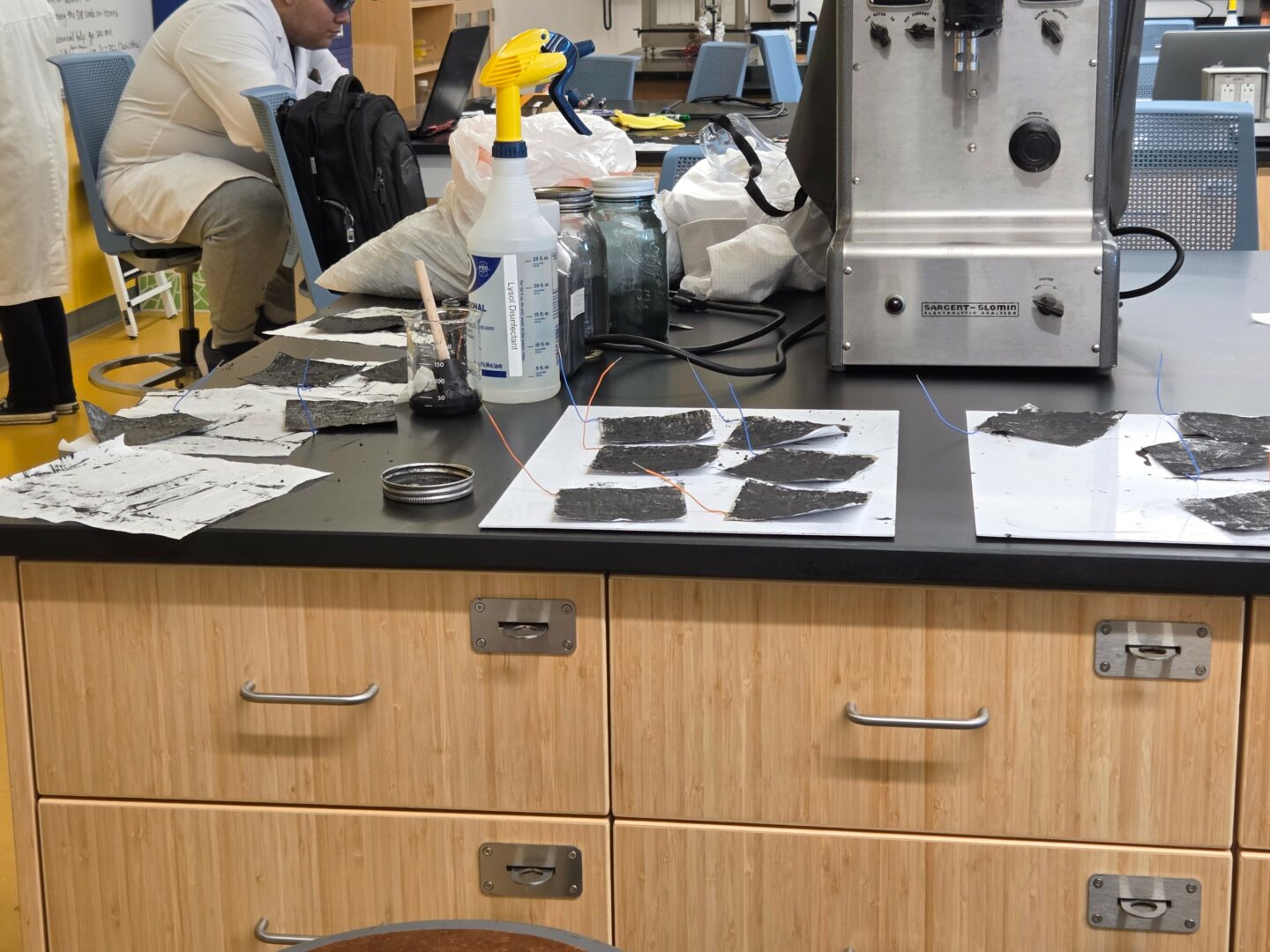
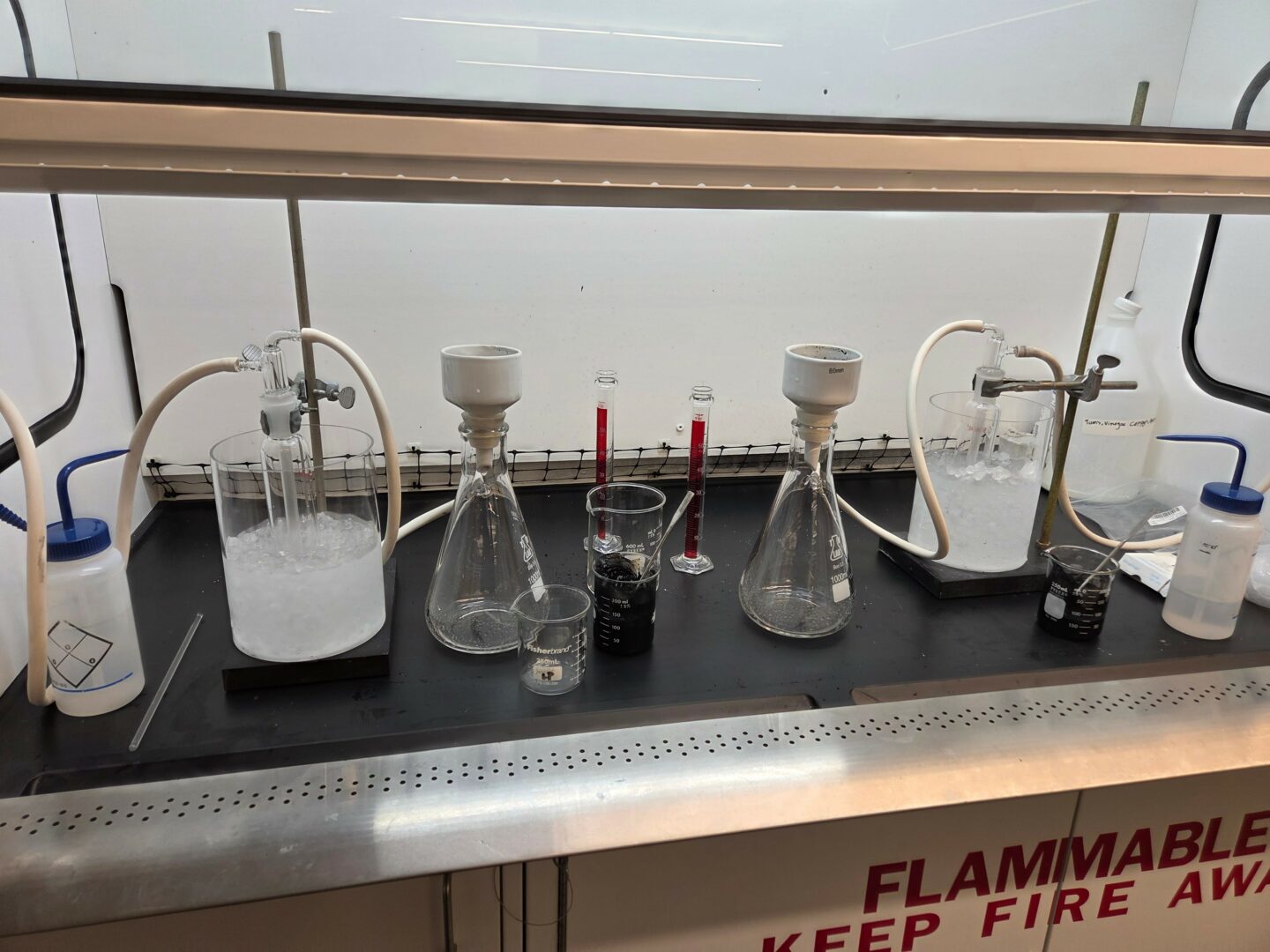
Image Credits
Credits to BioCharge at CSUDH
so if you or someone you know deserves recognition please let us know here.