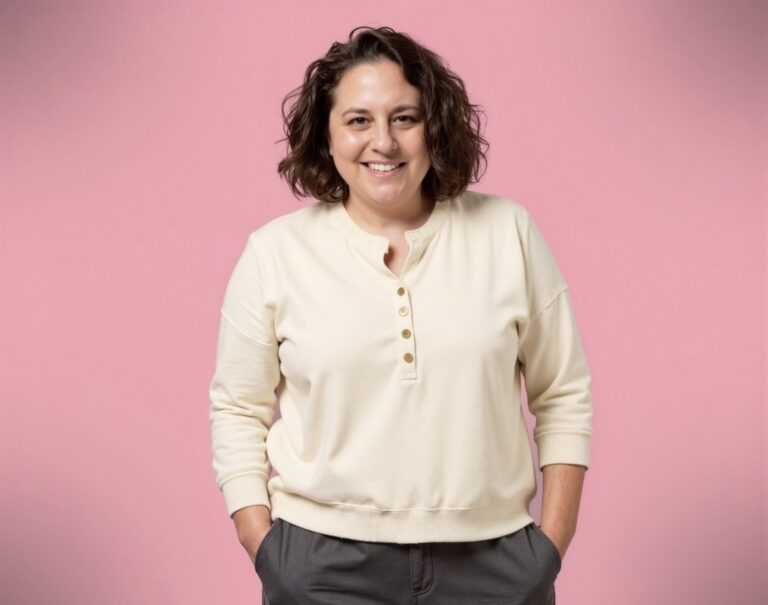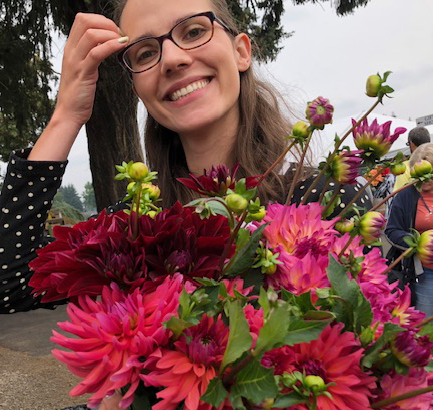
Alright – so today we’ve got the honor of introducing you to Shannon Weston. We think you’ll enjoy our conversation, we’ve shared it below.
Hi Shannon, so excited to have you with us today, particularly to get your insight on a topic that comes up constantly in the community – overcoming creativity blocks. Any thoughts you can share with us?
I don’t know an artist out there that hasn’t experienced a creativity block. Regardless of medium, sometimes you look at a canvas, or a blank document, or lines of grid paper and nothing comes out. It’s incredibly frustrating, but beyond that, it also feels a little like failure. Here’s a hobby (or a jobby, or a full-time career) that you have a history of tapping into and suddenly the valve has shut off. For me, I also feel a sense of guilt. I’m not sure if that makes sense, but I feel guilty for robbing myself, in a way, of this thing I love. After that, the frustration sets in. The resentment. And somehow, it’s been months since I’ve opened up a project. The process starts all over from there.
I’ve had to learn how to work through those blocks. I tried the brute method – forcing my way through, staring for hours at a document, grumbling at myself, and (maybe unsurprisingly), that didn’t work.
I take a gentler approach now. I consider art a matter of input and output; sometimes, that means I consume media (for research, or just to heal the tax on my imagination), other times that means I create. Allowing myself those periods of recovery allows for my creative streaks to be longer and stronger.
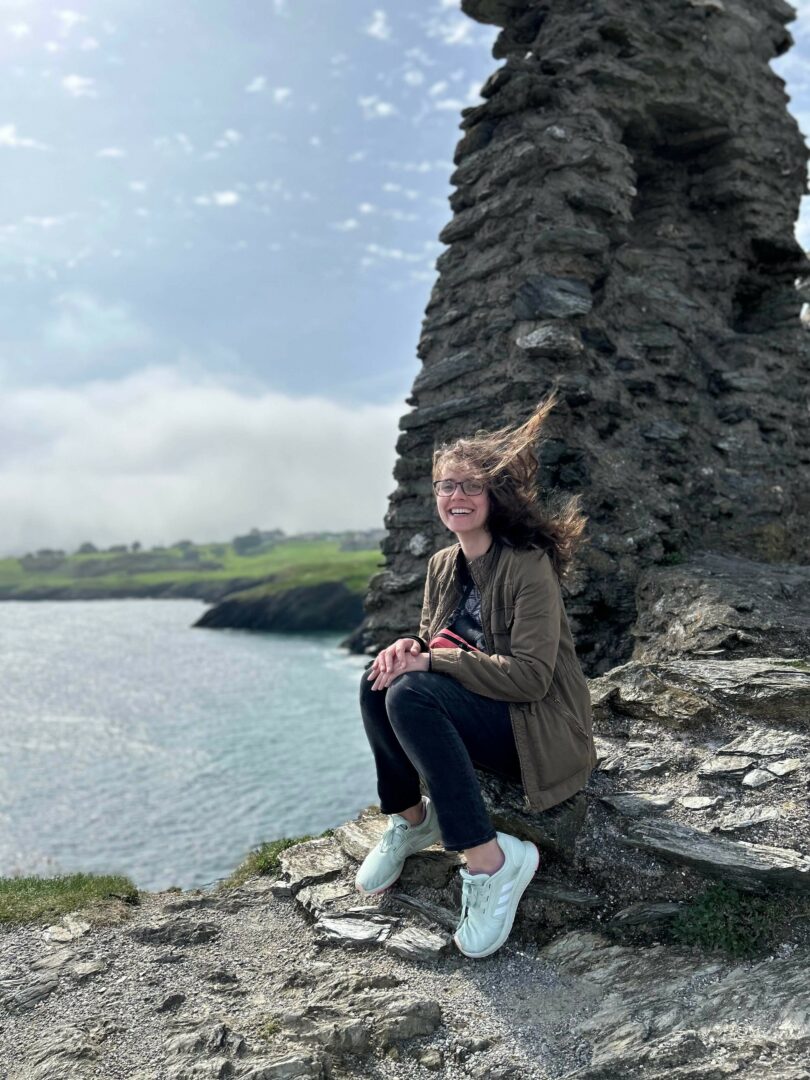
Great, so let’s take a few minutes and cover your story. What should folks know about you and what you do?
I’ve been a lot of things in my relatively short life – pop culture blogger, television show reviewer, receptionist, documentation specialist, master planner for an engineering company – but, at the core, I consider myself an artist. An author, if we’re being super, super specific.
Growing up, I was primarily raised by a single mother, carrying memories of my father with me wherever I went. I had two older brothers, who kept me humble, and lovingly carried me around like a sack of potatoes at picnics and humored my endless questions about their video games. I spent a lot of time with my grandparents, a pair of old world Europeans. I learned the value of making things from scratch, enjoying what you have, and putting pieces of yourself in everything that you do.
I read fairy tales with them. Russian and German folklore, specifically. My grandfather was an artist of his own – he lovingly considered his shed “Geppetto’s Workshop,” with a wooden sign and everything – and did everything from woodworking to painting. He built a treehouse in the backyard and painted scenes from Little Red Riding Hood on it, he created rocking horses and signs, he painted pictures and sketched his grandchildren as little elves, he made garden fences out of scrap wood and downed branches. It was so whimsical and beautiful. He grew up with very little, and lived a hard life, but I learned early that magic could be created anywhere.
I aspire to bring that to my own work. An element of the fantastical is never far away from my wordsmithing. You know, enjoying how a little bit of magic can change someone’s entire perspective.
In this last year, my work has gained more traction. I’ve placed as a finalist in multiple competitions, I’ve joined writing communities with authors both inspiring and encouraging. I’m really excited to see where this journey goes.
There is so much advice out there about all the different skills and qualities folks need to develop in order to succeed in today’s highly competitive environment and often it can feel overwhelming. So, if we had to break it down to just the three that matter most, which three skills or qualities would you focus on?
A very good friend of mine once said that I never half-ass anything. I’m determined once I get set on something. I’ll research for a single passage in a manuscript, just to make sure that the dye I’m referencing is historically accurate. It’s a little obsessive, maybe, but I think of it as a part of the creation process. Curiosity is a powerful tool. I love learning about something just to see if I can integrate it, if I can use it – if not now, in the future. When you’re creative, everything can influence it and help you grow; it should be a process of learning and improving.
That attention to detail has resonated with me throughout my entire professional life. I’m a perfectionist (positive) and a perfectionist (negative). In some ways, I make it a game with myself, just to prove that I can do it. I think that self-propelling is especially important in a creative field, because there are large stretches where you have to be your own cheerleader.
For any starting advice for other authors out there, I’d say – let your first draft be terrible. Don’t try to create perfection from scratch. It’s going to be hard. It’s probably going to be ugly. But, I think it’s best to get it all out there instead of revisiting and revising sections endlessly instead of moving forward. The first pass is all about ideas, you know? From there, you can revise, and tinker, and fix your run-on sentences.
I also suggest joining communities of fellow creatives. Not only can they offer perspective and advice, but learning how to share your work and receive feedback is integral to artistic growth.
Alright so to wrap up, who deserves credit for helping you overcome challenges or build some of the essential skills you’ve needed?
This is going to sound a little strange, but I have to say – myself.
Throughout a lot of my professional career, I’ve had to learn how to be the one to advocate for my advancement, my skills, and my growth. For a decade, I worked in a male-dominated field and for a good portion of that, I was banked on as reliable and helpful, but not because I was knowledgeable. I was seen as a constant, instead of a hard worker.
I worked my way into spaces that would allow me to shine, be that through reports or metrics, or for teambuilding exercises, and sat down with my bosses to champion the amount of work I truly did. I fought for my promotions, my wages. I hated turning down challenges, but believed I should be rewarded for those accomplishments as well. It taught me that I could be a leader. Not just for other people, but for myself.
Even though my trajectory is now artistic, I come across similar roadblocks, but now the doubt isn’t coming from an office down the hall, but from myself. Have you ever held a performance review with yourself? It’s kinda rough.
Imposter syndrome and creativity blocks are terrible coworkers, just take my word on it. At the same time, it forces me to push forward, because if I don’t believe in myself, I don’t know why others should, either. Motivation has to come from within, even if that growth is sometimes hard and difficult. The payoff is worth it.
Contact Info:
- Instagram: https://www.instagram.com/shanwestonwrites/
so if you or someone you know deserves recognition please let us know here.