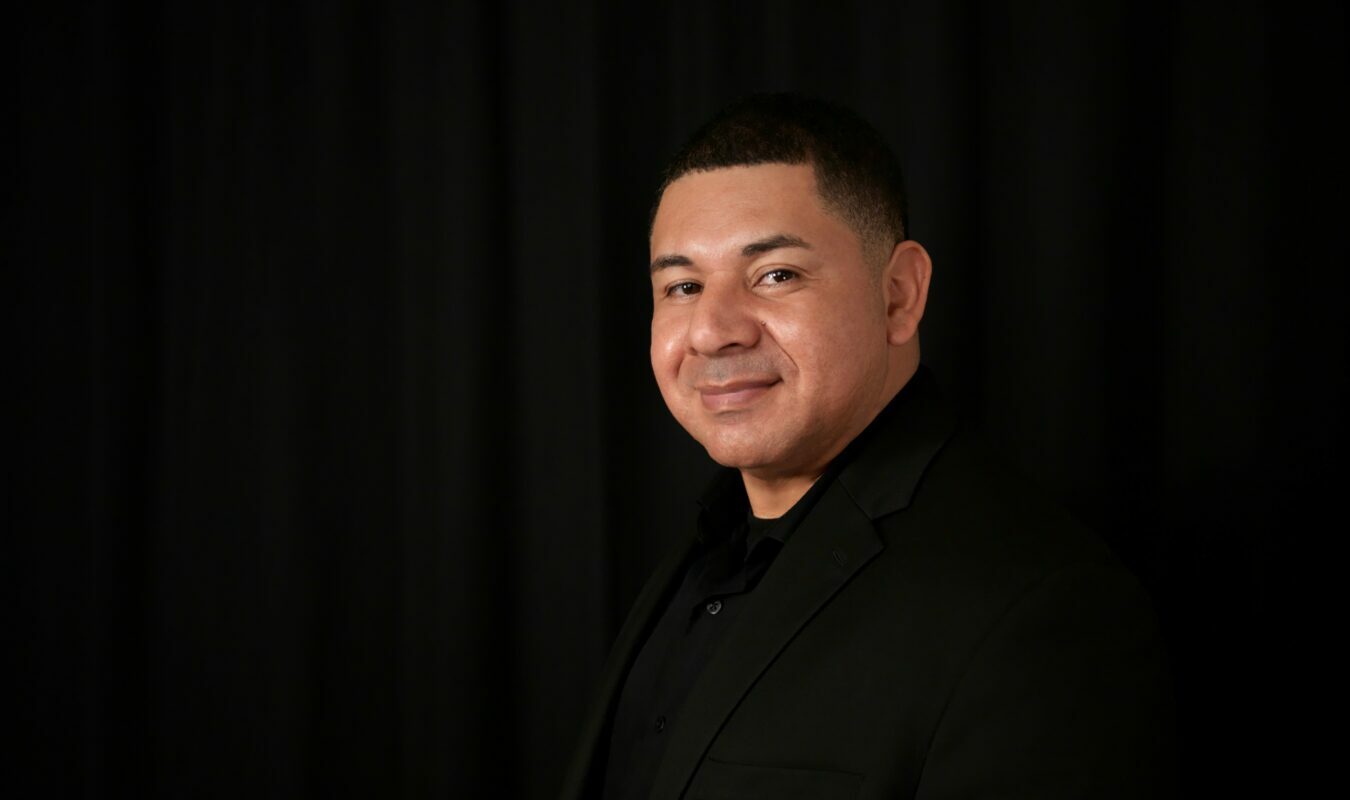
We caught up with the brilliant and insightful Shay Watson a few weeks ago and have shared our conversation below.
Hi Shay, thank you so much for making time for us today. Let’s jump right into a question so many in our community are looking for answers to – how to overcome creativity blocks, writer’s block, etc. We’d love to hear your thoughts or any advice you might have.
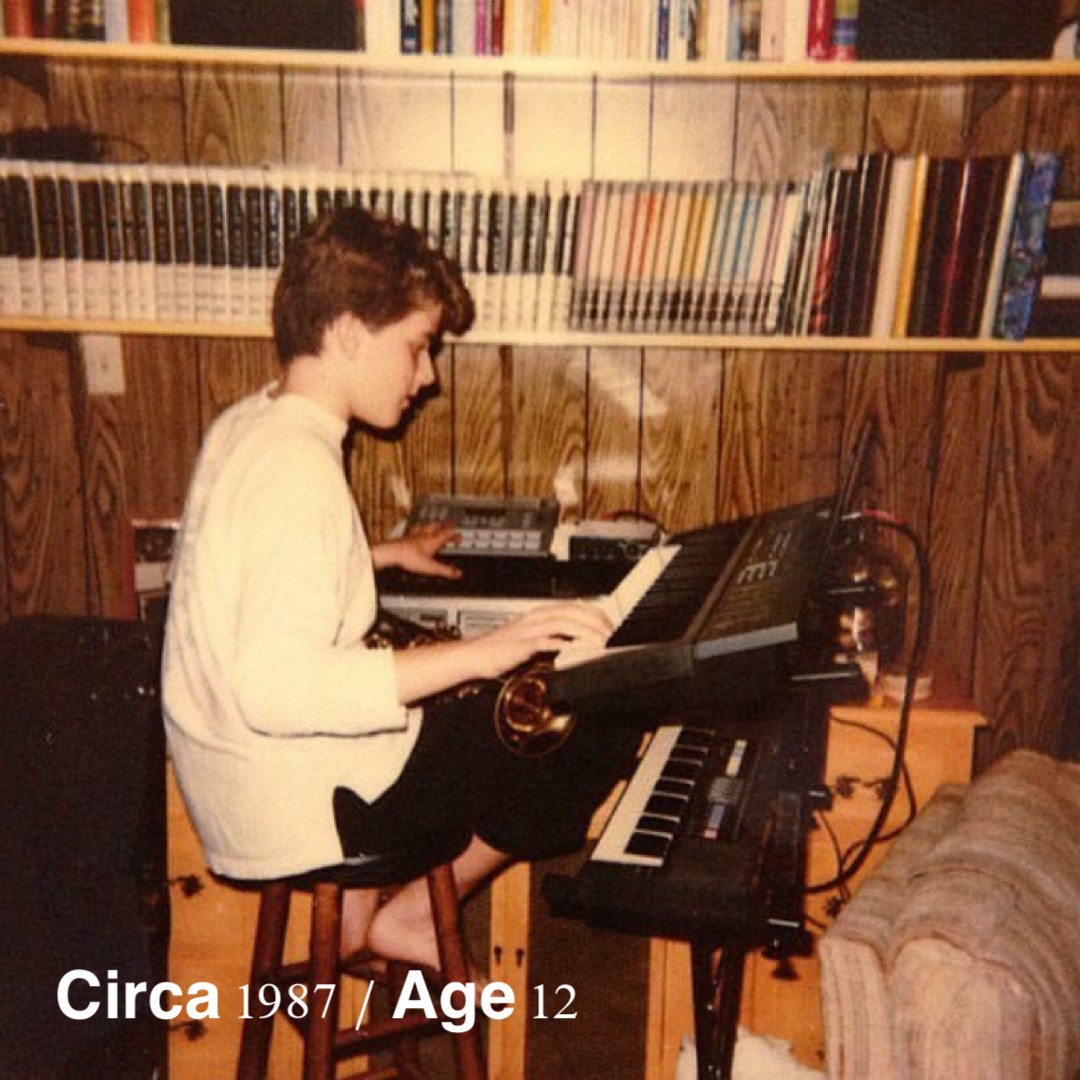
I remember those early days on my creative journey. Pen in hand and and a blank page of a notebook stared at me from the music rack on the old upright piano that it rested against. The old upright filled the tiny dining area of my first apartment. It was the same piano that I learned to make music on as a child. The piano that I spent hours playfully writing my first songs and compositions as a preteen kid in South Alabama. When I moved to Nashville in my early twenties, my parents offered that I take the piano with me. The piano wanted to provide the chords and melodies that would accompany my latest lyric but the lyric wouldn’t come. The melodies also wouldn’t come. Interestingly enough, it was not always a lack of ideas that prevented me from initiating the song. Sometimes it was the anxiety and fear that comes from simply starting. Other times, I’d begin lines and get blocked because I would self edit too early and essentially edit myself out of an idea. This early editing would produce more anxiety and leave my mind blank.
It had been many years since those early days of the whimsical, playful excitement I felt spilling my imagination onto the page. For one, the stakes were higher. I’d managed to land a very meager publishing deal with a small music publishing company and I didn’t want to disappoint. I knew my craft, I’d learned the various technical components of songwriting. Catchy title, repetitive hook, applicable structure, colorful yet conversational, alliteration, emotion…technically, I knew what needed to be there. I’d analyzed the works of other songwriters. I knew what I was up against. The excitement of that preteen kid who didn’t care about the rules and just wanted to get the music out was now a signed songwriter who was fighting fear and finding it hard to get the ink on the page.
That was twenty five years ago. I don’t often face creative block anymore. It’s been well over a decade since I experienced those early emotions that shut me down and stole my thoughts. What changed? The short answer is, I learned to rid myself of fear, specifically the fear of beginning an idea due to the voices of self criticism. Once the fear was gone, the spirit of that playful boy musician emerged and the music and lyrics flowed easily. That’s the short answer. The long answer is a little more complicated.
A few hurdles that I had to overcome to get to a place where creative ideas could flow, and their remedies, in no particular order, are as follows.
Schedule your creative time. Throughout the years, I have trained myself to compose music and write lyrics within certain time parameters. I typically schedule several writing blocks a day. My first block is often 7-10, my next block is 10-1, and the next is 1-4. I try to begin and finish a concept (song or composition) within each block. Setting time parameters provides a sense of urgency, that I believe causes me to hyper focus and think quicker. I can remember the early days of reaching the end of one session and realizing that I’d hardly gotten anything written in any form that I’d want to show anyone. After consistently making myself create within this framework, I forced ideas to come out…the good, the bad and the ugly presented themselves. The more I adjusted mentally to working within these time parameters the quicker I was able sift through ideas, identify the dross and get rid of it.
Mentally and physically prepare. It’s difficult to be creative if you are tired, physically unfit and have mental clutter. Sleep cannot be underestimated. You need it to function properly. When I was younger, I could survive with 3 1/2 or 4 hours of solid sleep per night. I could survive but I was often not at my peak mental performance. In a sense the brain needs a number of solid sleep cycles in a night to defragment, rejuvenate and reset itself. We’ve all felt the effects of a lack of sleep.
Upon awakening, I encourage you not to grab your cell of flat screen device to check messages, news and socials. If you are like me, it just puts me in a negative mood and adds to the regular anxiety that we all encounter in life. Instead, make your bed, put your clothes on and go for a walk…Without your cell phone and without your listening devices. No music, no podcasts.
I’ve noticed that when I do this I have a rush of ideas. If I’ve had a good night’s sleep and rise early to get a walk in, a powerful tone for my day is set. I tend sometimes to form too many creative ideas for the day. That’s a great problem to have.
Be consistent. I mentioned earlier that we should schedule our ‘creative times.’ Once we adapt a schedule, and everyone’s schedule will be different, remain consistent with that schedule. For instance, if you have not crossed that barrier of working full-time in your creative field and have to work a 9-5 M-F to make ends meet, perhaps your creative time is 7-10 before bed every other night and 1 full day on the weekend. You have to protect that time vigilantly. Even if you are too tired or if an out of town friend invites you out to dinner, you have to sacrifice and maintain and reserve that creative time for you. You can’t shift it around and say, “well since so and so is in town tonight, I’ll just reschedule it for tomorrow night.” That’s not a good thing to do. Shifting and rescheduling breaks down structure. A breakdown of structure leads to inconsistency and chaos. Chaos leads to the death of your creative endeavor.
A “too-early” self critique of the idea or concept should be avoided. Oftentimes, I would, physically, not allow myself to scribble down initial lyrics or melodies before I felt they were perfected in my mind. Instead of just getting an idea out on paper, or onto my laptop, I would internally critique, compare to others and edit way too early. This form of editing would prevent initial ideas and any ideas that may have flown from them. I measured these initial ideas, scratch concepts or ‘roughs’ against the finished works of the giants of songwriting.
The first thing that I had to do to allow me to break through this early self-critique, comparison fear was to simply allow myself to write down the bad, dumb, terrible ideas. I had to give myself permission to allow them to exist, knowing that they were essential as part of the process in order to get to the good stuff. This meant training myself to think, “no fear, put it all out there, even if it makes no sense to anyone but me.” I gave myself permission to use word combinations that were off kilter, to play chord patterns that “shouldn’t” belong together. It was ok. My page of brainstorming was never meant to be the final product. Letting go of early self critique and fear that emanates from it are essential in breaking through the creative block.
Emulate the Masters If you find yourself completely void of ideas, read great works, listen to great works. If you are a novelists, try doing a bit of copy. Physically put a pen in your hand, grab a notebook and copy down the lines on Steinbeck, Hemingway or Tolstoy, whoever first inspired you to write. Same goes for lyricists. Find those lyricists/songwriters that inspired you. Copy down the words of Joni Mitchel, Bernie Taupin, Cardi B (ok…many not that last one)…you get the point. Not only will you be inspired but you’ll begin to learn so much about structure and components of writing such as proper use of alliteration and metaphor, rhythm and rhyme. If you are a composer or songwriter, listen to great works of whoever you consider a master. You will become inspired and you will come back to that excitement that you first experienced when you fell in love with your particular discipline.
Play and take chances. Rules or tools of your craft are great to know. You have to learn them before you have the poetic license to take chances in your early published works, whether you be a novelist or a songwriter. You have to know what works and why it works. You must learn to structure your creative works in a manner that another human will take notice of them and relate. …That said, the rules/tools, must not become a barrier. Rules are made to be bent and broken in this sense. You must not lose the original childlike interest and excitement in your creative endeavor. If you have that sense of adventure and playfulness to your work, I can guarantee the final product will be better.
The above, helps me to keep the excitement up during the creative process. Yes it is a labor, but a labor of love. All the above brings me back to that preteen boy sitting in his parent’s living room pounding out chords on a piano and singing in rhyme and rhythmic fashion whatever came to his mind.
Let’s take a small detour – maybe you can share a bit about yourself before we dive back into some of the other questions we had for you?
Shay Watson. Producer. Artist. Songwriter. TV & Film Composer.
I’ve toured and worked with platinum selling recording artists as a songwriter and producer. I made a shift in the mid 2000s and started writing for TV and Film. My music has appeared in over 40 popular TV series and Movies. I also have a Juris Doctorate (though I do not practice law) and I am a voting member of the Recording Academy/Grammy member. I have over 50 solo albums in addition to projects that I’ve produced for other artists. I’m a multi instrumentalist and work out of my own studio located in Nashville, TN. Nashville is where I reside with my wife and two children and where I create, though most of my work is in L.A./Hollywood and artists are located in various parts of the world.
In addition to writing for and producing popular artists and bands, I’ve toured as a solo artist and in various bands. My music has achieved chart success on Billboard and iTunes Music Charts, as well as international acclaim.
Recently I’ve been producing and working with Multi-Platinum selling band, Blessid Union of Souls. This is very special to me because I was a big fan of their’s back in the 1990s when I was in college. That’s the time when the band had 8 top 40 pop hits. I was attracted to them because they were a melodic piano based pop/rock band. I was introduced around 8 years ago to the band’s lead singer, Eliot Sloan, through my long time co-writer, Bill DiLuigi. We hit it off, became friends and the three of us began writing for Blessid. I wound up producing all the material that we were writing. We’ve recorded a few projects and singles together at this point and continue to work together. I recently featured Blessid Union of Souls on my latest album, Pop Palisades. I also recently wrote two songs on Blues artist, Justine Blazer’s ‘Girl Singing The Blues Album,’ which went to #1 on both Amazon and iTunes Music charts and #18 on Billboard. I keep a regular writing/production schedule with artists from around the world. I’m big into the world music scene and have worked with various artists from Europe, The Middle East and South America. Recently, I produced a few singles with Irish Singer, Sarah Gannon who formerly toured with both Celtic Woman and Murphy’s Celtic Legacy. I love merging pop music with the music of different cultures.
I try to tie in all the bands and artists that I co-write with and produce with the TV and Film (Sync Music) world. As I mentioned, that’s where I spend a lot of time. I’ve been working successfully in TV and Film Music for over a decade now. I write and compose underscore in various genres and get pre-existing songs in TV series and movies. At this point in time, I have a catalogue of close to 10,000 tracks, (songs and compositions) that I’ve written and recorded. My catalogue spans my 25 years in the music industry.
To give you a little background on my journey, I moved to Nashville in the late 1990s. After arriving in Nashville, I did odd jobs, until I was noticed by a music publisher, who began to mentor me and offered me a small pub deal. While writing for different touring artists and getting my feet wet tracking demos for the publishing company, I met a young writer, Jacob Hulsey. He and I, along with musician, Cole Bruce, formed a group called Ten Mile Drive. We were an Acoustic Pop-New Grass Trio that had a lot of success touring. Our fans were multi generational. We were playing everything from Festivals, Colleges, theaters, to various other venues. We were together for the span of about 4 or 5 years and played close to 250 shows a year our last couple years.
We were briefly signed to a label deal. After our label deal ended, we decided to disband. At this point, I resigned with the band’s former management company, who began promoting me as a songwriter/producer to the Nashville Music Industry.
The management company began finding projects for me to write on, and also to produce. They were responsible for bringing the Word/Capitol Music Group band, Sidewalk Prophets, to me. I wrote several songs on their first album, which was a massive success. They also brought former InPop Recording Artist, James Clay to me to co-write with and produce. I began using the successes that I was having to get more projects and write with other artists for their projects. Around this time I co-founded the duo Watson & Nash. I was hungry to go back on the road for a season. I missed the audiences and performing live. Watson & Nash really opened the door for me to get into writing for TV and Film.
TV and Film Music wasn’t on my radar until around 2006. I had a good friend who had moved to L.A. and done well in that area. It made me take notice and begin to investigate that world, but it was somewhat of a secondary thought until Watson & Nash had success in that area.
Around late 2006 or 2007, I formed the duo with fellow singer/songwriter, Joe Nash. We began touring and working on our album ‘Mile Markers.’ We had the idea to write a song that could be used at sporting events, particularly Football. We along with songwriter, Bill Whyte, wrote a song titled ‘Bring It On.’ The song was, if I’m recalling correctly, picked up by Fox Sports and ESPN.
‘Bring It On’ became a door opener for me to begin talking to people who were in the TV and film synchronization (Sync) world. After establishing some great relationships and friendship with people involved in the Television and film industry my catalogue began being pitched to various TV series and movies. I began having success with my catalogue.
Once everyone found out that I was well versed in different styles of music, particularly, pop, jazz and lounge chill areas and could play a variety of instruments, they began asking me to create for specific scenes. This was a jump from trying to place my previously written songs in scenes and rather creating for the scene.
2007 to around 2011 were my resume building years. 2012-2019 were years where my music exploded onto the scene. I was very busy during this time period. At one point, I’d travelled back to my hometown and was sitting in my parent’s living room, switching through channels and happened to switch through 4 or 5 shows that were using music of mine. It was one of those weird feelings that hits you when you realize that your music is serving a purpose and being heard by millions of people worldwide.
The TV/Film score and songwriting fed into me having continued work writing with bands and artists. As the music industry as a whole began to change, more artists and their managers/labels were seeking opportunities to get music on shows and movies for both financial and exposure purposes.
As both a producer and songwriter, I’m always on the look out for new, true talent. I love working with both seasoned and new artists/songwriters. If a person feels as though they have talent, an adaptable spirit and the fortitude to withstand the challenges of an artist’s career, I’m interested in hearing them. I love finding artists with true talent and the personality to match. I do tend to avoid ‘high maintenance’ artists. Quirky is ok but difficult makes me run the other way.
Artists who are interest in working with me can audition by finding me on social media.
You can direct them to these social media platforms:
INSTA: shay_watson_musicproducer
X: @shaywatsonmusic
I respond best to Instagram.
In addition:
I’m on all music platforms. The music on there is very varied and reflective of the varied genres I work in. My Spotify artist page spans the past almost 25 years.
Looking back, what do you think were the three qualities, skills, or areas of knowledge that were most impactful in your journey? What advice do you have for folks who are early in their journey in terms of how they can best develop or improve on these?
1. Talent and knowing one’s craft backward and forward is important but almost equally important is being personable and learning great people skills.
2. Develop people skills. Strive to be a person others want to be around. Think about others, rather than constantly focusing on self. If you train yourself to think of others needs, you’ll find that taking the focus off self, ironically will provide you with success in both your private and professional life.
3. Success is subjective. Do not compare yourself to others/Your journey is unique to you.
I was recently asked how long it took me to become successful in the music industry.
That is a difficult question to answer because we have to define what constitutes success a when it come to songwriting and artistry.
For some, success is defined as making enough to support yourself or yourself and a family and get to do what you love, even though you aren’t making what say a tech worker is making. For others looking at it, if you haven’t made six figures per year you’re not successful. For some, making $60,000 a year and having your name on a ton of credits is a success. So success, in general, is subjective. That said, over this 25 year period that I’ve been in the industry, I’ve had great financial years and terrible financial years. You do have to train yourself to ‘save up for a rainy day,’ because you can easily trick yourself after having a couple of big successes to thinking that the successes will continue and the big money will always be there.
For me, I had success early on, followed by a huge failure or two, followed by success followed by another deep dark valley followed by success and a continuing upward slope. Minus the pandemic, my past decade has been successful from both a financial standpoint and an output notoriety standpoint.
In general, financially, musicians and artists have always struggled and it’s getting tougher, due to streaming and lack of fans purchasing physical products. Even the appearance of wealth and having done well financially is sometimes manufactured. I’ve worked with well known with bad label deals that are barely paying their rent or mortgages. They are touring and able to make barely enough to pay bills but not that much more.
It’s also very important to not compare yourself to others, especially when it comes to online social media. Your journey is and should be unique to you. It doesn’t need to look like someone else’s. Also, when it comes to social media, always remember that you are seeing someone else’s highlight reel. You aren’t getting the full picture. Oftentimes the full picture can look quite messy.
Okay, so before we go we always love to ask if you are looking for folks to partner or collaborate with?
As both a producer and songwriter, I’m always on the look out for new, true talent. I love working with both seasoned and new artist/songwriter. If a person feels as though they have talent, an adaptable spirit and the fortitude to withstand the challenges of an artist’s career, I’m interested in hearing them. I love finding artists with true talent and the personality to match. I do tend to avoid ‘high maintenance’ artists. Quirky is ok but difficult makes me run the other way.
Artists who are interest in working with me can audition by finding me on social media.
You can direct them to these social media platforms:
INSTA: shay_watson_musicproducer
X: @shaywatsonmusic
I respond best to Instagram.
Contact Info:
- Website: shaywatson.com
- Instagram: shay_watson_musicproducer
- Facebook: therealshaywatson
- Twitter: @shaywatsonmusic
- Youtube: shaywatsonmusician
- SoundCloud: therealshaywatson
- Other: Spotify: Shay Watson (Verified artist account) Apple Music: https://music.apple.com/us/artist/shay-watson/253791344 TikTok: @officialshaywatson