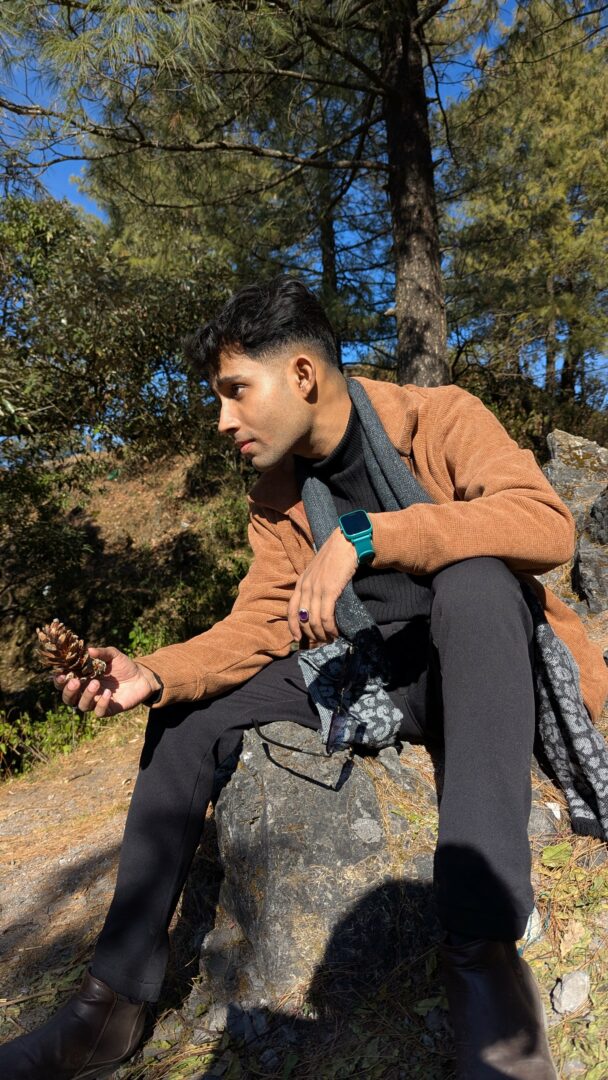
We caught up with the brilliant and insightful Tanuj Samaddar a few weeks ago and have shared our conversation below.
Hi Tanuj, so excited to talk about all sorts of important topics with you today. The first one we want to jump into is about being the only one in the room – for some that’s being the only person of color or the only non-native English speaker or the only non-MBA, etc Can you talk to us about how you have managed to be successful even when you were the only one in the room that looked like you?
The notion of being the sole person in a room is not a unique experience for me, but has been the foundation of my development. I have frequently found myself in situations where the intersection of my location, professional background and life experiences has set me apart from others. As I spearheaded various forums, councils, and creative endeavours, I realised that while trying to fit in with everybody else was difficult, it was not the path to achieving success; rather, having faith in my individuality and participating was the key.
The first lesson I learned was to treat differences as an asset, not a deficit. When you are the only one who looks like you, thinks like you, or comes from where you come from, you inevitably carry perspectives that others in the room do not. Instead of diluting those perspectives to “fit in,” I learned to articulate them clearly and responsibly, anchoring my arguments in evidence, lived realities, and ethical reasoning. This allowed me to contribute value rather than merely occupy space.
On other occasions, I have been the youngest one in the room, sitting together with stalwarts of their respective fields. Initially, this dynamic was intimidating. However, it taught me the importance of preparation and intellectual discipline. I soon realised how essential it is to prepare yourself intellectually and have enough self-control before engaging in large meetings where your seniors are going to respect your authority. I learned to listen attentively, absorb institutional memory, and then intervene with precision: offering insights that were informed, relevant, and forward-looking. Ultimately, I learned the idea that you’re never too old to be curious or capable of providing great insights.
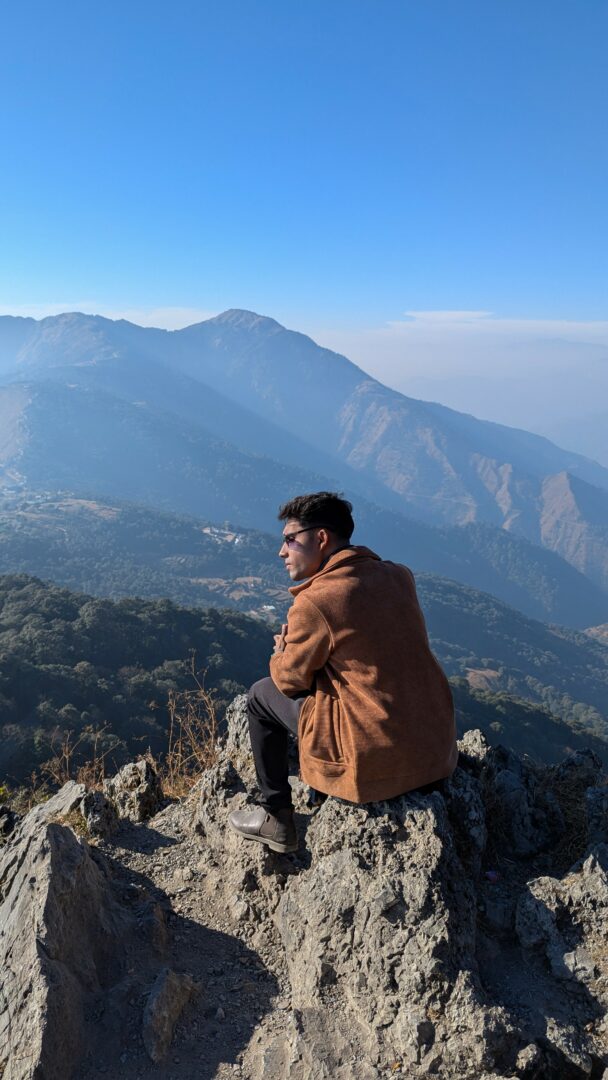
Thanks, so before we move on maybe you can share a bit more about yourself?
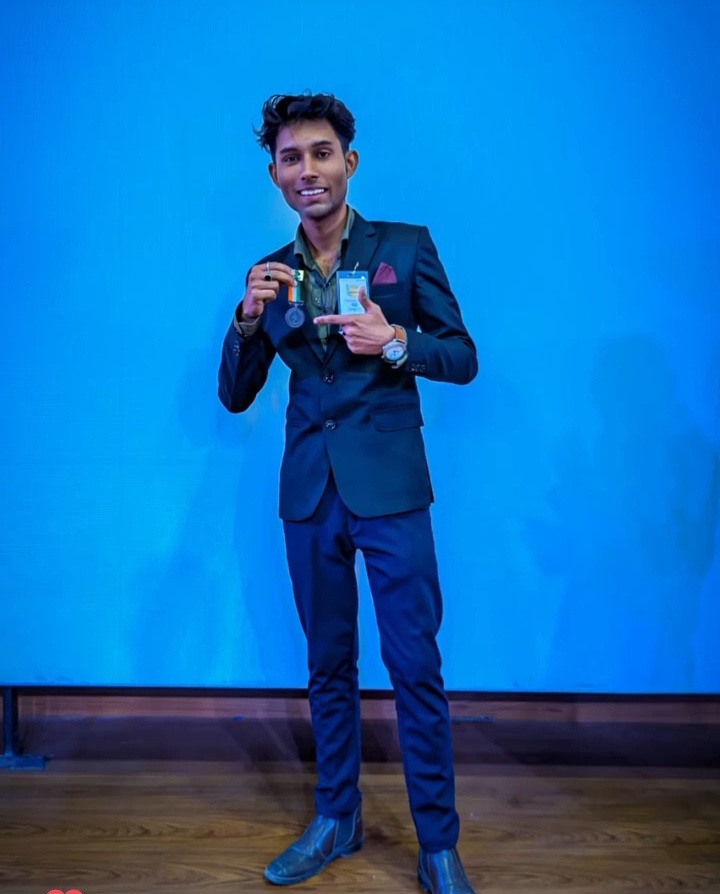
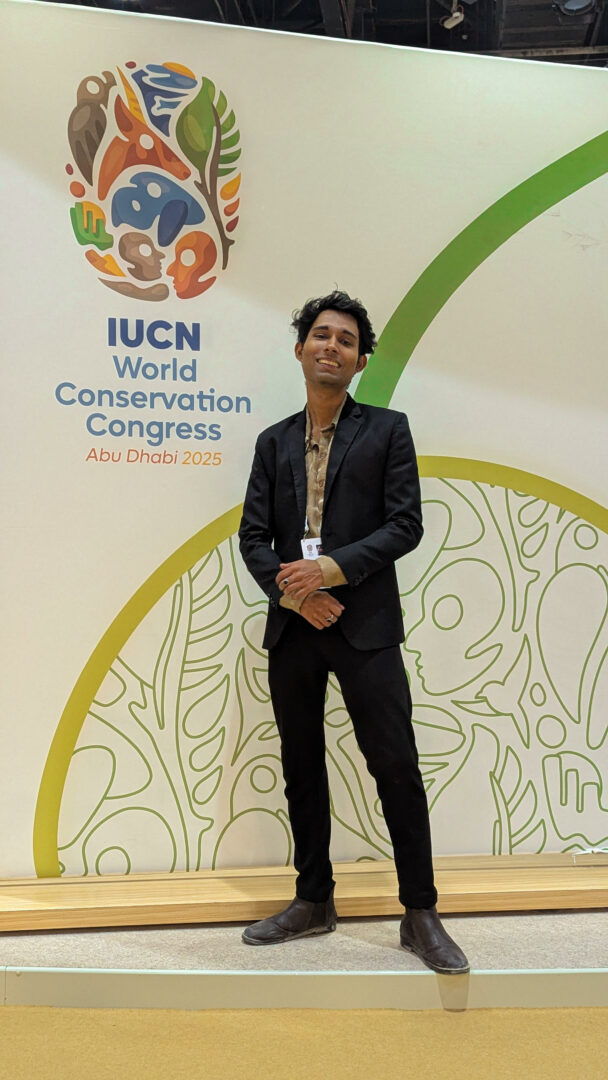
I am Tanuj Samaddar – an artist, researcher and youth activist. Recognised by the governments of India and the US, I have in my possession more than 35 international awards in the field of fine arts. I was awarded the Karmaveer Chakra Award by UNDP and Icongo in 2024, and the Kentucky Colonel Commission from the Governor of Kentucky. Additionally, I have done extensive work in the field of public policy, having worked with IIT Guwahati, the Beyond Lab at UN Geneva, Young Leaders for Active Citizenship (YLAC), the Ministry of Education, International Union for Conservation of Nature (IUCN), along multiple International Think Tanks. In my capacity, I have assisted Members of Parliament in drafting policy briefs and research decks, contributing to legislative discussions on climate resilience, youth empowerment, and environmental governance. I am a fellow of the Royal Society of Arts, the Development Studies Association, UK and the ASEAN Youth Association. This hands-on policy work, combined with my artistic advocacy, has enabled me to bridge creative expression with actionable change, influencing initiatives such as wetland conservation, which was presented at the IUCN World Conservation Congress held in Abu Dhabi in 2025.
My multidisciplinary practice combines fine arts with activism, addressing issues of climate justice, mental health, gender discrimination, and youth empowerment through illustrations exhibited globally. I am also a recipient of the Billion Acts Peace Fellowship conferred by the Peace Jam Foundation, U.S.A. Conferred upon five individuals worldwide this year, this fellowship comes with a microgrant, which has helped accelerate and boost my social impact initiatives in my state and beyond. The brainchild of this initiative is ‘Action for a Resilient Tomorrow’ (ART) – a campaign which aims to impart practical and life-skills education to the rural students who usually remain restricted to their conventional curriculum. I am also associated with ‘Beyond The Classroom’ an initiative providing sustained and last-mile educational and mentorship support to underprivileged students in the National Capital Territory (NCT) with the objective of upscaling it at the national level.
Being a member of UNESCO’s Inclusive Policy Lab and the Commission on Environmental, Economic and Social Policy (CEESP) at the IUCN has afforded me the opportunity to engage at the intersection of policy, equity, and sustainability, contributing to interdisciplinary dialogues, evidence-based research, and collaborative frameworks aimed at advancing inclusive governance and environmentally just development across diverse regional and global contexts.
In the long term, I hope to scale up my social impact initiatives from a local to transnational campaign the pilot project for which has been made feasible by a grant I have received from the Peace Jam Foundation, USA. I have launched a campaign titled ‘Action for a Resilient Tomorrow (ART) and it is my dream to see this campaign scale up with branches in all states of India and beyond while working hand in hand with the government mechanism. My vision to work at the intersection of policy and activism would allow me to accelerate the institutionalisation of a bottom up development model which prioritizes socio economic opportunities for marginalized demographics underscored by policies stemmed in target area development initiatives on historically proven effective parameters. My vision envisages an India where young hands don’t sweep remnants of neglect from train floors but wipe boards to script new ideas; ideas which will inspire generations to fight the good fight.

There is so much advice out there about all the different skills and qualities folks need to develop in order to succeed in today’s highly competitive environment and often it can feel overwhelming. So, if we had to break it down to just the three that matter most, which three skills or qualities would you focus on?
Looking back, three qualities have been most impactful in shaping my journey: intellectual rigour, grounded self-awareness, and the ability to build across disciplines and people. None of these emerged overnight; they were consciously cultivated through discomfort, responsibility, and sustained reflection.
First, intellectual rigour and curiosity.
What consistently opened doors for me was not just passion, but the ability to back ideas with depth through research, data, historical context, and ethical clarity. Whether I was engaging in policy discussions, writing, or leading advocacy initiatives, rigour helped my voice carry weight, especially in rooms where credibility was being quietly tested.
Advice: Develop the habit of going one layer deeper than required. Read beyond headlines, question assumptions, and learn to translate complex ideas into clear arguments. Early on, focus less on sounding impressive and more on being precise. Over time, precision builds trust.
Second, self-awareness and emotional resilience. Being young, underrepresented, or different in professional spaces can amplify self-doubt. Learning to sit with discomfort, without internalising, was critical for me. Self-awareness helped me recognise when feedback was about growth versus when it was rooted in bias, and resilience allowed me to persist without becoming rigid or cynical. I would suggest that you invest time in reflection. Seek mentors who challenge you honestly, not just those who affirm you. Learn to separate your sense of worth from outcomes, titles, or applause. Emotional steadiness is not a soft skill; it is an infrastructure for long-term impact.
Third, the ability to connect across disciplines and people. Much of my work sits at intersections: art and policy, youth and institutions, research and lived experience. The ability to listen deeply, collaborate across differences, and communicate with empathy made my work scalable and sustainable. Impact rarely happens in silos. Build relationships before you need them. Learn to speak multiple “languages”: academic, creative, policy, and human. Be generous with credit and intentional about collaboration. Influence grows when people feel seen, not used.
In essence, the journey is less about accumulating credentials and more about cultivating depth, steadiness, and connection. For those early in their path, my advice is simple but demanding: be patient with yourself, uncompromising with your values, and relentless in your commitment to learning. The rest follows.
Who has been most helpful in helping you overcome challenges or build and develop the essential skills, qualities or knowledge you needed to be successful?
If I look closely at the moments where I grew the most, especially when things felt uncertain: I realise that growth never arrived alone; it arrived through people.
My parents, Tapas Samaddar and Sharbari Samaddar, have been my quiet constant. They didn’t hand me solutions; they gave me something far more durable, confidence rooted in values. From them, I learned resilience without bitterness, ambition without arrogance, and the importance of standing tall even when the room feels unwelcoming. Their belief in me often came before I fully believed in myself.
A pivotal role in shaping my thinking and conduct has been played by Anurag Jain, one of my mentors at the Kiran Foundation, where I am a scholar. His mentorship sharpened my ability to question, analyse, and take responsibility for my ideas. He taught me that knowledge is incomplete without integrity, and that leadership begins with intellectual honesty rather than authority.
Then there are my friends, Upamanyu Hritam Mahanta, Jyotirmoy Mazumder, and Avinash Mallick : who made the journey lighter but no less meaningful. With them, challenges turned into conversations, setbacks into lessons, and ambition into something shared rather than solitary. They reminded me that perspective often comes from listening, and that strength is built as much in laughter and disagreement as in success.
Together, these people didn’t just help me overcome challenges; they shaped the way I approach them. The skills, confidence, and clarity I carry today are deeply rooted in their presenceand that, more than anything, has defined my path forward.
Contact Info:
- Website: https://www.tanujsamaddar.in
- Instagram: https://www.instagram.com/being_tsam/
- Linkedin: https://www.linkedin.com/in/tanuj-samaddar-frsa/
- Other: Pluc TV: https://pluc.tv/creator/tanuj-samaddar
Medium: https://medium.com/@tsamwrites/about
so if you or someone you know deserves recognition please let us know here.