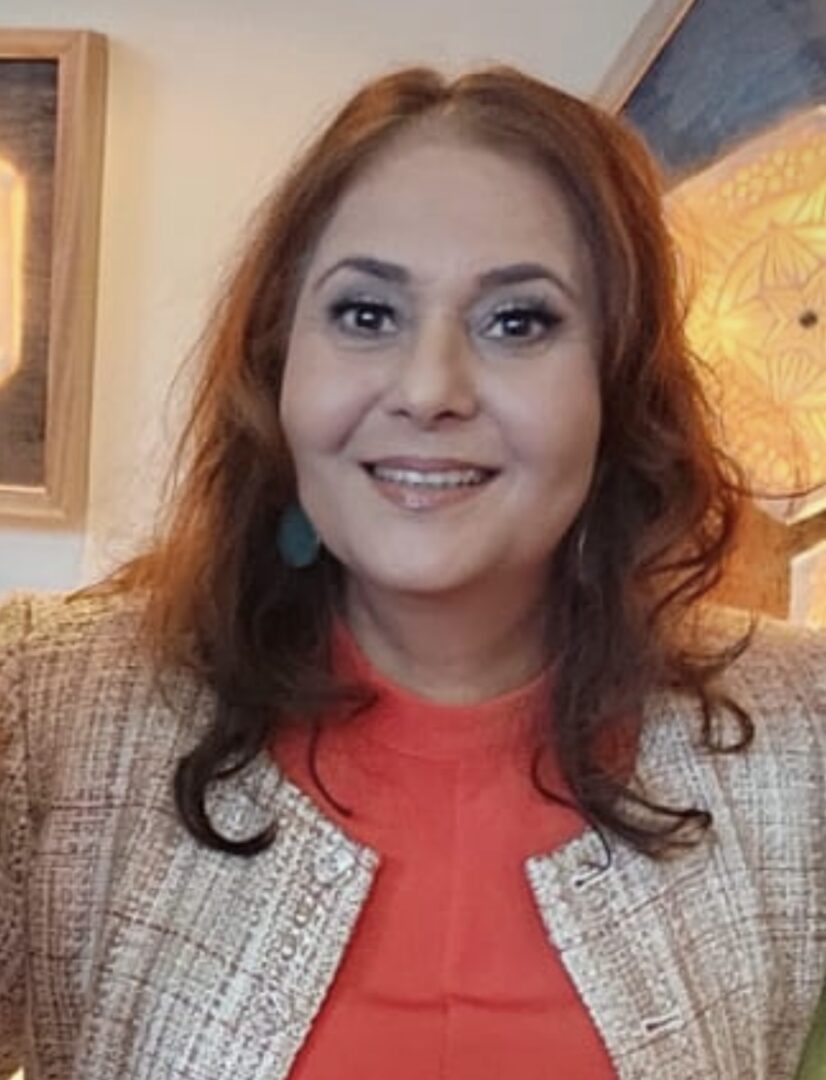
We’re excited to introduce you to the always interesting and insightful Tanya Momi. We hope you’ll enjoy our conversation with Tanya below.
Tanya, thank you so much for joining us and offering your lessons and wisdom for our readers. One of the things we most admire about you is your generosity and so we’d love if you could talk to us about where you think your generosity comes from.
My generosity is deeply rooted in the Sikh faith, the tradition I was born into and raised with. Sikhism, founded by Guru Nanak in the 15th century in Punjab, India, is built on three core principles that guide how we live and serve in the world: Kirat Karo, Naam Japo, and Wand Chhako.
Kirat Karo means earning an honest living through hard work and integrity. Naam Japo is the practice of remembering and meditating on the Divine—staying spiritually grounded in gratitude and awareness. And Wand Chhako is the principle that truly shapes my generosity: it means to share what you have—your time, your food, your resources—with others.
From a young age, I saw this in action. My parents, both Sikh, lived these teachings daily. Whether it was volunteering at the Gurudwara (our Sikh place of worship), feeding strangers through Langar (a free communal meal open to all, regardless of background), or quietly helping neighbors in need, giving was never seen as charity—it was simply our duty and our joy.
In Sikhism, service isn’t about being a savior—it’s about humility and equality. No one is above or beneath another. We believe the Divine exists in every person, so when we serve others, we are honoring that divinity. That belief has shaped every part of my identity as an artist, a mentor, and a community member.
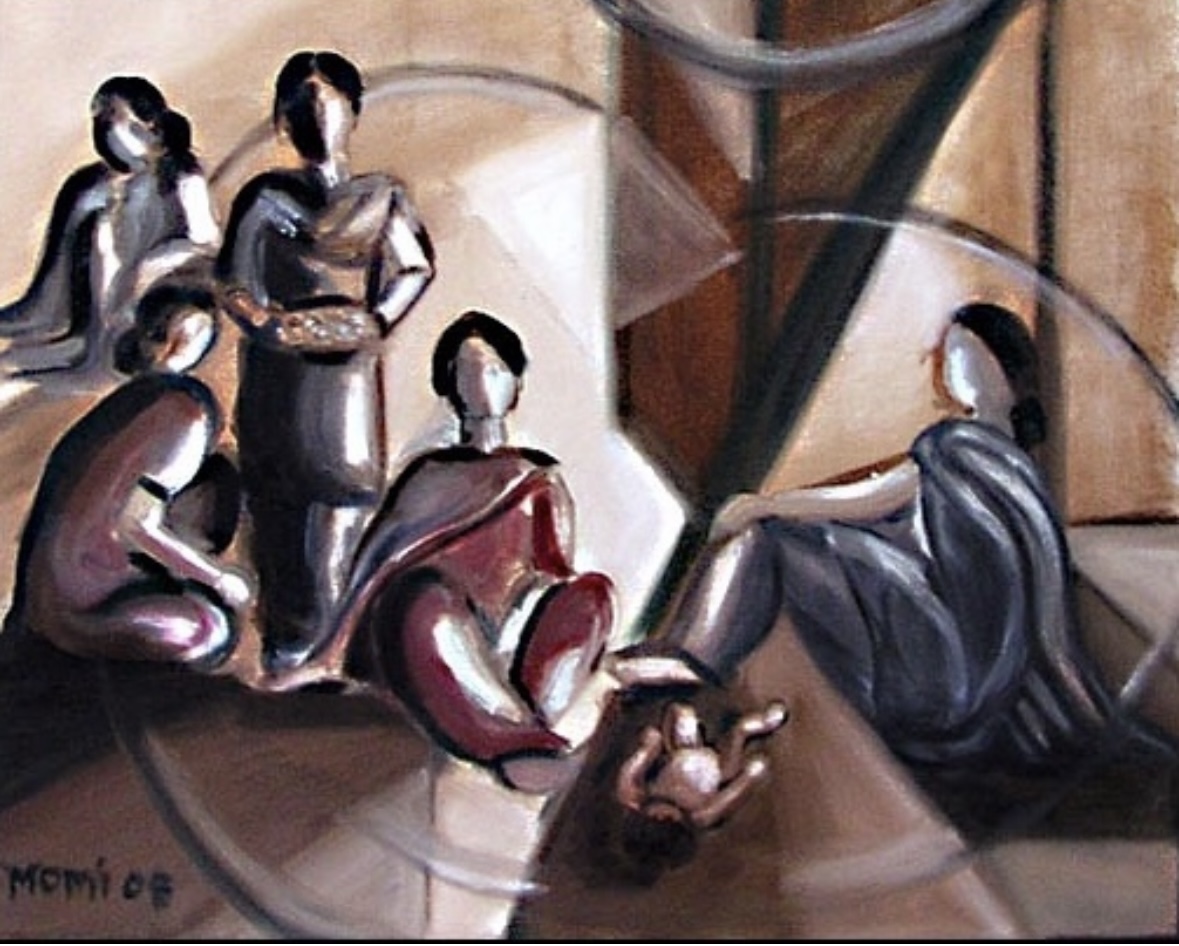
So my generosity comes from a spiritual lineage and a living tradition that sees sharing as sacred. It’s not something I turn on and off—it’s woven into who I am.Title: Comfort – 2
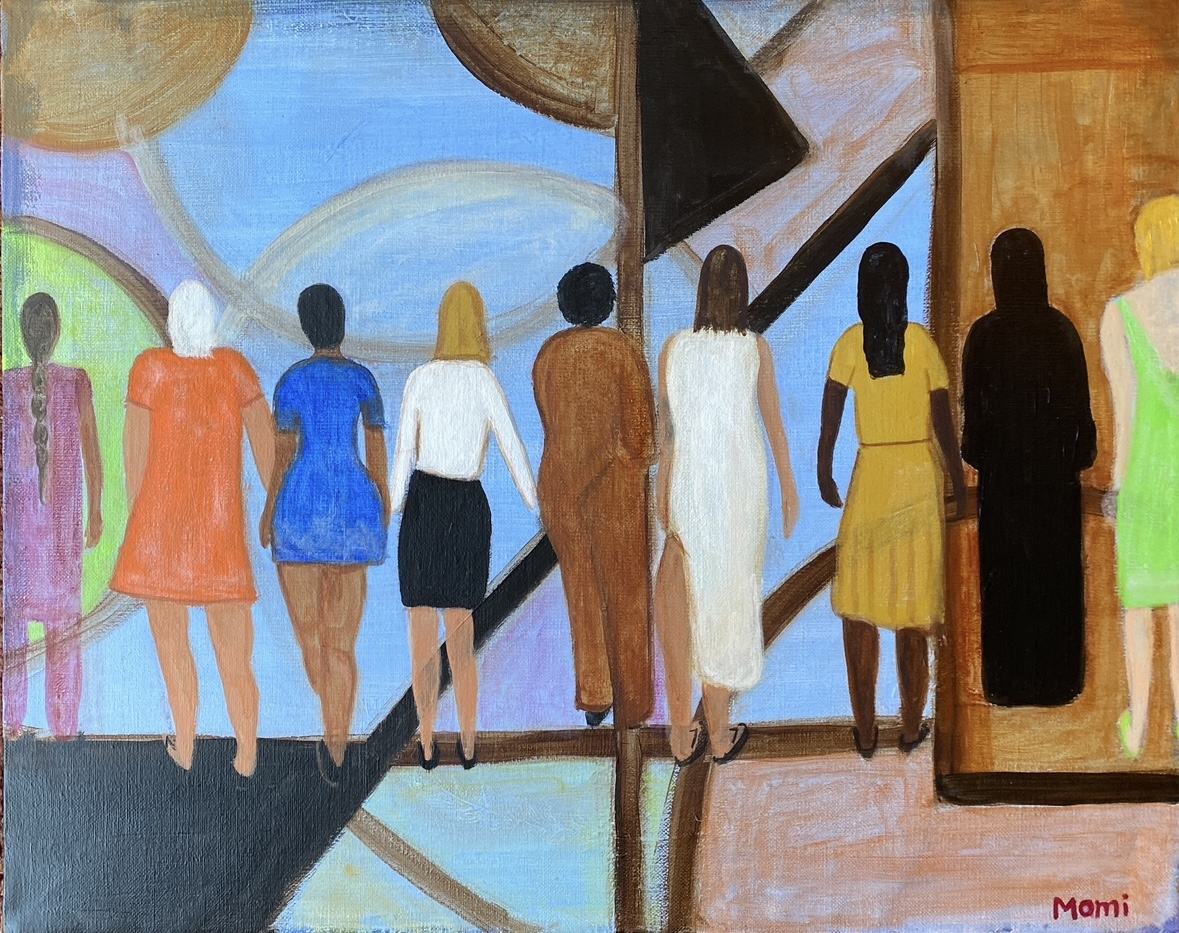
Medium: Acrylic on Canvas
Size: 16 x 20 in
Comfort – 2 is a deeply moving Cubist painting that captures a group of women coming together in an act of nurturing, support, and collective strength. They are seen comforting one another, caring for babies, and creating a circle of resilience in the midst of hardship. The composition emphasizes the power of sisterhood—how women hold each other up through life’s most difficult moments.
The angular forms of Cubism mirror the fragmented experiences many women endure, yet the figures in this piece are unified in emotion and purpose. It’s a visual tribute to caregiving, solidarity, and the unspoken bond that often forms in silence and struggle. This painting is about building community—not through grand gestures, but through the simple, sacred acts of showing up for one another.
Let’s take a small detour – maybe you can share a bit about yourself before we dive back into some of the other questions we had for you?
I am a multidisciplinary visual artist, actor, producer, and author. My work is rooted in storytelling—especially the stories that are often silenced or overlooked. Whether it’s through a painting, a film, or a written word, I aim to preserve memory, ignite dialogue, and foster healing.
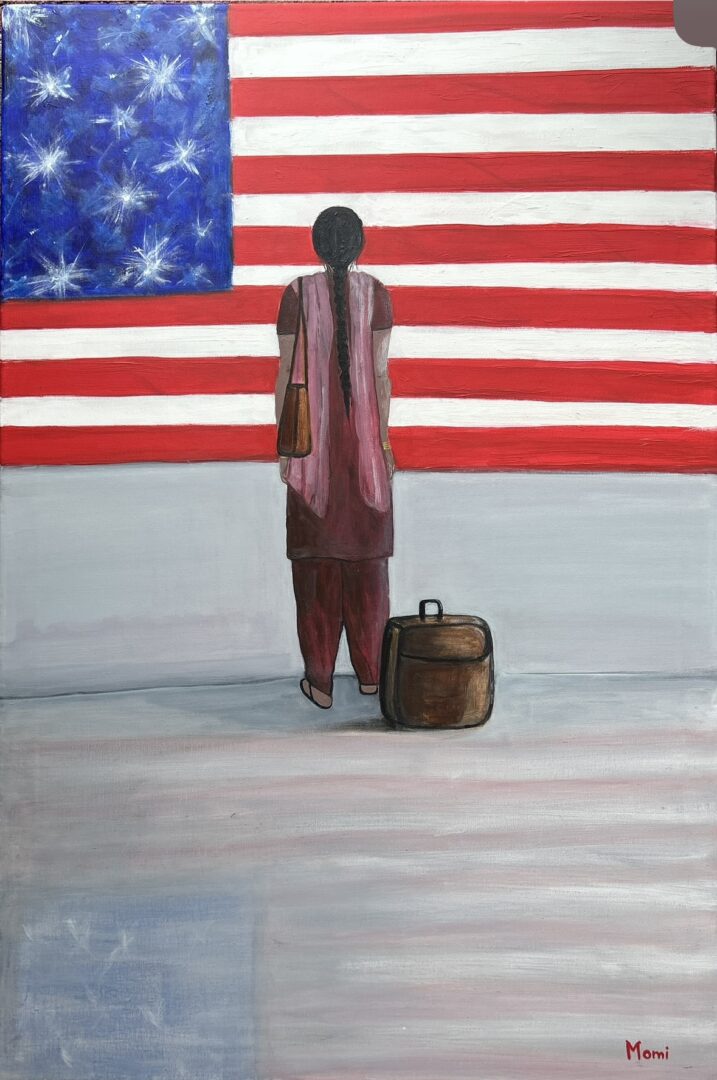
Much of my art focuses on themes of displacement, resilience, and feminine strength. I am the daughter of a Partition survivor, and that history has shaped my life’s work. I’ve created an expansive body of Partition-themed art that reflects the suffering and resilience of those uprooted during the 1947 division of India. My art carries a mission—to remember, to heal, and to build bridges between communities.
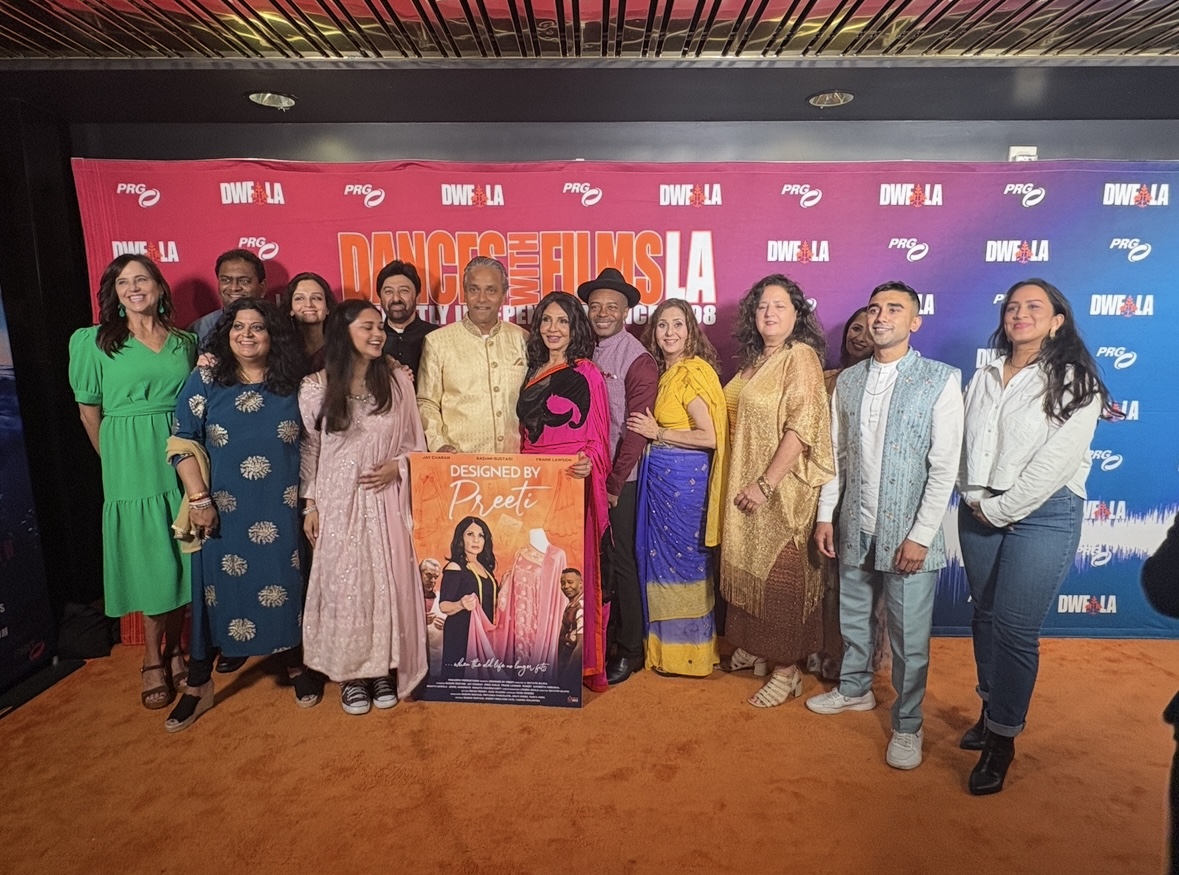
Recently, I produced a film titled Designed by Preeti, which is currently screening. It’s a powerful romantic drama that explores domestic abuse, mental health, and immigrant identity through the lens of an Indian woman’s journey to empowerment. My own paintings are featured throughout the film, serving as both visual storytelling and emotional texture. I also played the head seamstress in the film, which allowed me to step into yet another dimension of storytelling.
What excites me most about my work is how it evolves and connects. Whether I’m curating an art exhibit, mentoring young Sikh kids, writing my upcoming book Daughter of a Refugee, or launching creative community projects, my intention remains the same: to use creativity as a tool for transformation.
Looking ahead, I’m expanding my art practice through international collaborations, a new radio storytelling project, and ongoing museum and gallery submissions. Everything I do is a reflection of lived experience, love for heritage, and a deep desire to create space for truth and beauty.
There is so much advice out there about all the different skills and qualities folks need to develop in order to succeed in today’s highly competitive environment and often it can feel overwhelming. So, if we had to break it down to just the three that matter most, which three skills or qualities would you focus on?
Looking back, three qualities have guided me deeply in my journey: truthfulness, self-focus, and love for family.
First, tell the truth. Always. People may hesitate to hear it, and at times it’s uncomfortable—even painful—but truth carries a power that nothing else can replace. I’ve learned that speaking the truth, even when it shakes the room, will eventually set you free. It clears the path. It holds you accountable. And it builds trust in your work and in your character.
Second, focus on your own journey. Your life is yours to shape—not a reflection of someone else’s expectations or path. I’ve stopped measuring myself against others and instead started growing from my own life experiences, no matter how painful or complicated they may be. Live your truth, follow your passion, and take ownership of your evolution.
And third, love your family. My parents and siblings have been a source of constant strength for me. I wouldn’t be who I am without them. Through every twist and turn, my family has been my grounding force, my cheerleaders, and my teachers. To me, family isn’t just important—it’s everything.
To those just starting out: speak honestly, live boldly, and never take your loved ones for granted. These are the roots that will hold you steady as you grow.
If you knew you only had a decade of life left, how would you spend that decade?
If I had only a decade left to live, I would continue doing exactly what I am doing now—living with purpose, creating meaningful art, telling stories that heal, and preparing myself and my family for the inevitable. In Sikh tradition, we are taught not to be attached to the body. After death, it is cremated, the ashes are returned to nature, and nothing is held onto. There is no fear, no clinging—just release. I have no wishes for myself. My only desire is peace and clarity for those I love.
I’ve already donated my body for medical research. I’ve organized my documents, my valuables, and every part of my affairs, so my children don’t have to carry that burden. My gift to them is freedom from confusion. I’ve written everything down clearly—no guessing, no stress. In our family, we talk about these things. Our father was extremely organized with his end-of-life planning. He sat us down, explained everything, and gave us the gift of understanding. I’m following his example, and we’re deeply grateful for the way he handled it.
Preparing for death is not morbid to me—it’s a final act of responsibility, rooted in love. I want my children to know they are free to grieve, to live, to move forward—without being tied down by my things or my silence. That’s how I honor them, and that’s how I honor the Sikh path: with simplicity, detachment, and love. I would live with presence and purpose—loving my family, cherishing time, and leaving behind a legacy of truth and compassion.
Contact Info:
- Website: https://www.Tanyamomi.Com
- Instagram: @tanyamomi3
- Facebook: TanyaMomi
- Linkedin: https://www.linkedin.com/in/tanya-momi/
- Twitter: Tanyamomi
so if you or someone you know deserves recognition please let us know here.