We were lucky to catch up with Trevor Inkwell recently and have shared our conversation below.
Hi Trevor, thank you so much for opening up with us about some important, but sometimes personal topics. One that really matters to us is overcoming Imposter Syndrome because we’ve seen how so many people are held back in life because of this and so we’d really appreciate hearing about how you overcame Imposter Syndrome.
When I first started my journey as an artist – literally setting up my work on the sidewalk in Louisville, hoping the cops wouldn’t hassle me – I felt like a total imposter. But that feeling began to fade with every sale I made, every hard-won day. Thanks to discovering art festivals, (where you can set up your art *without* worrying about getting shooed off by police) I was able to cobble together a modest-but-fulltime income from painting alone. After a year or two of that, calling myself an “imposter” felt not only inaccurate but slightly offensive, like a false modesty.
The feeling of imposter syndrome still creeps in here and there, like an annoying-but-tolerated acquaintance from the past, but it never overstays its welcome.
Because here’s the truth: At some point the amount of work you create and sales you make, the number of patrons and colleagues you connect with, they become a mountain of evidence that imposter syndrome simply crumbles beneath. Imposter syndrome can never withstand the weight of a mass of evidence.
Let’s take a small detour – maybe you can share a bit about yourself before we dive back into some of the other questions we had for you?
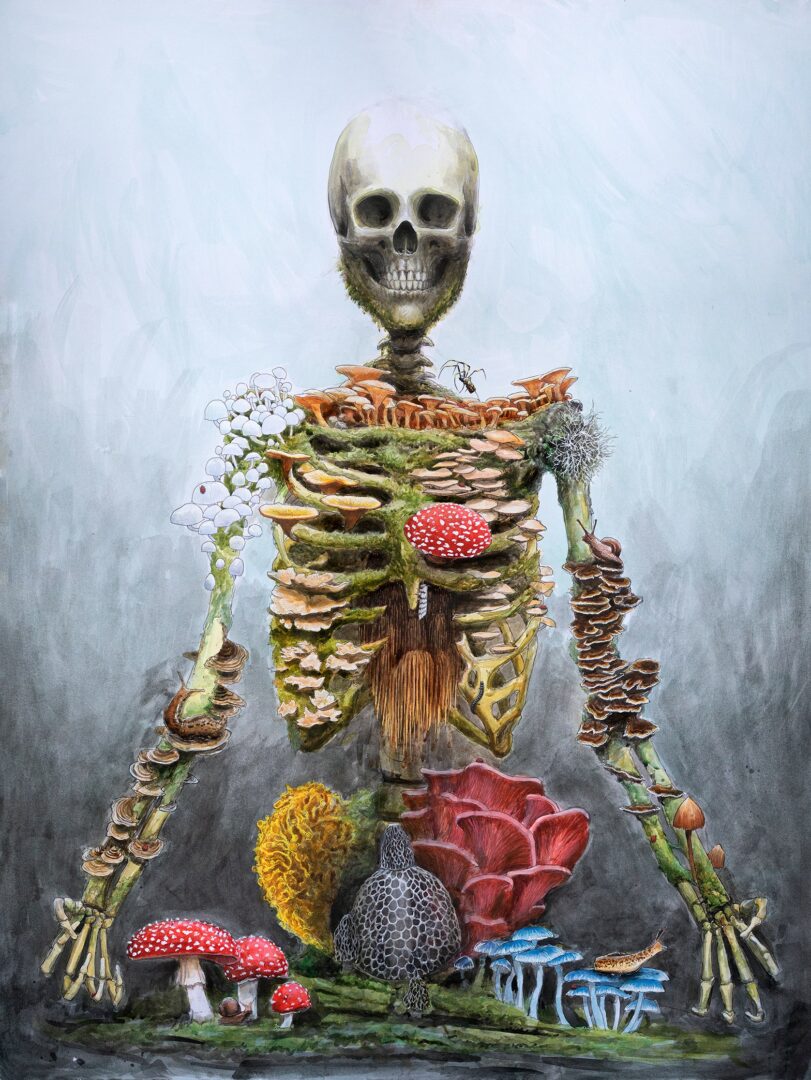
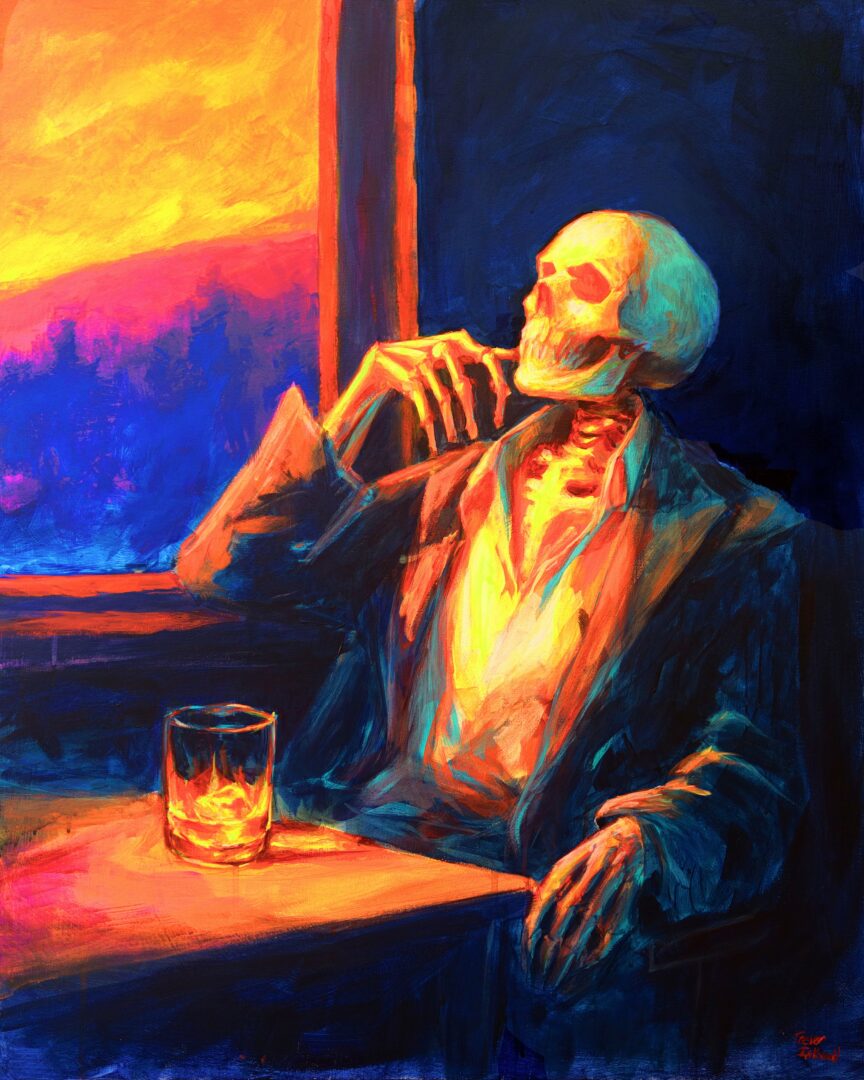
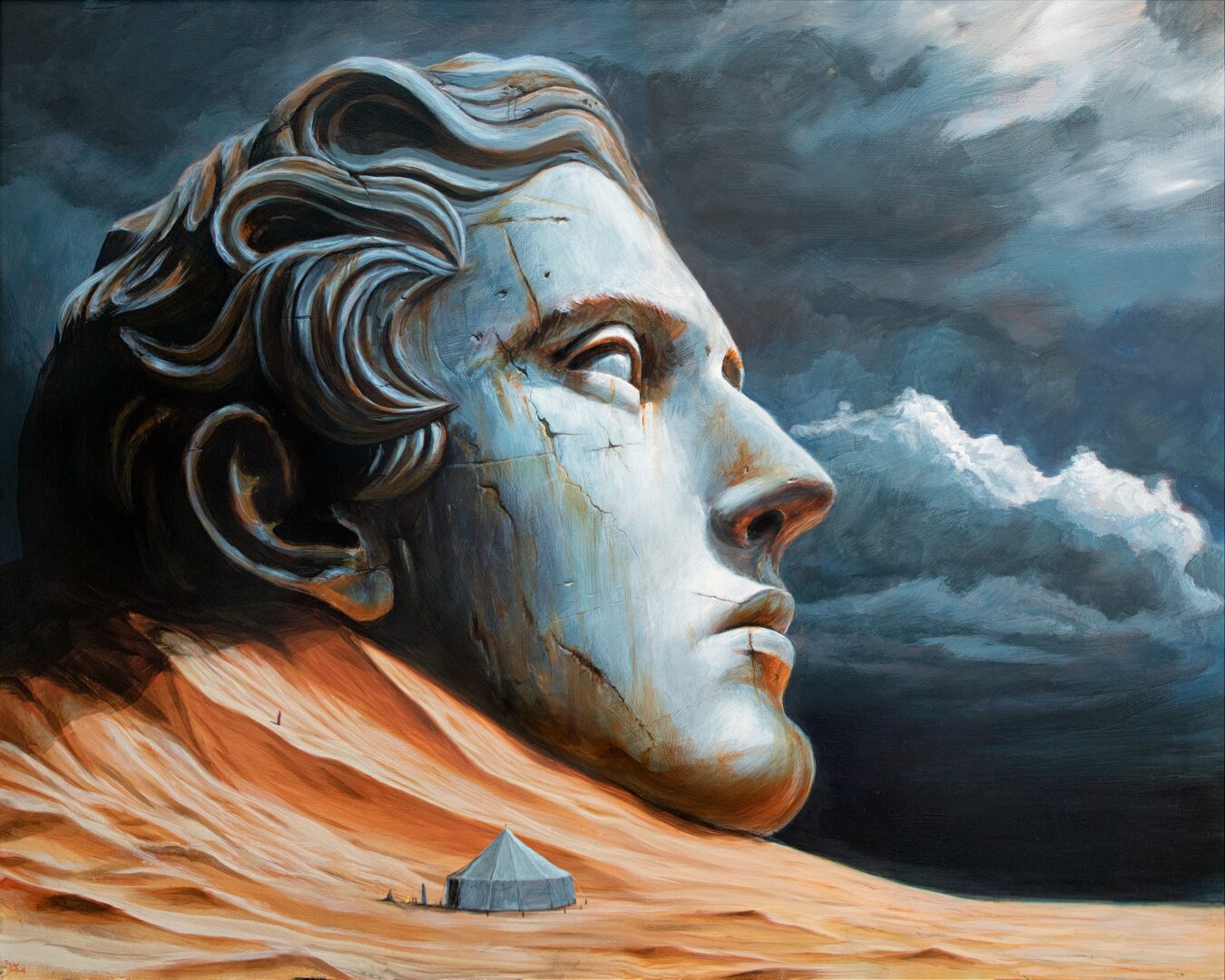
I’m a visual artist based in Louisville Kentucky, specializing in contemporary realism and illustration. I try to give a dreamlike or surreal quality to my work. My work is usually broken into series, wherein each I explore a particular style or theme and try to push it to its conceptual limit. One year I was obsessed with natural disasters, and painted tornadoes and wildfires. The next year I painted trompe-loeille Polaroids and explored retro media. My next series will play with folklore and mythology.
My work is constantly evolving and exploring new concepts and mediums, so I never get bored, and its always a challenge (which I love). This is a double-edged sword, however: on one hand it keeps me excited and engaged with the work, but on the other it makes it harder to categorize me compared to other artists. I’m not simply “the landscape guy” or “the guy who uses a lot of cerulean blue”.
But this mutability in my work allows me to show at all sorts of places and still connect with an audience, whether it be at a prestigious fine art show or at a gothed-out oddities expo.
My work definitely resonates with a niche audience, and I’m totally fine with that.
There is so much advice out there about all the different skills and qualities folks need to develop in order to succeed in today’s highly competitive environment and often it can feel overwhelming. So, if we had to break it down to just the three that matter most, which three skills or qualities would you focus on?
The three most important skills to develop starting out as an artist, or really any creative:
1. Courage. The most important skill to develop, as it tends to empower all others. You must grow your courage, however incrementally, so that you can boldly experiment, create new work, and then show that work to strangers. The courage to fail and get back up. The courage to take criticism in stride. The courage to reach out to strangers and ask them to care about something you made – that’s the *whole job*.
2. Honesty. In particular, honesty about your own work, and its place within the world, is of crucial importance. Be honest: is your work *good*? Do you even believe that creative work can be “good” or “bad”? Are you striving to improve? Are people resonating with your work? Are you trying to understand why they do, or not? Do you have something to say with your work, and if so, is it worth saying?
Every creative will have different answers to important questions like these, but regardless, each creative *must* be honest with themselves about their work.
3. A sense of freedom and play. The ability to relax, let your mind wander and allow the Muse to speak to you is of utmost importance. Without a sense of freedom and play, your creative process will burn itself out, regardless of how determined your mindset or fanatic your work ethic. Cultivating a sense of play literally *makes your ideas better*. A sense of play obliterates creator’s block.
Find an activity that allows your mind to freely wander. Then be sure to do that activity as often as time allows, for its a *necessary* part of the creative process. (For me, its hiking in the woods and talking to myself.)
We’ve all got limited resources, time, energy, focus etc – so if you had to choose between going all in on your strengths or working on areas where you aren’t as strong, what would you choose?
It sounds like a copout but I think the best creatives oscillate between both, and it all depends on what your goals are.
If you’re at a place where you want stability, material success, brand recognition, etc, you definitely need to specialize, double and triple-down on what you’re good at, what you can leverage, what you can sell. Press the advantage.
If you’re at a place where you need new ideas, looking for the next milestone, or otherwise in a slump, then it’s a good idea to branch out, try new things, and let those new pursuits inform and transform you.
People recognize Leonardo DaVinci primarily as a painter, but he was also an avid writer, inventor, anatomist, scientist, and engineer. He is an exemplar of the point. Choosing one or the other, “all-in” or “well-rounded”, is missing an important truth: if you’re a creator who wishes to express multitudes, you must *be* multitudes. You need both.
So oscillate. Spend time expanding yourself, and then spend time condensing that self into singular expression.
Contact Info:
- Website: https://trevorinkwell.com
- Instagram: trevorinkwell
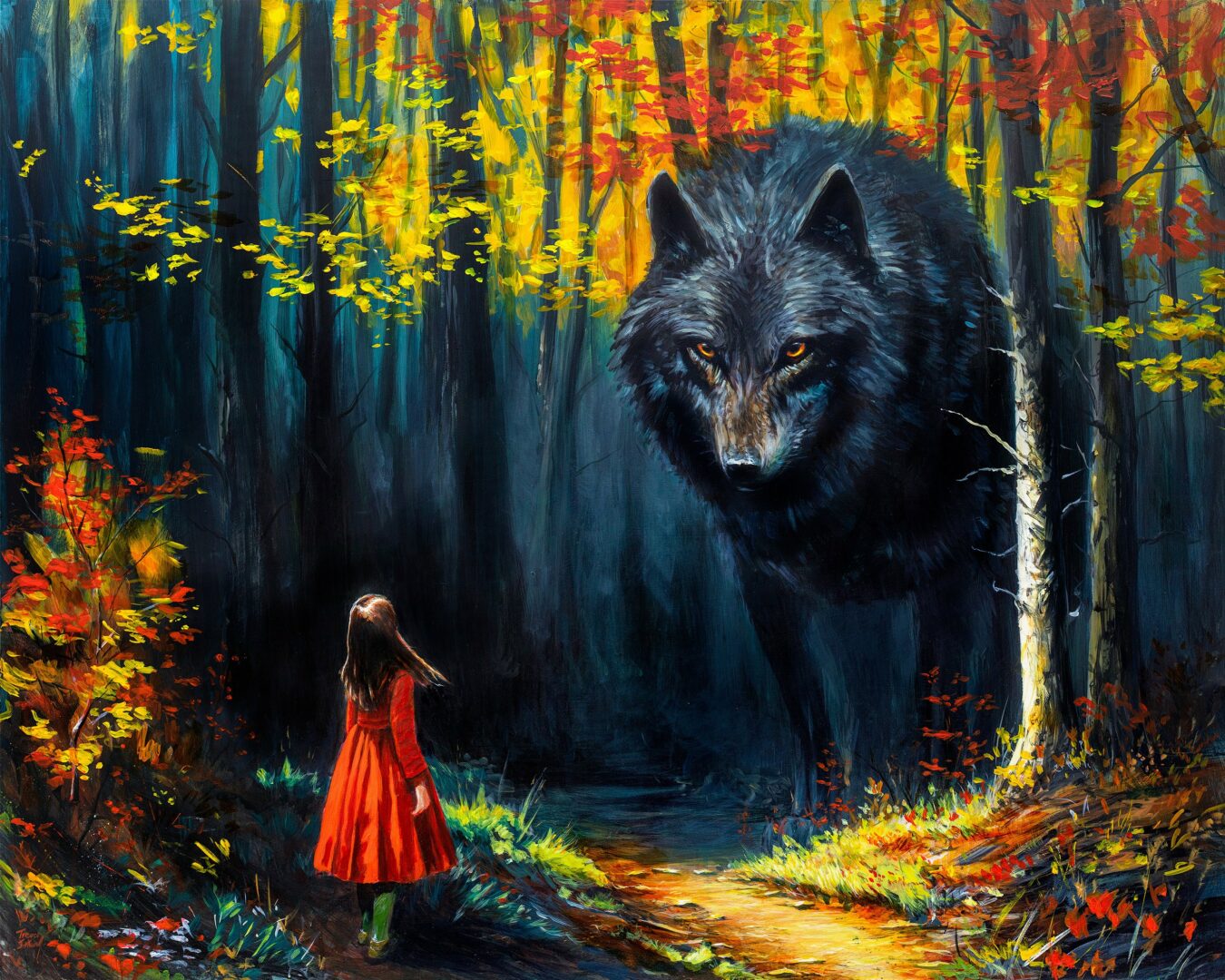
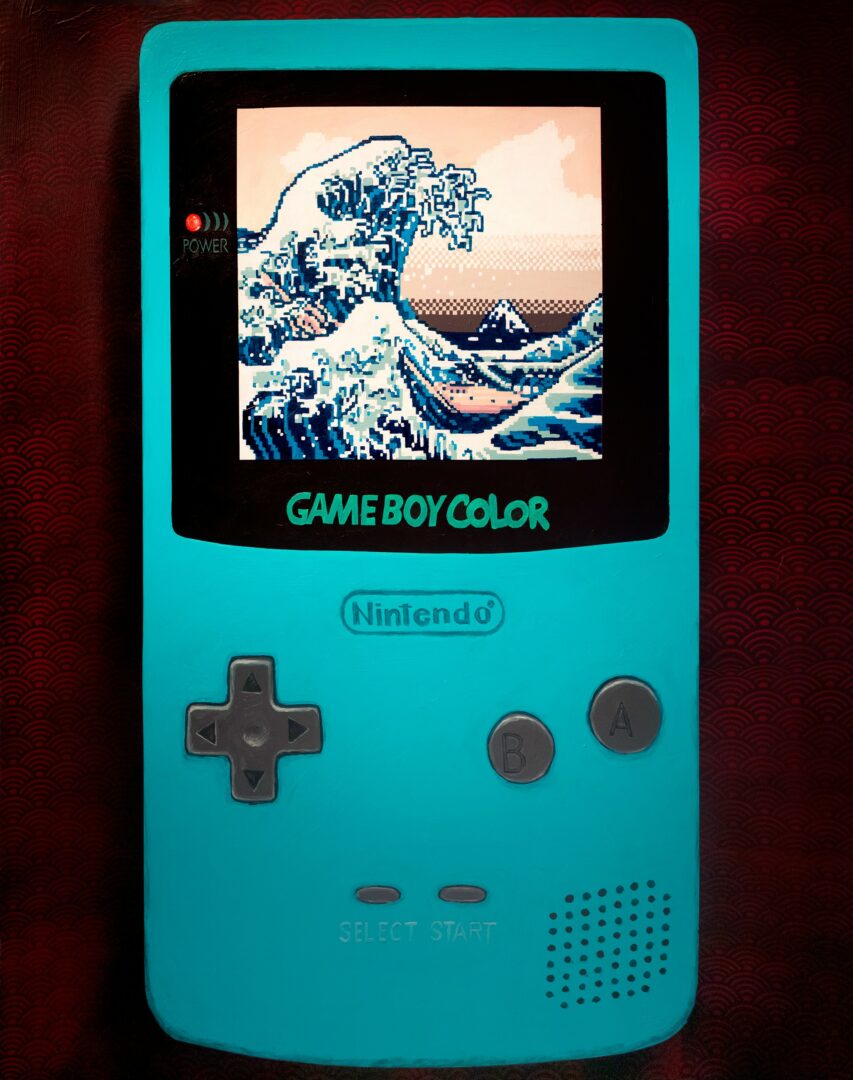
Image Credits
All images are of my work.
so if you or someone you know deserves recognition please let us know here.