We were lucky to catch up with Warren Feld recently and have shared our conversation below.
Hi Warren, really happy you were able to join us today and we’re looking forward to sharing your story and insights with our readers. Let’s start with the heart of it all – purpose. How did you find your purpose?
Have you found your passion? I used to get so sick and tired of this question. I got perplexed. What did it really mean? What were people really telling me when they said I should follow my passion?
I tortured myself in reflection. What job or career or avocation should I pursue? Do I have an intense interest in anything? Does anything drive me? Motivate me? Capture my undivided attention? What do I wish I would have done? Or should have done? Or could have done? Is something to do with design the answer? Passion! That word is spoken so often.
Find and follow your passion! Follow your passion! Follow your passion!
You get told this over and over again so many times that you begin to question whether anyone has ever really been successful, or even been substantially motivated to follow their passions. Especially those people who tell you to do so – surely, they have not actually found their passion. They must only be testing you to confirm for their passionate-less selves that no one else has found their passion either.
It seems so hard to find. A good goal, but let’s get real. Insurmountable. There are lots of things I like and get very enthusiastic about, but I can’t say I’m passionate about them. And you can’t forget you have to earn a living, whether you are passionate about what you do or not.
You hear and read about finding your passion, so much so, that you feel if you haven’t found yours, something must be wrong with you. And, certainly you think no one else has, either. The pressure, the pressure. Why is it so important to my family and friends and my teachers and my inner still voice that I be passionate about something?
Their admonitions took on different tones, from command, to pleading, to expressing concern and sorrow, to lowering their expectations for you. You see / feel/ know what they are really trying to say to you – sympathy, empathy, pity — by those variations on the memes they throw at you.
Realistically, you don’t have to wait to make a decision about a career until you find your passion!
Don’t worry, they assure you, you’ll find something to be passionate about!
You discover that not everyone finds their passion.
But if you do not, you begin to feel like a failure in life. Or that so-and-so you went to school with found theirs… and you didn’t.
The only way to stave all these folks off, as was the only conclusion I could come to, was to get a job that made a lot of money.
Pursuing money apparently was seen as a legitimate substitute for following your passion.
And that’s what I did.
For almost 40 years.
I pursued money.
Until I found my passion.
My passion for design.
Specifically, jewelry design.
In high school, I decided that my passion would be archaeology. I read books and articles about Middle East history and settlement patterns. I loved the idea of traveling. I loved history. I selected a college that had an excellent and extensive archaeology program.
That first fall semester in college, I took two archaeology classes. In one of these classes, week after week for 18 weeks, I sat through the examinations and resultant reports looking at the remains of a small grouping of houses in Iran. I saw the partial remains of some walls. An area the remains of which suggested it was a kitchen. And lots of dust and dirt and not much else. The archaeological reports were each done by teams from different countries.
From the scant evidence, the Russian report found the settlement to be communal and socialist. They based their conclusions on the positioning of the walls, the proximity of the kitchen area to the walls, and the remains mostly consisting of chicken bones. The German report found the settlement to be more democratic but still communal. Their evidence was based on the positioning of the walls, the proximity of the kitchen area to the walls, and the remains mostly consisting of chicken bones. And the American report found the settlement to be an early example of democracy and capitalism. Their evidence – can you guess? – was based on the positioning of the walls, the proximity of the kitchen area to the walls, and the remains mostly consisting of chicken bones.
I made a discovery in myself and about myself that first semester of college. Archaeology was not my passion. I changed majors. But still no passion.
I still yearned to be passionate about something, however. A goal. A Task. An activity. A career. Anything. My search took almost another 20 years. Not having a passion did not affect my ability to work and do my job. But I felt some distance from it. Some disconnection. Something missing and less satisfying.
After college, I had some great jobs. Lots of creativity. Not much passion.
I was a college administrator for a year. I was hired to organize the student orientation program. As new students arrived at the university in the fall, I created social activities, like dances and mixers and discussions. I arranged for greet and meets in each of the dorms. I worked with each club to generate their first meetings and some of the marketing materials. I set up religious orientations and services for Jewish, Christian and Islamic students. I set up orientations for women’s affinity groups, black groups, Latino groups, and many others. I wrote, photographed and published an orientation handbook and a new faces book. I even planned the food services menus for the first week. I did a lot. I loved it. It was very creative.
But not my passion.
I also had an opportunity to become the Assistant Editor of the American Anthropologist for a little less than a year. The regular Assistant wanted to go on a sabbatical. The Editor knew me and asked if I wanted to do her job while she was gone. I edited and saw to the publication of 2 ½ issues. I worked with anthropologists all over the world in helping them translate their work into publishable articles. I loved this job too. I did a lot. It was very creative.
But not my passion.
I decided to pursue a degree in City and Regional Planning. I was getting an inkling that I liked things associated with the word “design.” I liked the idea of designing cities and neighborhoods and community developments. I was intrigued with transportation systems and building systems and urban development. I was about to enter graduate training in City Planning, which meant moving from where I lived, but a family crisis came up. Physical planning – buildings, cities, roads, neighborhoods – had captured my interest. But I resigned myself, in order to accommodate family needs, to attend a graduate program close to home which emphasized social and health planning, instead.
I got a job as a city health planner, and worked for a private revitalization agency. I assisted in getting government approval for a rehabilitation center. I developed a local maternal-child health system. I guided a group of health care professionals in developing a health care plan for New Brunswick, New Jersey. I organized a health fair. I participated with other planners in commercial development and transportation for the downtown. I loved this job. I did a lot. It was very creative.
But not my passion.
I continued working in the health care field, teaching graduate school, doing consulting, government health policy planning, and, my last professional job, directing a nonprofit membership organization of primary health care centers.
Working in health care had become such a hollow experience for me, that I jumped off the corporate ladder when I was 36 years old. With a partner, we opened up a retail operation, in Nashville, Tennessee, where we sold finished artisan jewelry, most of it custom made, as well as selling all the parts for other people interested in making jewelry themselves.
My partner was the creative one, and the design aspects of the business were organized around her work. I was the business person. I made some jewelry to sell, but my motivation was purely monetary. No passion yet.
During the first few years, it was painfully obvious that my jewelry construction techniques were poor, at best. The jewelry I made was pretty. It sold well. But it also broke too easily. This bothered me. I was determined to figure out how to do it better.
This was pre-internet. There were no established jewelry making magazines at that time. In Nashville, there was a very small jewelry / beading craft community. No experience, no support. So I did a lot of trial-and-error. Lots of experimentation.
In these early years in our retail jewelry business, two critical things happened which started steering me in the direction of pursuing my jewelry design and it becoming a passion.
First, our store was located in a tourist area near the downtown convention center. Many people attending conventions lived in areas, especially California, where there were major jewelry making and beading communities. They shopped in our store, and from watching their shopping behaviors, seeing what they liked and did not like, and talking with them, I learned many insights about where to direct my energies.
Second, I began taking in jewelry repairs. It became almost like an apprenticeship. I got to see what design choices other jewelry makers made, and I looked for patterns. I got to see where things broke, and I looked for patterns. I spoke with the customers to get a sense of what happened when the jewelry broke, and I looked for patterns. I put into effect my developing insights about jewelry construction and materials selection when doing repairs, and I looked for patterns.
No passion yet, but I took one more big step. And passion was beginning to show itself on the horizon.
I was developing all this knowledge and experience about design theory and applications. Suddenly, I wanted to share this. I wanted to teach. But I wanted to have some high level of coherency underlying my curriculum. My budding passion for design saw design as a profession, not a hobby. I did not want to teach a step-by-step, paint-by-number class. I wanted to teach a way of thinking through design. I wanted my students to develop a literacy and fluency in design. As I had.
I inadvertently cultivated my passion for design over time. I did not really follow one. It was a journey. My passion for the idea of design did not necessarily match a particular job. I coordinated it with the job I had been doing. And over time, my job and my passion became more and more intertwined and coherent. For me, it was a long process. I honed my abilities. I leveraged them to create value – personal satisfaction and some monetary remuneration.
My passion became my lifestyle. My lifestyle resonated with me.
Appreciate the insights and wisdom. Before we dig deeper and ask you about the skills that matter and more, maybe you can tell our readers about yourself?
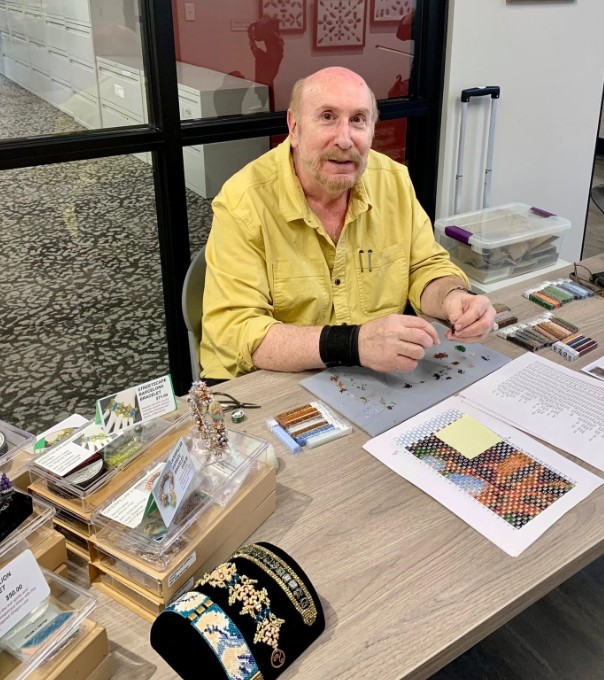
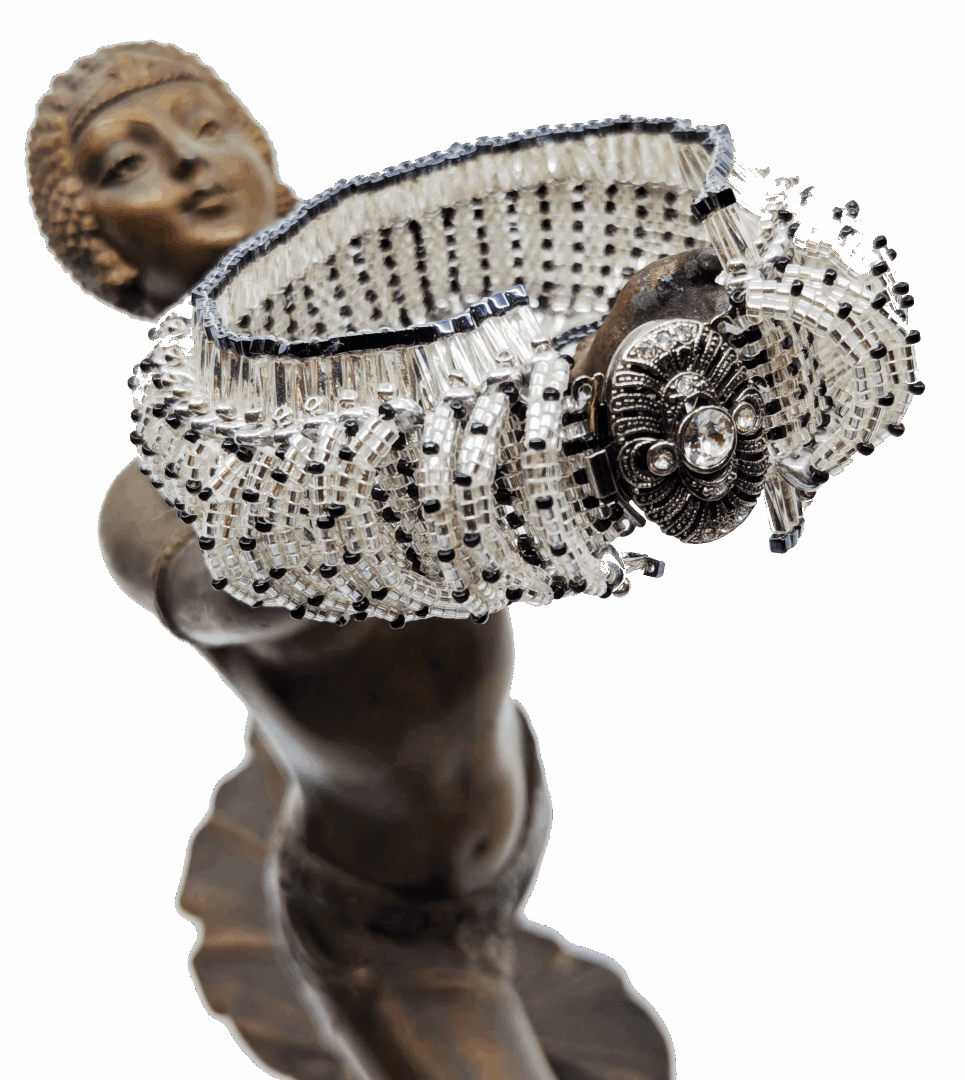
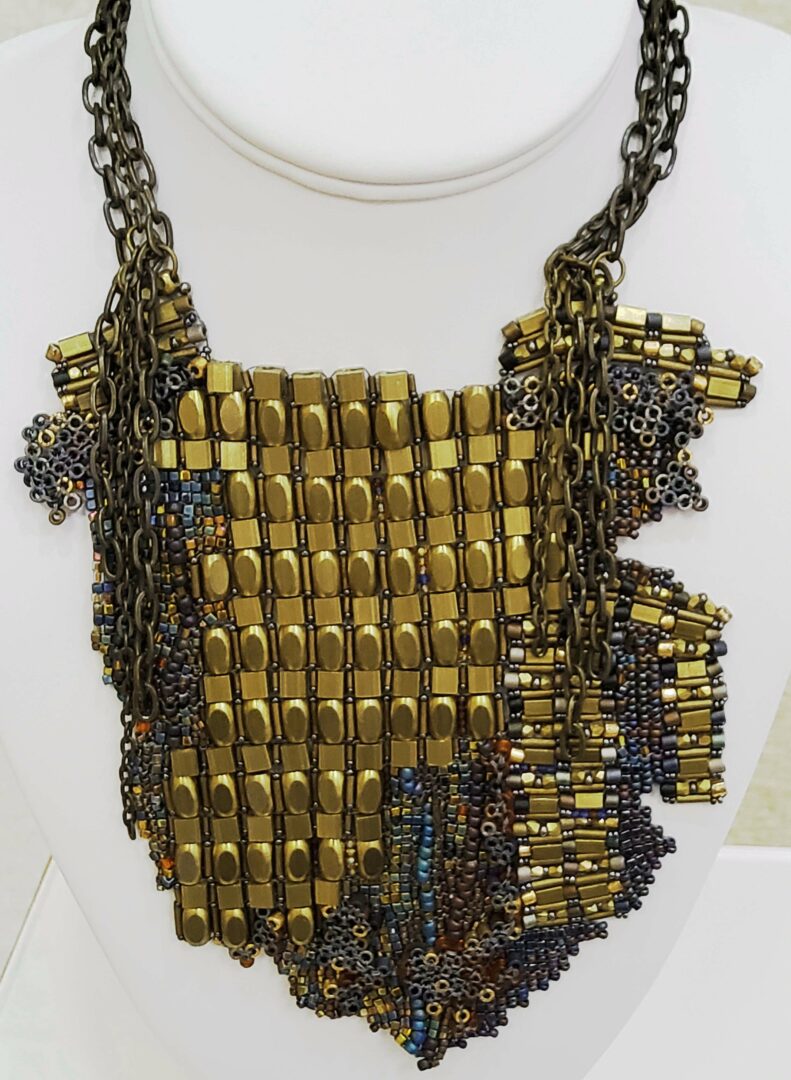
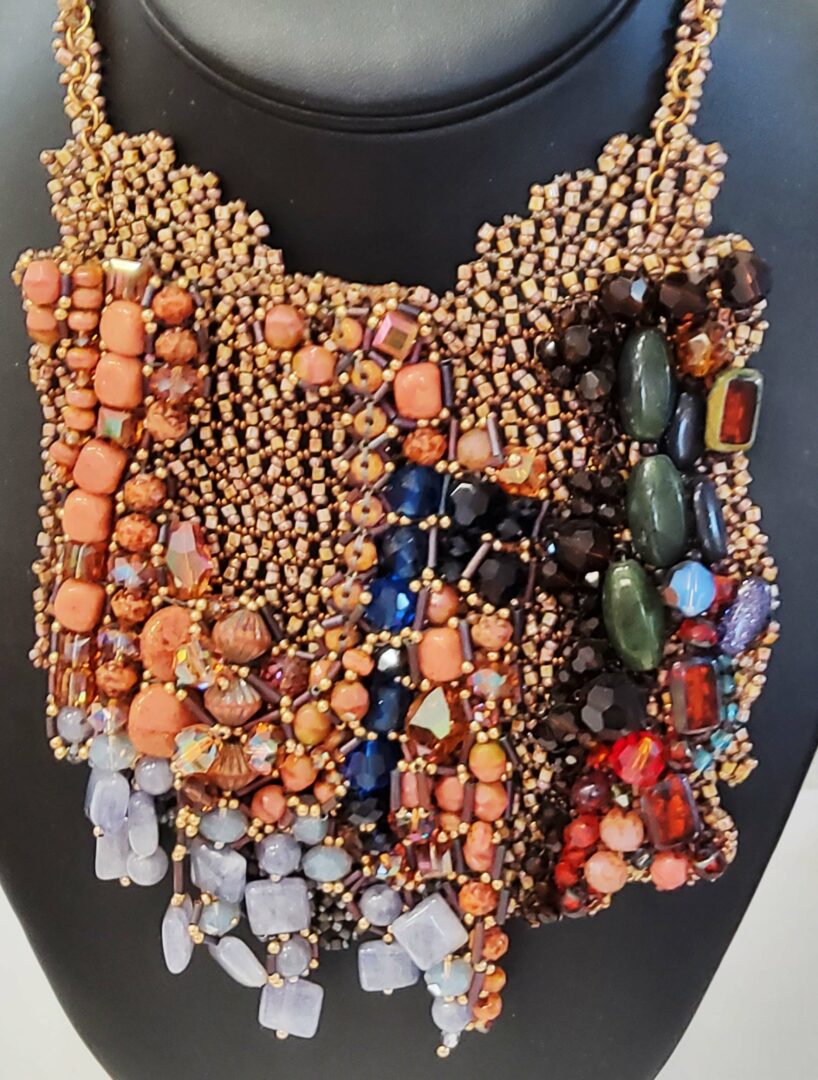
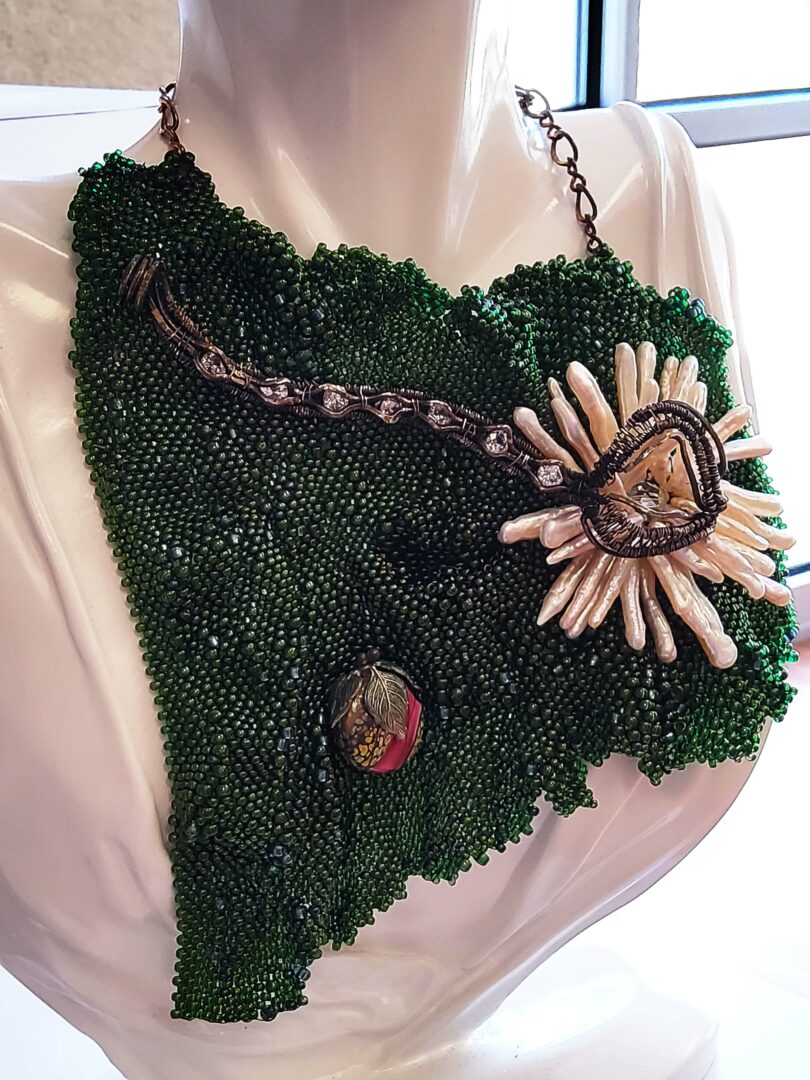
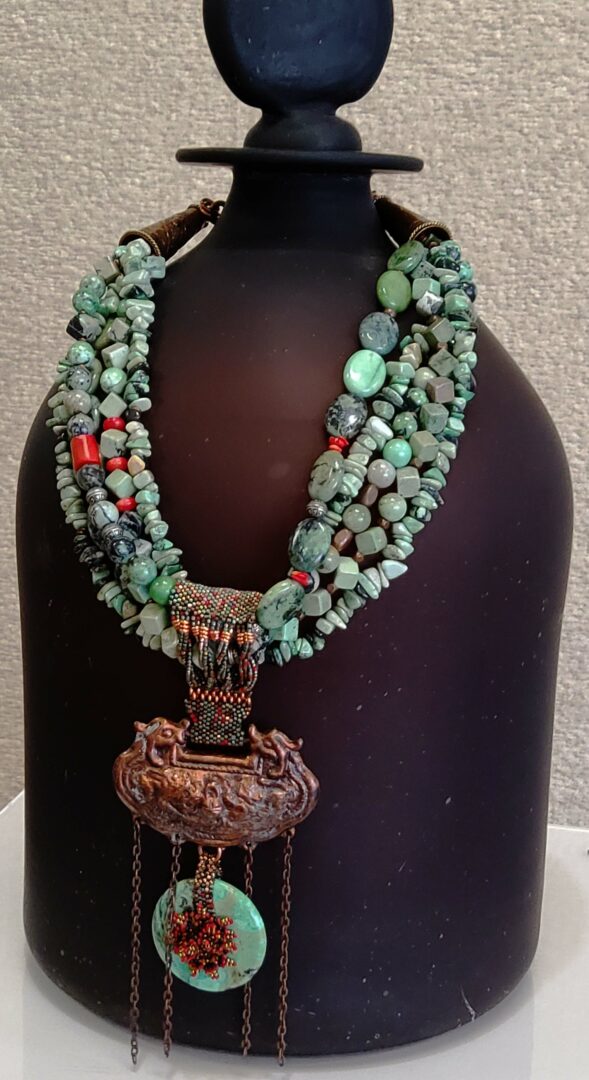
I design jewelry. For me, jewelry can only be considered art as it is worn. And that creates many challenging dilemmas for a designer like myself. Whether stringing beads, weaving beads, knotting between beads, manipulating wire, fabricating metals, it takes a certain comprehension and fluency in design. With movement, jewelry construction takes equal stage with visual appeal. It has to look good, move, drape and flow, and be durable. As the jewelry shifts positions or contexts, colors get enhanced, amplified or distorted. Compositions, on the one hand, which if static as in a hung painting, might feel satisfying and complete, on the other hand, when the object is not stationary, it’s look — whether satisfying or not — keeps changing. People attribute the qualities of the jewelry to the qualities of the person wearing it. As a designer, no matter the position of the body or the general context in which your jewelry is worn, you never want anyone viewing your piece to think it’s unsatisfying. To accommodate this, the jewelry designer has to resort to new ways of thinking through the arrangements of design elements. My pieces reflect overcoming these challenges.
One of my passions is exploring how to contemporize traditional jewelry so that it becomes alive for today’s audiences. I organize trips to deliver an immersive exploration of this theme. It is important that my guests — artisan, collector or enthusiast — experience traditional and contemporary jewelry making and designs so as to become more familiar with possibilities in technique, concept and value. My next tour is of the jewelry design culture in Istanbul, one of a handful of premier jewelry cities in the world, with a jewelry making culture going back 3,000 years. This tour is Oct 14-19, 2026. https://www.warrenfeldjewelry.com/wfjtourIstanbul.htm
If you had to pick three qualities that are most important to develop, which three would you say matter most?
1. Know that you’re not born with a passion, nor is it necessarily discoverable. Passion is something that needs to be developed over time. Sometimes this is intentional, other times happenstance.
2. You don’t have to be passionate about your job to do a good job. Passion makes doing your job more enjoyable, more motivating, more fulfilling.
3. Passion is not the same thing as creativity. Creativity is one tool people use which enhances their passion.
4. Passion sometimes conflicts with self-care, and this is something you always need to reflect upon and be aware of. Passion can lead you to become a workaholic, for example, and disrupt that healthier work/life balance.
Okay, so before we go we always love to ask if you are looking for folks to partner or collaborate with?
Currently I am the Chair of the Columbia TN Arts Council. The Council’s role is to facilitate opportunities for all artists, from visual artists to artisans/crafters to performers to writers. The challenge I face is to persuade those in city government or in influential organizations to see the arts, not as objects you would hang in a museum, but as intentions which underly planning, community and economic development. I need to collaborate and work with folks who share this alternative view where the arts are used strategically as tools in urban planning. As tools, these are used to enhance tourism, recruit and retain both residences and businesses, and to create an identifiable cultural identify for a community. I am reachable by email: [email protected]
Contact Info:
- Website: https://warrenfeldjewelry.com
- Instagram: https://www.instagram.com/warrenfeld/
- Facebook: https://www.facebook.com/warren.feld
- Youtube: https://www.youtube.com/@oddsshop
- Other: https://www.patreon.com/warrenfeldjewelry

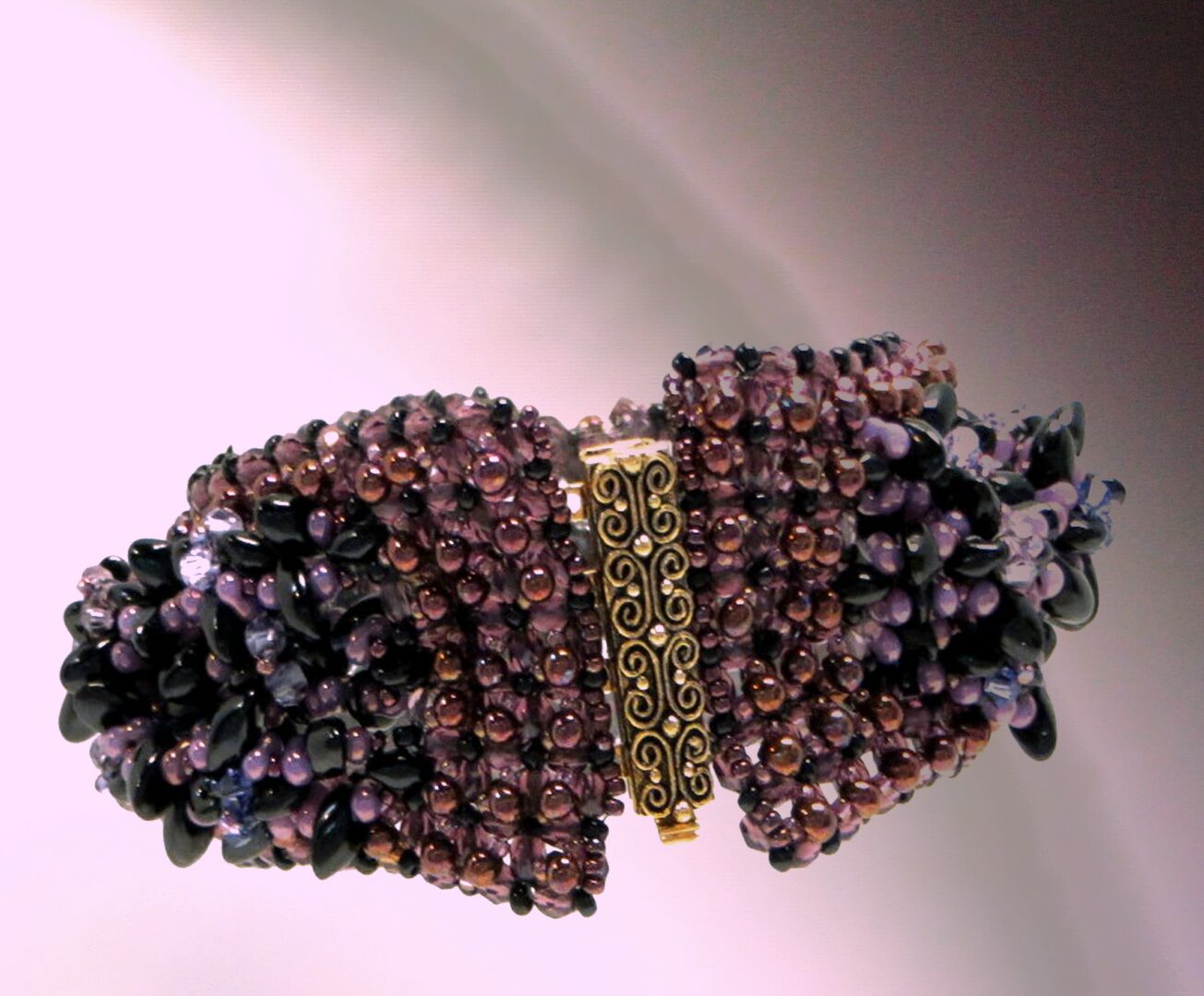
Image Credits
All images taken by me — Warren Feld
so if you or someone you know deserves recognition please let us know here.