We recently connected with Xinyuan Zhan and have shared our conversation below.
Xinyuan , so excited to have you with us today. So much we can chat about, but one of the questions we are most interested in is how you have managed to keep your creativity alive.
My creative trajectory has always been deeply shaped by mythology and fantasy. This kind of unrestrained imagination originates first and foremost from a genuine personal fascination—it feels almost like an inner necessity rather than a conscious choice.
Methodologically, I tend to look for a solid “anchor” for every act of imagination: a reliable point of reference or source of inspiration that can be researched and grounded in reality. This anchor can come from many directions. For instance, the intricate structures of human biology became the conceptual core of my graduation project. Once I establish such a tangible, research-based foundation, I feel free to let imagination grow from it—to cultivate a world of my own with confidence. Only after that do I search for the most appropriate visual language, weaving it together with the sense of wonder I ultimately want to evoke. This expressive process naturally shifts and expands depending on the audience, context, or medium in which the work is experienced.
Beyond making art, I deliberately keep myself in a state of active “wandering.” I seek out diverse fields of knowledge and cultivate wide-ranging interests, because it is often through these cross-disciplinary movements that unexpected connections emerge. I look at the real world through a slightly fantastical lens, constantly searching for sparks that can be illuminated and transformed into ideas.
I selectively follow high-quality platforms that function almost like an “external brain” for me—comprehensive visual culture platforms that curate outstanding illustration, design, photography, and public art from around the world. They help me break free from the perceived boundaries of picture books and see the vast possibilities of visual storytelling across different media.
In addition, I regularly engage with resources that may seem unrelated to illustration: natural science databases (such as NASA or biological atlases), archaeological reports, architectural journals, and analyses of classical music scores. These inputs form the structural backbone of my work. They offer raw, minimally aestheticized forms, systems, and logics—an invaluable reservoir of materials when I translate abstract concepts into visual imagery.
Finally, I intentionally participate in high-quality lectures, conversations, and workshops, which provide crucial “external perspectives.” Deep immersion in personal creation can easily lead to cognitive blind spots. Dialogues with practitioners from other disciplines often surface questions and feedback that reveal what I cannot see on my own.
Thanks for sharing that. So, before we get any further into our conversation, can you tell our readers a bit about yourself and what you’re working on?
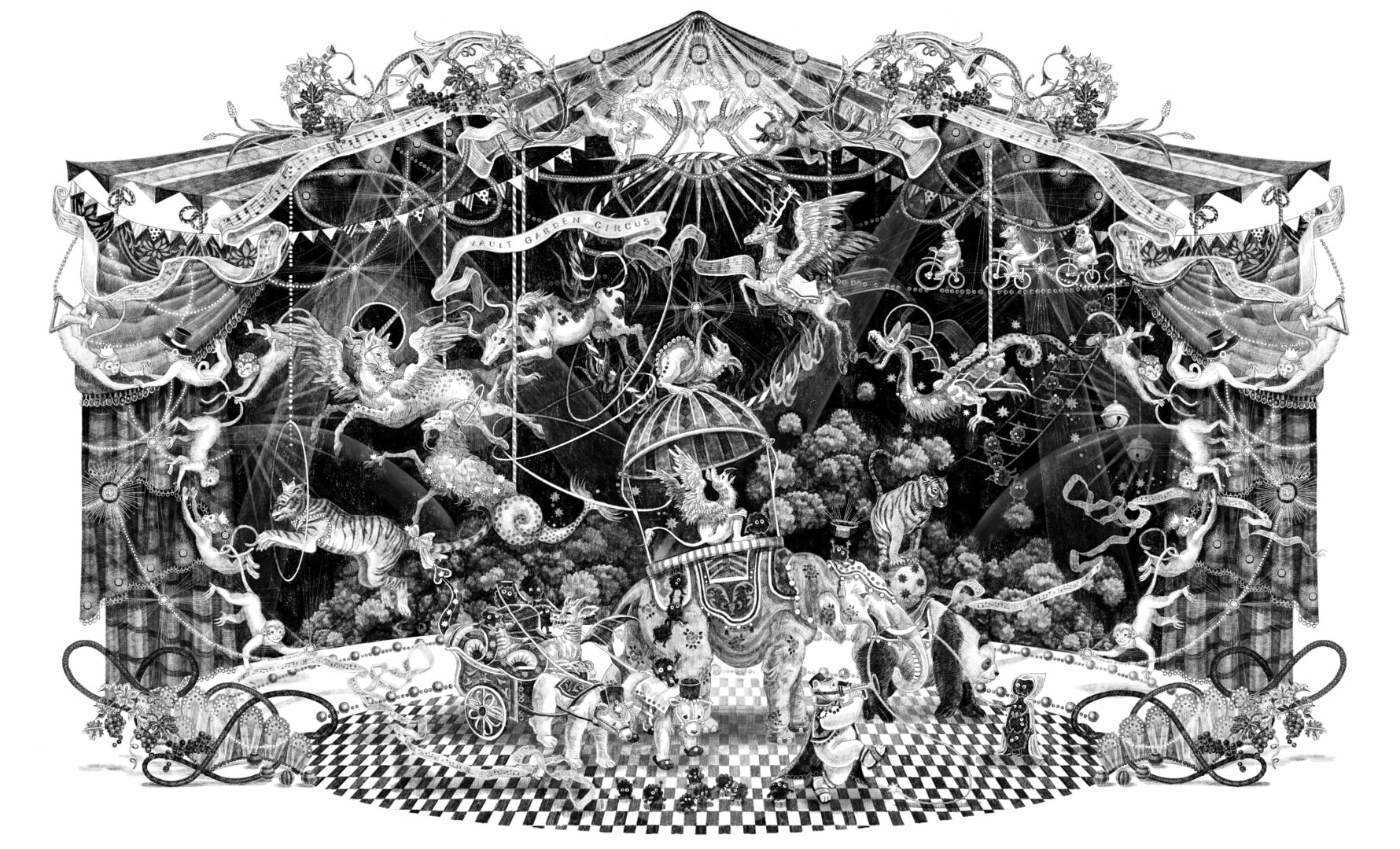
At the core of my practice is the construction of visual narrative systems that make abstract concepts, inner experiences, or complex information visible, navigable, and emotionally resonant.
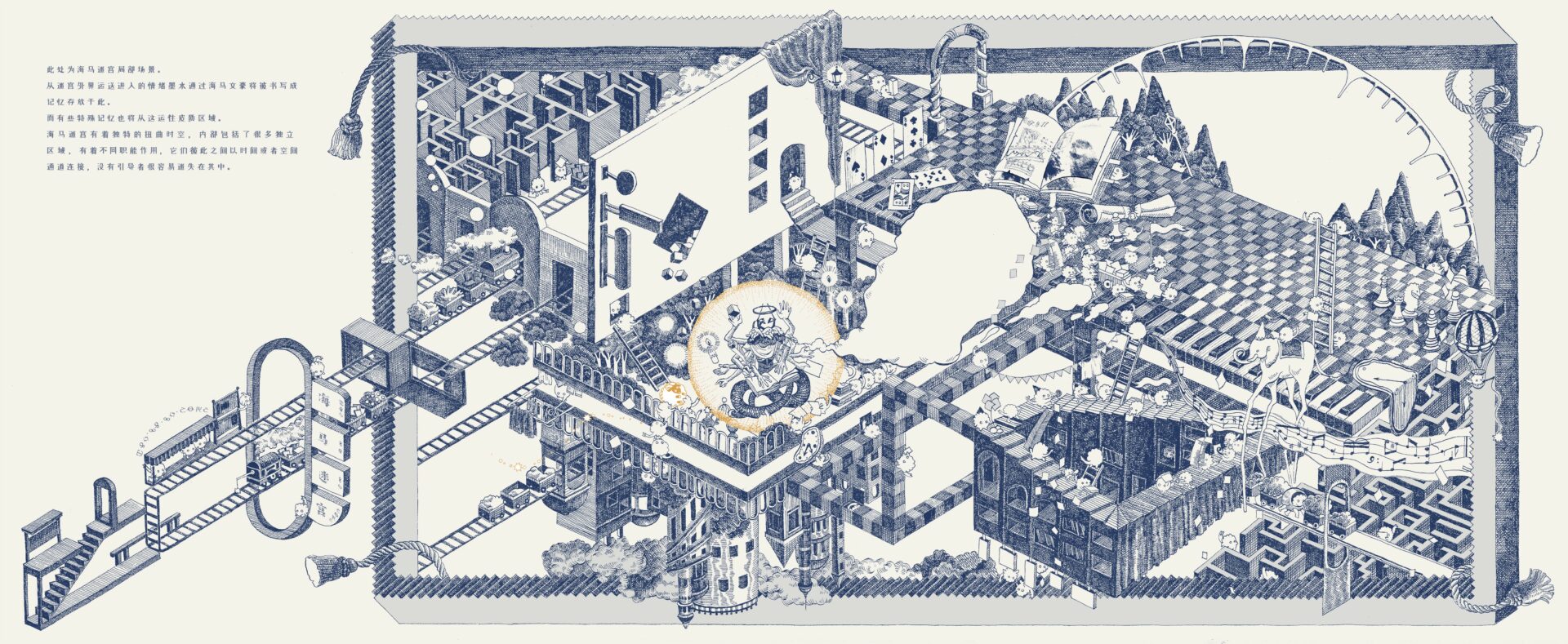
In my picture book practice, which serves as both my intellectual foundation and spiritual home, this approach is most evident. From A Guide to Traveling Inside the Skull, a metaphorical exploration of cognitive ecology, to Body Resonance (currently in progress), which investigates bodily perception, and The Changxin Palace Lantern, which reactivates the vitality of cultural relics—my picture books revolve around one central pursuit: transforming invisible mental processes, historical memory, and lived experience into “cognitive maps” with internal logic and aesthetic order. These works are not merely stories; they are tools for understanding the world and oneself in new ways.
In cultural and public projects, my role often involves translating and activating collective memory. Participating in projects such as the visual design for the Beijing Winter Olympics opening ceremony or illustrated books centered on cultural heritage has been a form of rigorous training in “public narrative.” The essence of this work lies in translation and transmutation—converting shared cultural memory, national emotion, or historical information into contemporary visual moments and narrative structures that can transcend linguistic and cultural boundaries. This requires both an archaeologist’s depth of inquiry and a designer’s precision in creating points of emotional resonance.
In cross-disciplinary commercial and public art contexts, I aim to expand both the scope and function of storytelling. Whether illustrating mathematics textbooks or contributing to brand spatial art projects, these experiences train me to practice creative narration under constraints. Images must be accurate and aesthetically refined, but also capable of guiding emotion, shaping atmosphere, and sparking imagination within strict frameworks. These projects have reinforced my belief that visual storytelling is everywhere—it can function as a pedagogical tool or as a spatial emotional system. At its core, it is a way of organizing information and feeling effectively within a given context.
What excites me most about this work is finding the ignition point between absolute rational structure and absolute poetic freedom. It feels simultaneously like solving a puzzle and dreaming a dream. Searching for the most fitting visual metaphor for a philosophical idea or a historical fragment demands logical rigor, structural thinking, and systemic reasoning—yet the moment when an image finally acquires beauty and soul is driven purely by intuition and poetic impulse.
More broadly, I hope my artistic career can be understood as an ongoing exploration of “cognitive friendliness.” I am interested in using the immediacy and gentleness of images to soften things that appear rigid, abstract, complex, or easily overlooked—whether they belong to the inner psyche, scientific thought, historical discontinuities, or the subtle signals of our own bodies. My goal is not to simplify these subjects, but to make them more approachable, perceptible, and thinkable.
In this sense, my body of work can be seen as a series of “friendly cognitive tools”:
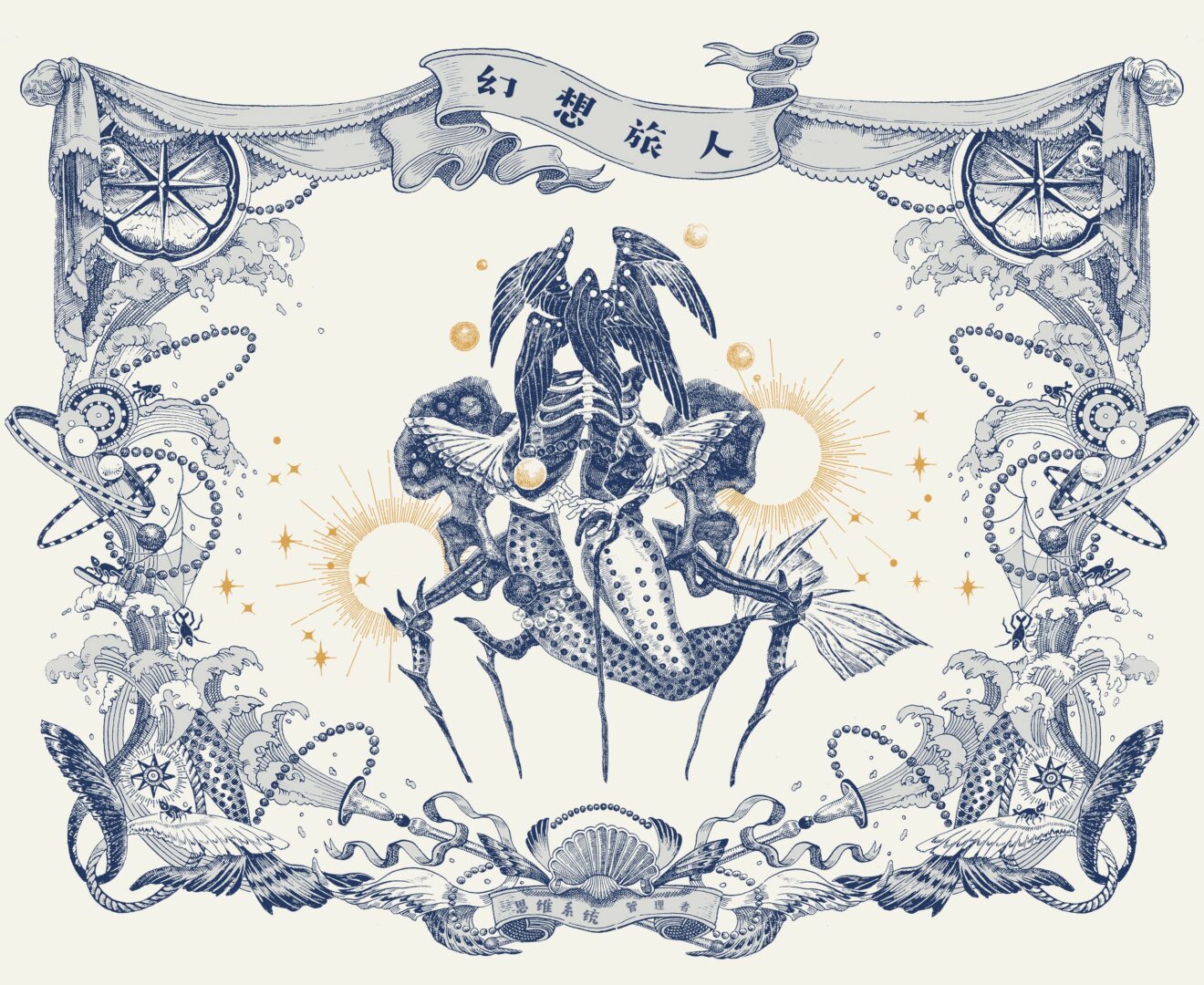
A Guide to Traveling Inside the Skull — a travel manual for the inner brain and mental world.
The Changxin Palace Lantern — a breathing window into dense history.
Body Resonance — a listening device for the connection between body and life.
If you had to pick three qualities that are most important to develop, which three would you say matter most?
Three qualities have shaped my development most profoundly, forming the foundation of my creative identity.
First is the sustained exploration and protection of one’s inner core. This is not about simply “finding a style,” but about an archaeological excavation of one’s aesthetic DNA and spiritual origins. I believe every creator carries a unique vein waiting to be discovered. My commitment has been to keep digging in the same direction, regardless of shifting trends or fleeting feedback. Whether in my persistent depiction of inner consciousness or my recurring poetic metaphors, this continuity is the natural outcome of that excavation. What begins as a vague preference gradually crystallizes—through repeated dialogue with oneself and creative testing—into a clear, recognizable, and communicable language system.
Second is building a cross-disciplinary “star map” and cultivating the ability to form connections. Curiosity is fuel, but it is not enough on its own. I consciously map my interests in biology, archaeology, architecture, and beyond—not as isolated data points, but as constellations with hidden gravitational relationships. The human circulatory system may inspire narrative rhythm; traditional joinery structures may become metaphors for emotional connection. This capacity transforms inspiration from something accidental into something that can be activated through deliberate thinking paths. Cross-disciplinary learning is not about accumulating labels, but about breaking cognitive barriers and finding unexpected reference systems and structural support for one’s core ideas.
Third is a philosophy of “self-revelation through action.” The self is not a static treasure waiting to be discovered, but a photographic negative that gradually develops through the labor of making. I rarely determine direction through abstract contemplation alone. Every sketch, project, or failed attempt becomes a conversation and calibration with myself. Ideas mutate when they hit the page; problems reveal true priorities as they are solved. It was through countless concrete decisions—handling historical texture in The Changxin Palace Lantern, or balancing artistic integrity and practical demands in commercial work—that my understanding of my creative boundaries, values, and endurance became clear. Practice is the most honest mirror and the most effective sculpting tool.
For beginners, my advice is this: don’t rely on vague feelings alone. Regularly document—through sketches, writing, or collage—the visual elements, themes, or emotional states that genuinely attract or calm you. Over time, patterns will emerge; these are the surface signs of your personal creative vein. Don’t fear imperfect practice, but give each attempt a clear micro-goal (for example, “this exercise focuses on conveying mood through light, not anatomical accuracy”). The feedback gathered through intentional trial and error is far more valuable than aimless repetition. Reflect while acting—this will bring you closer to your true self than hesitation ever could.
If you knew you only had a decade of life left, how would you spend that decade?
If I knew I had only ten years left, it would not change the ultimate questions driving my work, but it would sharpen my focus on what truly matters. I would treat those ten years as a final, staged creative project—and gradually let go of purely commercial work to create a complete work of my own life.
I would begin by pressing “pause,” not to stop creating, but to engage in a deeper, more systematic inner excavation. My work might become more abstract and essential; its forms could return to the most fundamental gestures—handwritten notes, sound, or moving images. The emphasis would shift toward expressing core feelings and insights rather than structural complexity.
I might create a final, summative work—perhaps something without a fixed form: an open-ended online “sensory garden” that continues to grow, or a creative toolkit left for the future.
I would spend more time with family, close friends, and long-term collaborators, revisiting and celebrating the meaning we have created together. The projects we completed and the inspirations we sparked would stand as beautiful evidence that we were here.
I hope my departure, like the narratives I admire most, would not feel like a period, but like an open, resonant ellipsis—or a transition into another chapter. My works, methods, and the connections I’ve ignited would continue to flow, evolve, and grow within the lives of readers, viewers, and fellow creators.
Contact Info:
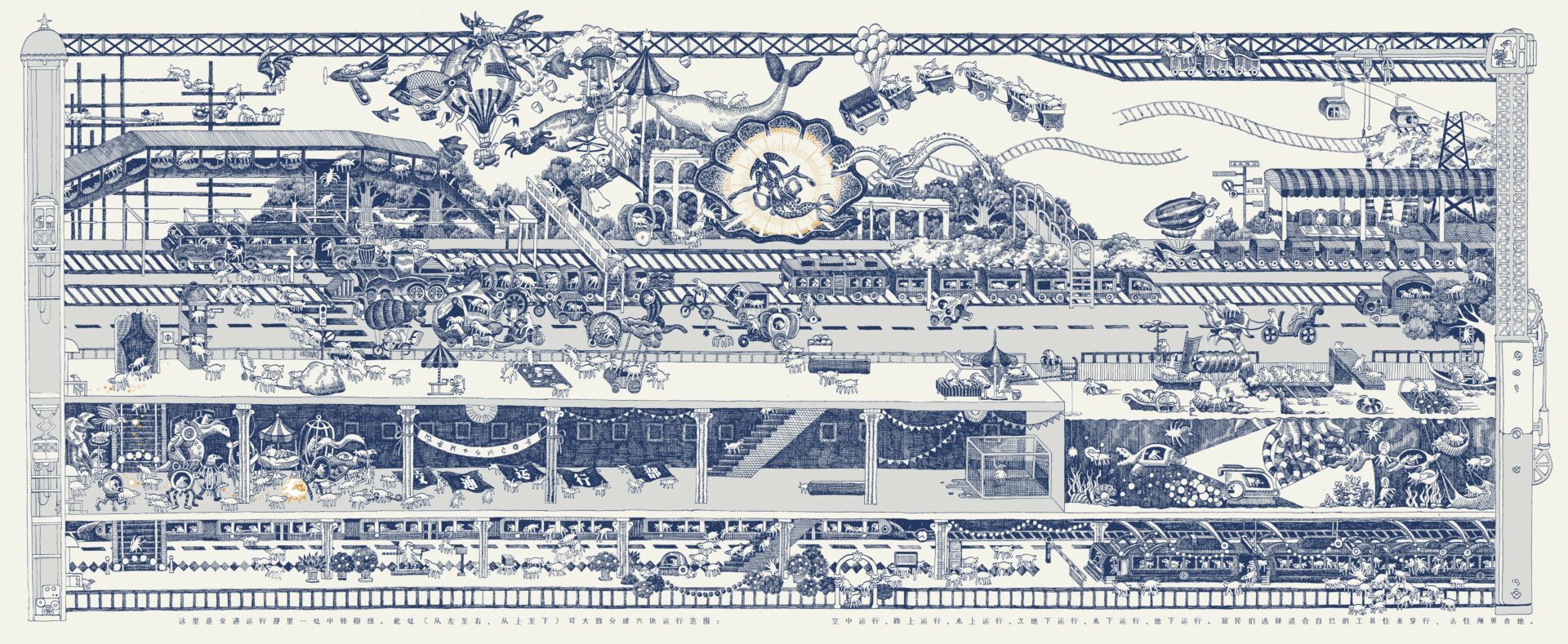
Image Credits
by myself
so if you or someone you know deserves recognition please let us know here.