We were lucky to catch up with Ye (Yolanda) Tian recently and have shared our conversation below.
Ye (Yolanda), thank you so much for joining us today. Let’s jump right into something we’re really interested in hearing about from you – being the only one in the room. So many of us find ourselves as the only woman in the room, the only immigrant or the only artist in the room, etc. Can you talk to us about how you have learned to be effective and successful in situations where you are the only one in the room like you?
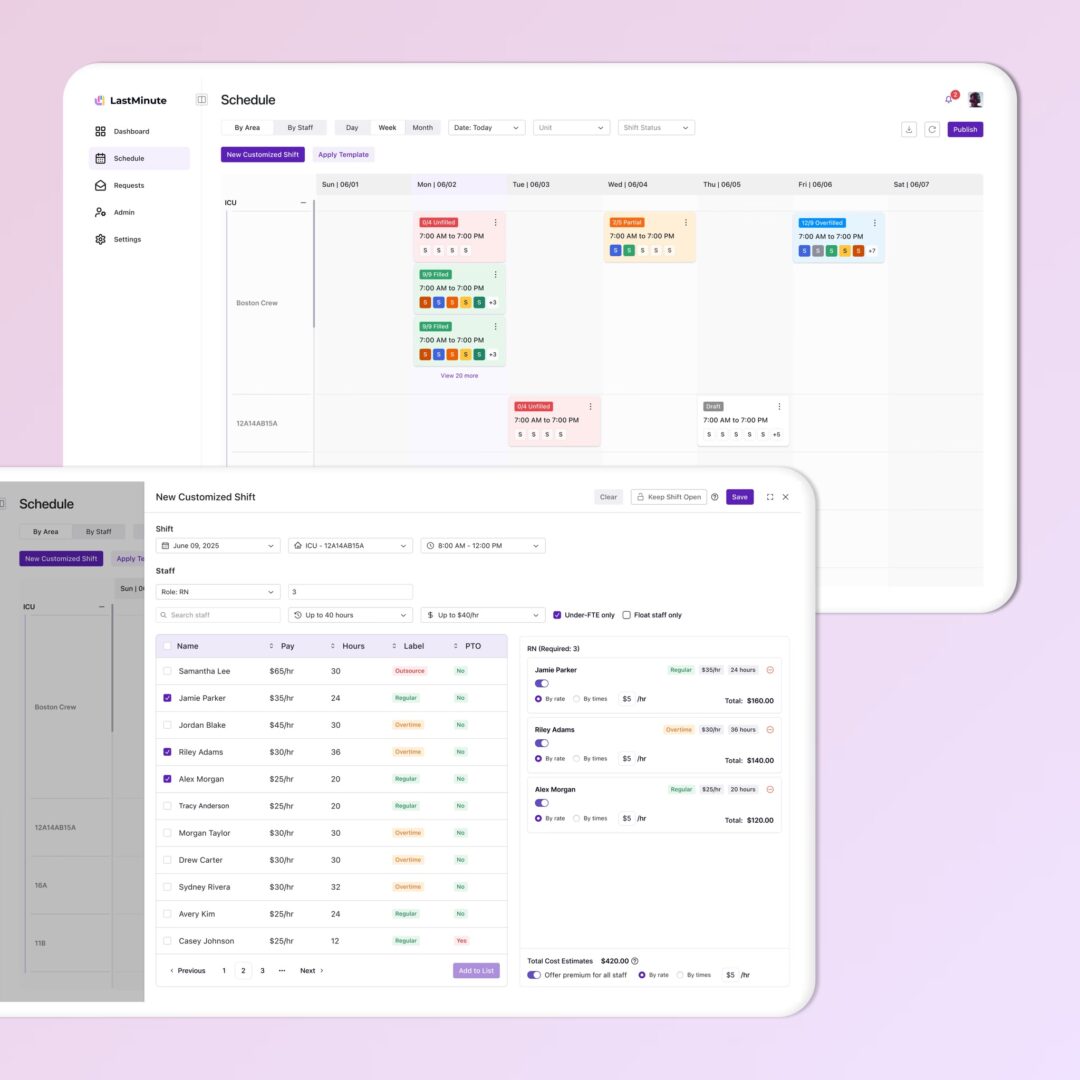
After four years at Rightway Healthcare, a Series C health tech company where we had a small but collaborative design team, I joined GreenLite, a Series B startup, as the sole Senior Product Designer. At GreenLite, I work alongside three product managers and nine engineers, which means I’m often the only one bringing the design perspective into the room.
There are real pros and cons to that dynamic. On the one hand, being the only designer gives you tremendous ownership and autonomy. Decisions move faster, and I have the chance to shape the design culture from the ground up. On the other hand, it can feel isolating at times. You don’t have peers with the same mindset to challenge or validate your thinking. In those moments, I’ve learned that it’s critical to be strong in your voice. Everyone naturally advocates from their own perspective: PMs often emphasize business impact, engineers focus on feasibility, and it’s my role to advocate for the user experience, empathy, and delight.
I see listening as one of my strengths, and I embrace the different voices in the room. But I’ve also learned that if you don’t speak up with conviction early on, it becomes harder to push back later. You have to claim your seat at the table from the start, balancing empathy with assertiveness, so that design isn’t seen as an afterthought, but as an equal driver of impact.
Appreciate the insights and wisdom. Before we dig deeper and ask you about the skills that matter and more, maybe you can tell our readers about yourself?
I grew up in an artist family in Beijing, China. My grandfather was a painter who taught me how to sketch when I was a little girl. Back then, I didn’t always enjoy sketching, but what stayed with me was the way he saw beauty in the world and recreated it with his own hands. That way of looking at life, spotting small yet beautiful moments that others might overlook, still shapes me today, both as a person and as a designer. My mom is a doctor, and in many traditional Chinese families, children are expected to follow their parents’ career path. But my mom was open-minded. She encouraged me to explore my own interests instead of pressuring me to go into medical. Still, growing up around her work, I witnessed firsthand how broken and frustrating the healthcare system can be. That planted a seed in me: I wanted to use design to make healthcare more transparent, easier to navigate, and less bureaucratic.
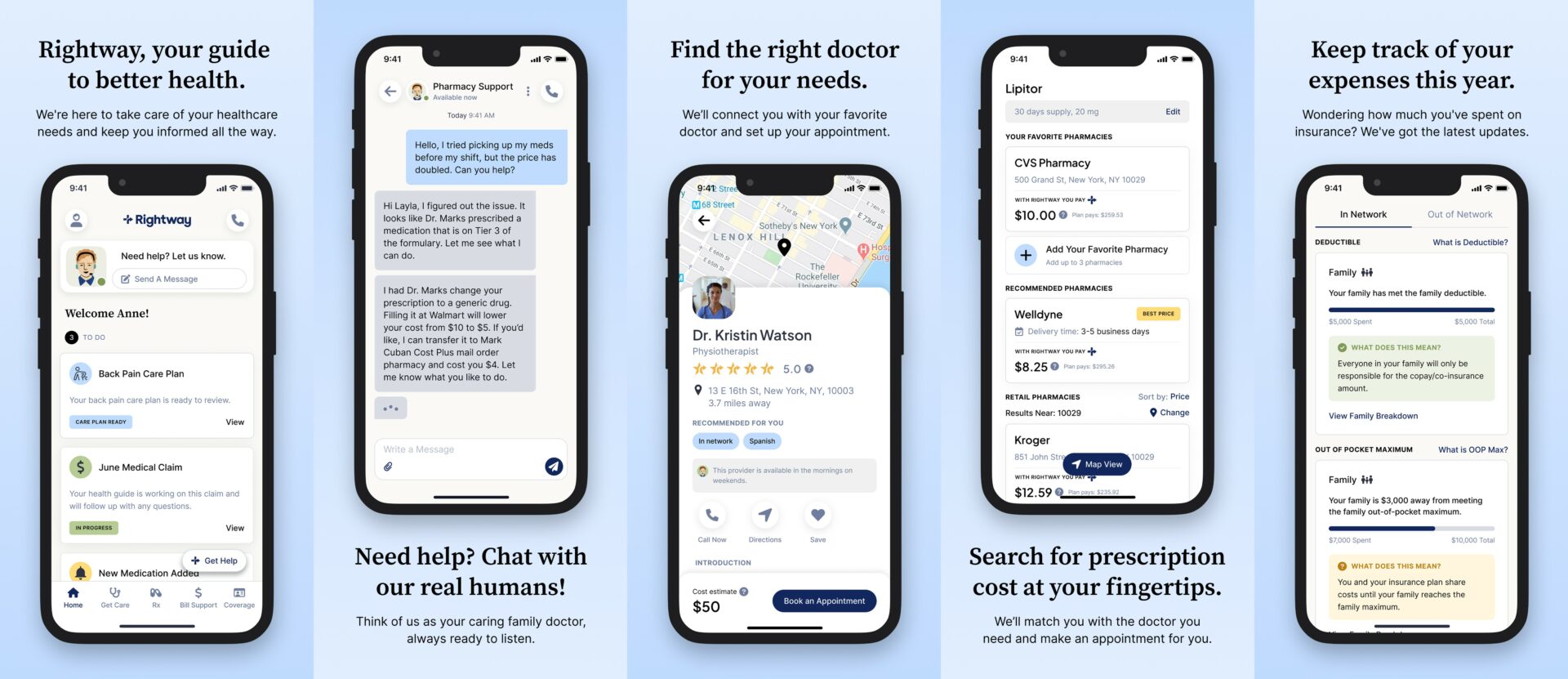
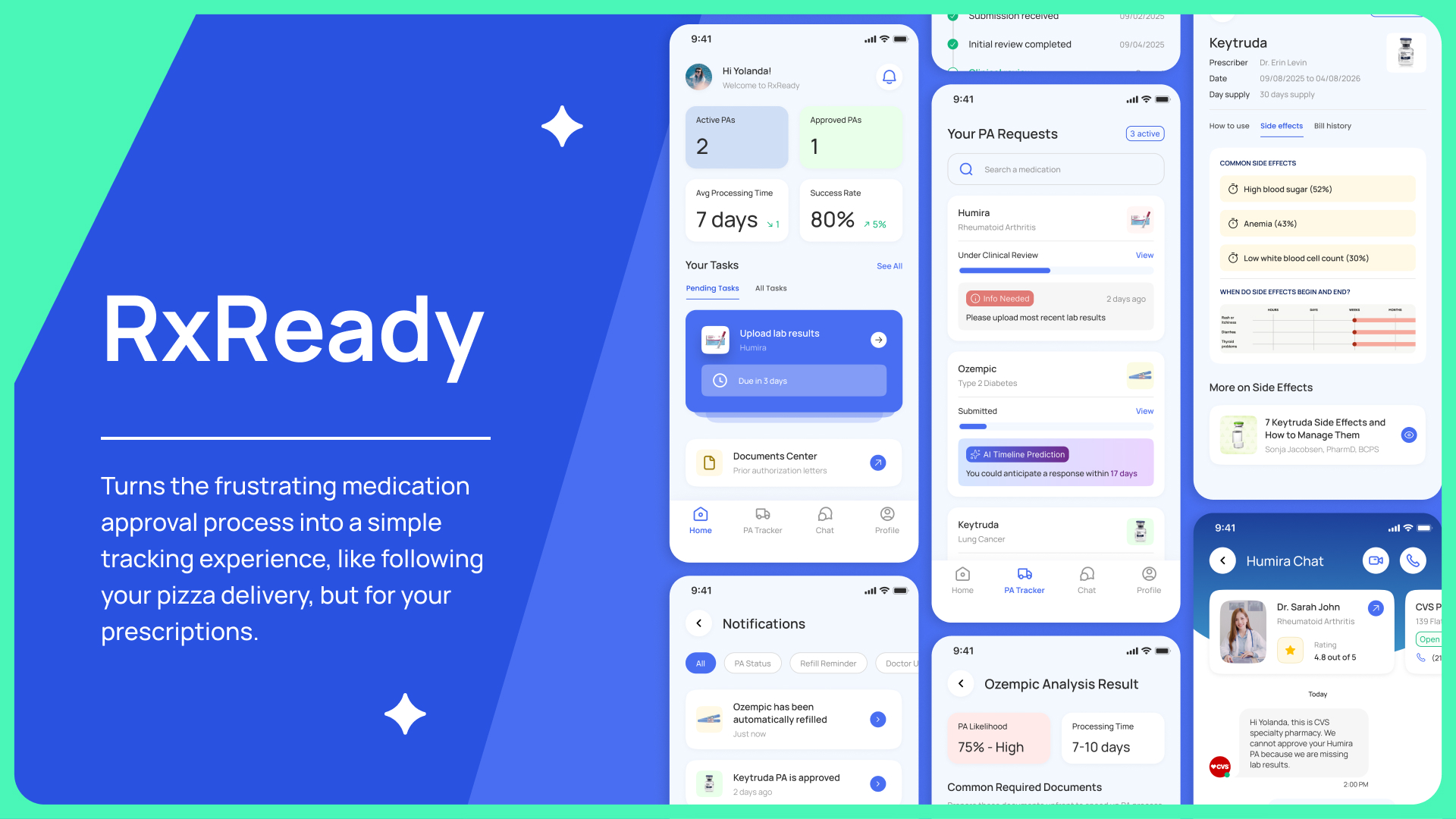
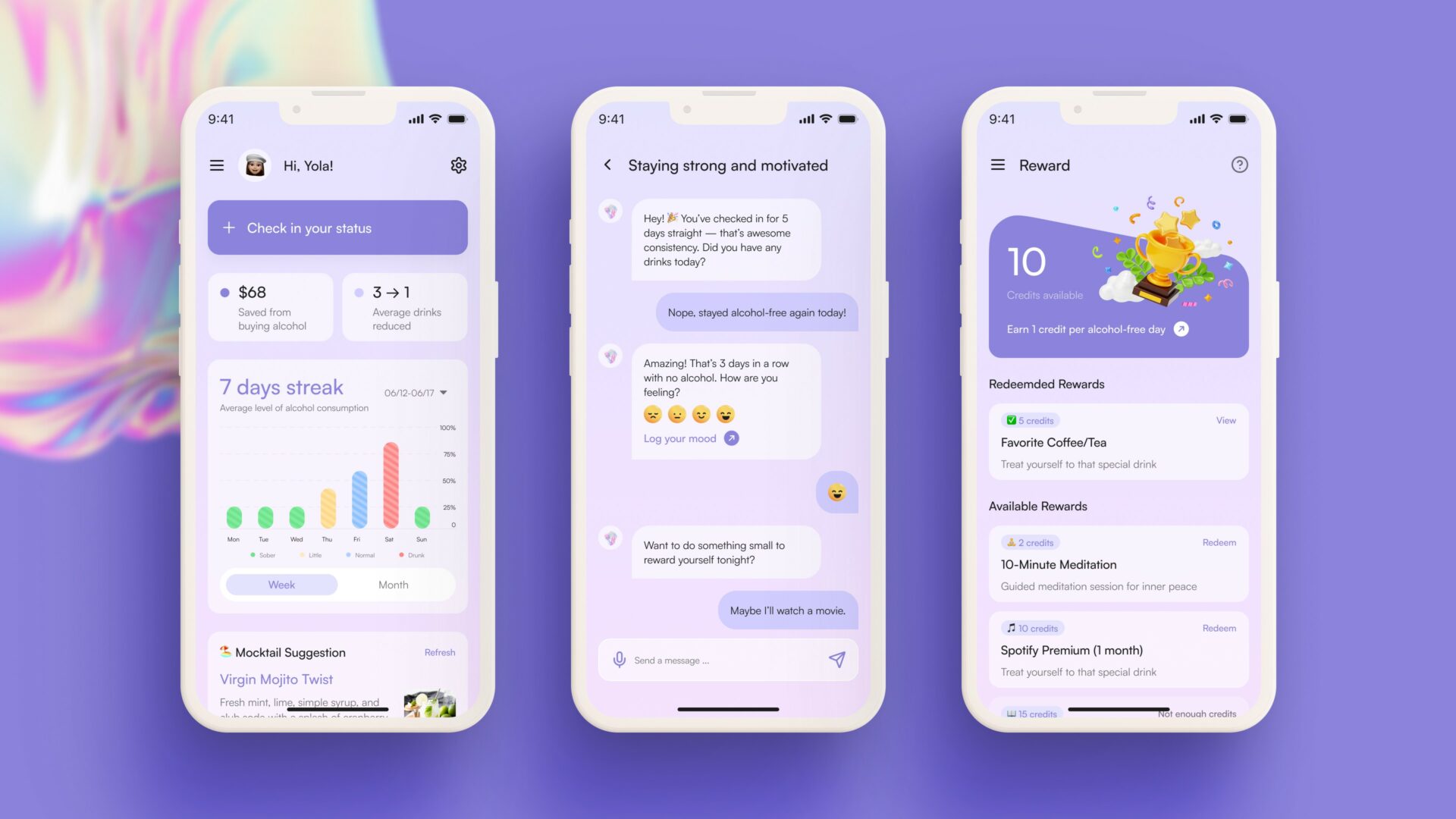
That’s why, after completing my master’s degree in Information Experience Design at Pratt Institute in New York, I chose to join Rightway Healthcare. There, I worked on consumer-facing PBM applications that helped patients lower their prescription costs and access the medications they needed more easily. It was deeply rewarding work, and it reinforced my passion for bringing clarity and humanity to healthcare through design. Even though I’ve since moved on from Rightway, that passion hasn’t faded. In my free time, I continue exploring healthcare concepts, most recently designing SipControl, an app that helps people reduce alcohol addiction, and RxReady, a tool that tracks prescription status and uses AI to support better-informed medication decisions. These side projects allow me to keep experimenting and imagining what the future of healthcare could look like.
Today, in my role as Senior Product Designer at GreenLite, I’m focusing on a different but equally challenging industry: construction. At GreenLite, I design B2B tools for architects, permit coordinators, and clients to streamline the building permit approval process. Just like healthcare, construction is an industry that often resists change, with processes that are slow and labor-intensive. But I see enormous opportunities here. With thoughtful design, we can show people how technology, especially AI, doesn’t replace human expertise, but empowers professionals to work more efficiently and confidently.
What excites me most about my work, whether in healthcare or construction, is the opportunity to create design solutions that remove frustration and give people back their time, clarity, and trust. For me, design isn’t just about pixels or interfaces, it’s about making complex systems feel more human.
If you had to pick three qualities that are most important to develop, which three would you say matter most?
For me, the three most impactful qualities have been empathy, curiosity, and motivation.
Empathy is at the heart of being a designer. Our work is always about solving other people’s problems, which means we need to see the world through their eyes. I remember one user interview I conducted at Rightway Healthcare. My plan was to walk an older woman through a new prototype and gather her feedback. But instead, she spent the entire 30 minutes talking about her frustrations with the U.S. healthcare system. I could have interrupted and redirected, but I chose to simply listen. I showed her that I understood her struggles, and by the end, she thanked me for my time and felt genuinely heard. That moment reminded me that sometimes being a good designer isn’t about the prototype in front of you, it’s about giving someone space to share their story. Those small moments reinforce my belief that design, when done with empathy, can make the world a little better.
Curiosity is equally important, especially in a field that evolves as quickly as ours. Technology never stands still. AI, for example, is moving at lightning speed. To stay relevant, designers need to constantly explore new skills, tools, and ways of thinking. Curiosity fuels that learning. It means reading articles, listening to podcasts, experimenting with new tools, and studying other products not because we have to, but because we genuinely want to.
And that’s where motivation comes in. Honestly, if you don’t love design, it’s hard to keep up with the pace of change. Product design relies heavily on the knowledge and experience you build over time, so motivation is what pushes you to keep learning after a long day at work, to keep experimenting even when no one is asking you to. For me, the answer is simple: I love design. I believe it’s meaningful work that impacts society in tangible ways, and I want to keep improving so I can contribute more.
My advice for anyone early in their journey is this: nurture your empathy by listening more than you talk, stay endlessly curious about the world and the tools around you, and find that internal motivation, your personal “why”, that keeps you moving forward. If you can combine those three, you’ll build not just a career, but a lifelong practice that feels both purposeful and fulfilling.
Looking back over the past 12 months or so, what do you think has been your biggest area of improvement or growth?
English is not my native language, and I’m also the only person in my company who moved to the U.S. after the age of 22. That has meant investing a lot of time in strengthening my speaking, listening, reading, and writing skills. I know this is an ongoing journey, but over the past year I’ve noticed real growth in both my communication and my confidence.
One of the biggest lessons I’ve learned is that designers need to be strong in their voice. Some people naturally grab attention by speaking fast, loud, or with humor. For me, persuasion comes through evidence and data. If two design options are in question, I’d rather run a pilot study with end users to validate which one performs better. Or I’ll research comparable products in the industry to show why aligning with established standards makes a design more intuitive. As I’ve leaned on this approach, I’ve become more confident advocating for design decisions, even when facing pushback from stakeholders.
Another area of growth has been relationship-building. I’ve discovered that I’m much stronger in one-on-one settings than in large group discussions. Whenever I get the chance to connect with colleagues individually, our conversations are deeper, trust grows, and collaboration becomes smoother.
Overall, the past 12 months have been a period of self-discovery. I’ve learned to recognize my own strengths and weaknesses, and to lean into what I call my “secret power”, using thoughtful persuasion, evidence, and empathy to achieve my goals. Continuous self-reflection has become a cornerstone of how I develop myself as both a designer and a teammate.
Contact Info:
so if you or someone you know deserves recognition please let us know here.