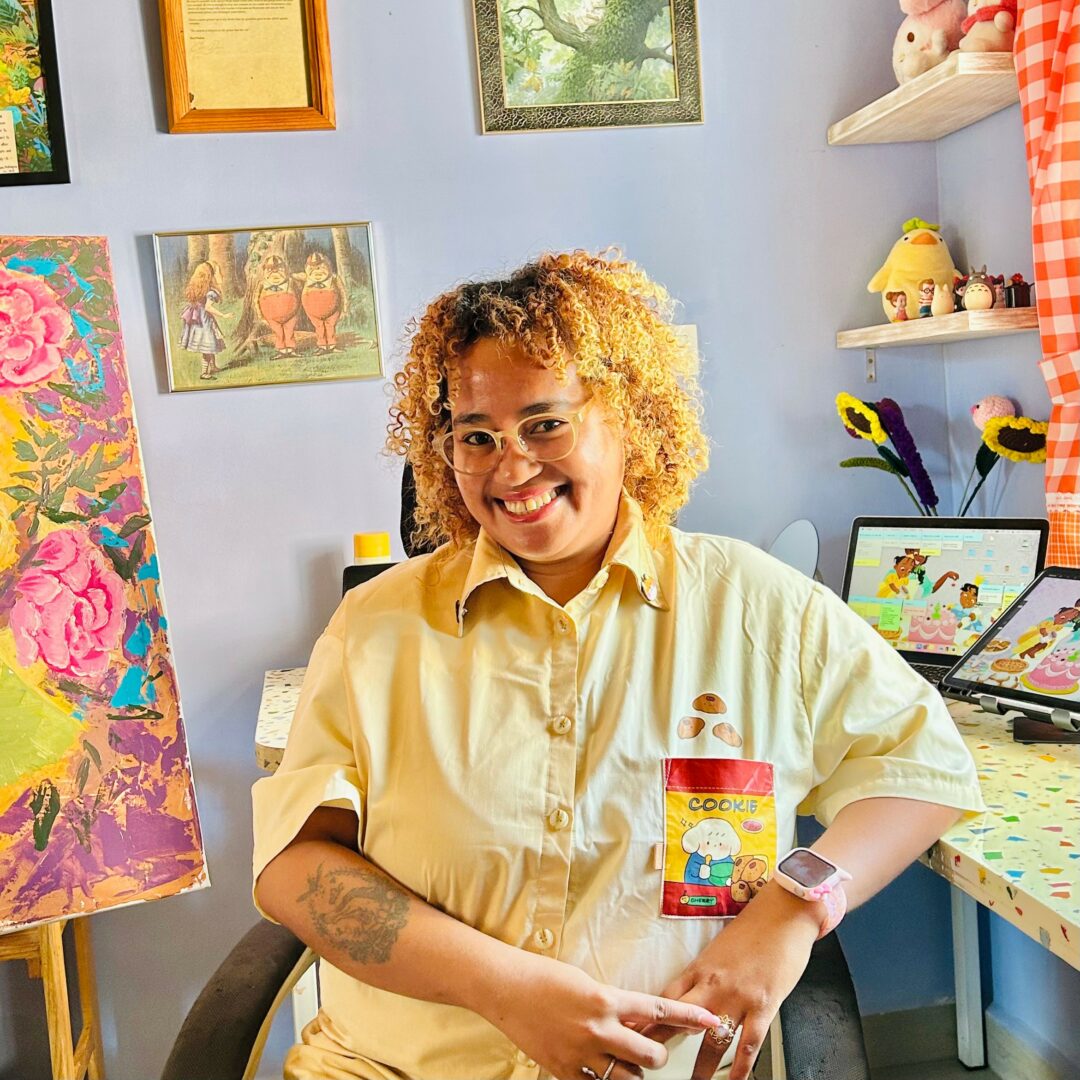
Alright – so today we’ve got the honor of introducing you to Jinshi Ozaki. We think you’ll enjoy our conversation, we’ve shared it below.
Jinshi, looking forward to learning from your journey. You’ve got an amazing story and before we dive into that, let’s start with an important building block. Where do you get your work ethic from?
Ever since I was a child, I have always watched my father’s attitude as he became absorbed in what he loved to do, which was pottery. Even when he was tired or not feeling well physically, I was overwhelmed by his concentration as he would sit at the wheel, kneading and shaping the clay with his hands. I wanted to mention that first.
Now I make a living playing jazz guitar. My decision to pursue music started when I began drumming along to Beatles songs using chopsticks to hit things around me. The floor was my bass drum, the top of my desk the snare, and I’d hit the spring on a desk lamp to get a cymbal sound. To my elementary school self, it was a full drum set. Coming home from school and doing that was my only joy back then. Actually, the very first instrument I touched was the piano we had at home. In preschool, my parents sent me to a few piano lessons, but I found it boring and quit. However, I was always drawn to the beauty of chords. I think the background led me to want to play chordal instruments. So, I bought an acoustic guitar instead of a real drum set.
Since I had learned chords to a certain extent, I became attracted to jazz. The album that triggered me the most was “Virtuoso” by Joe Pass. It was a sort of solo acoustic guitar recording, and although it produced a sound similar to the type of guitar I owned, I couldn’t reproduce any of those complex, sophisticated jazz chords at all. Feeling limited as a self-taught player, at the age of 15, I started commuting to a guitar school in Sapporo to gain some jazz skills. There was a lack of guitar instructors who were capable of playing jazz. Back then, I felt that the environment was not ideal for studying jazz in Japan. So after graduating high school, I decided to go abroad and attend Berklee College of Music in Boston.
To make a long story short, I am presently a jazz musician who freelances and teaches at a music college in Los Angeles called Musicians Institute, and I am grateful for the environment that allows me to fully immerse myself in what I love. Even when I’m tired or not feeling well physically, I am committed every day to working towards my dream of building my own unique style. That’s the spirit I got from my father.
Great, so let’s take a few minutes and cover your story. What should folks know about you and what you do?
Awarded a scholarship, Jinshi completed his professional major at Berklee College of Music and pursued further studies in counterpoint and advanced guitar voicing concepts under the tutelage of Ted Greene. He has embarked on widespread tours across the United States, Canada, Africa, and Japan, performing alongside renowned artists like Kirk Whalum, Jody Watley, Keiko Matsui, Jimbo Akira, and Scott Kinsey. Jinshi also boasts extensive experience as a seasoned session guitarist for various television shows and in the studio scene. Since 2004, he has shared his expertise by teaching at the Musicians Institute.
There is so much advice out there about all the different skills and qualities folks need to develop in order to succeed in today’s highly competitive environment and often it can feel overwhelming. So, if we had to break it down to just the three that matter most, which three skills or qualities would you focus on?
.
Any advice for folks feeling overwhelmed?
The advice for when you’re overwhelmed may not apply here but I would like to share some tips that might be helpful for musicians when they experience stage fright while performing in front of people and are unable to perform to their full potential.
From my years of experience teaching the guitar ensemble class at a music college, I’ve seen many students start to play on stage and become extremely nervous that their performance turns stiff and insular. Particularly during bandstand improvisation, the common feeling is that tension can cause people to retreat into their shells, narrow their perspectives, and overthink things. (What should I play next? When should I insert prepared licks? etc…) These are the barriers that keep them from catching the flow. I believe this applies not only to music performances, but also to performances in general.
Let me share an experience from my own jazz gigs from back in the day. Nights when I felt like I gave my best performance, all had one thing in common: I was able to listen to the sounds of the other players more closely than usual, and was inspired to expand my playing. In short, “Listen well!” I’ve concluded that by creating music together with others through active listening and mutual encouragement, your performance will surely move in a good direction. Feels like the older I get, the more I enjoy listening to others.
I’ve found this method tremendously effective at overcoming stage fright and distracting thoughts, so I often share it with students as a coping strategy.
Contact Info:
- Website: https://www.jinshiozaki.com/
- Other: https://www.amazon.com/music/player/albums/B08RXZKTDF?ASIN=B08RXZKTDF https://www.amazon.com/At-First-Light-Jinshi-Ozaki/dp/B07K87MS75
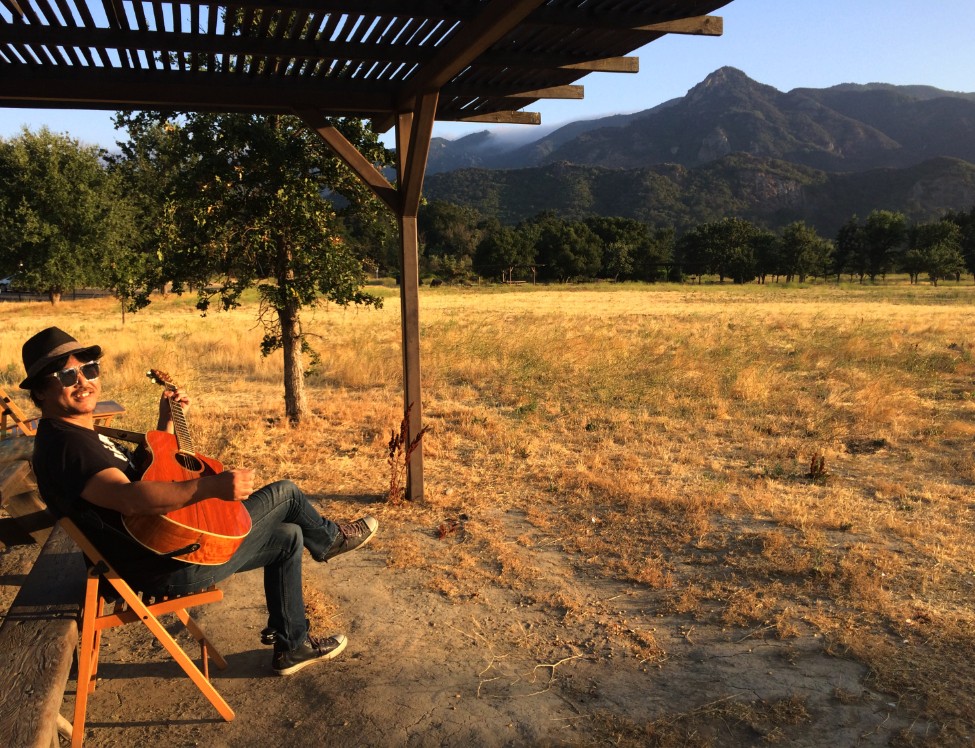


Image Credits
Aya Fukuma Takuma Kato