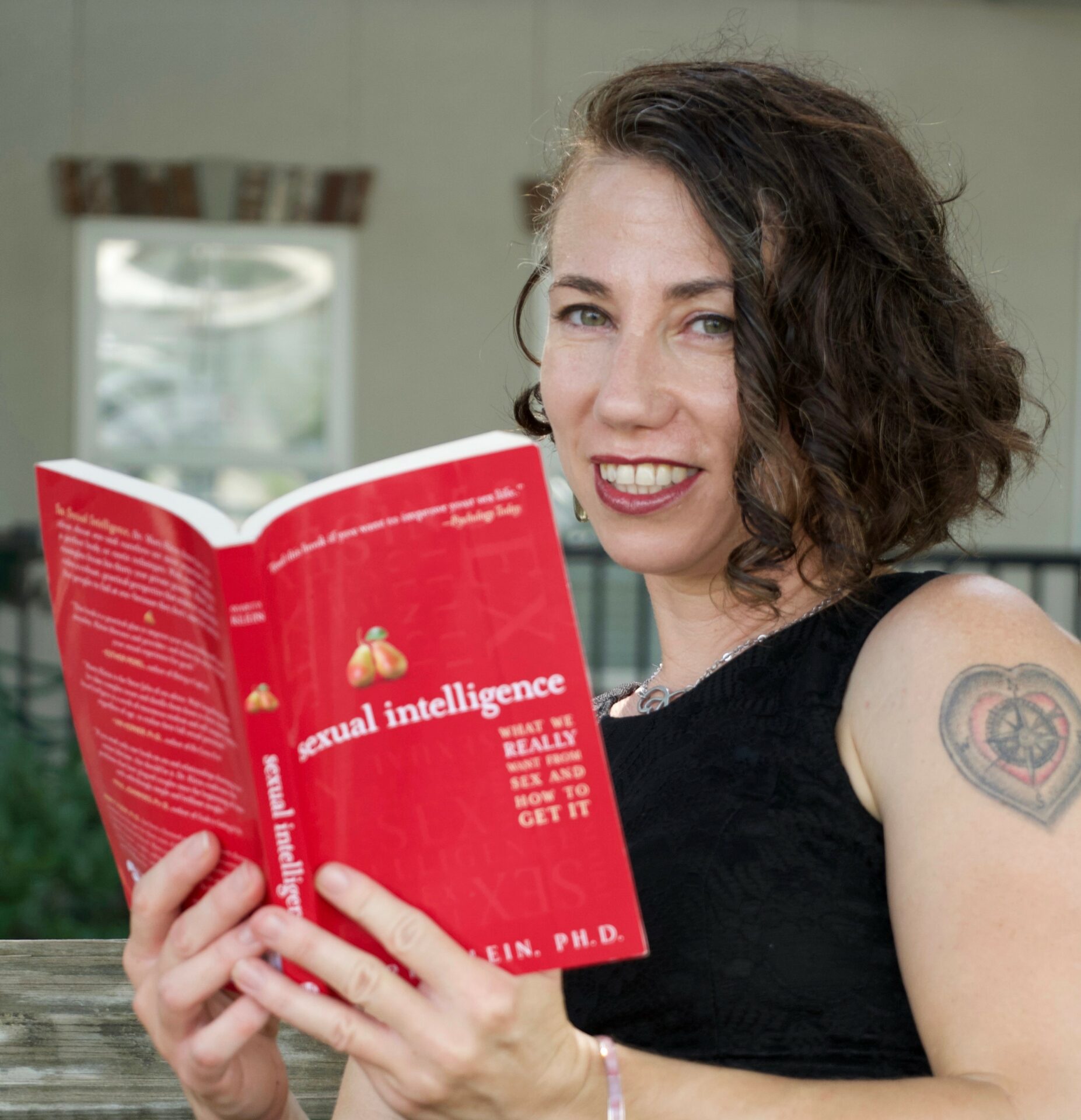
We were lucky to catch up with Julia Satterlee recently and have shared our conversation below.
Julia , thank you so much for joining us. You are such a positive person and it’s something we really admire and so we wanted to start by asking you where you think your optimism comes from?
My optimism is a combination of nature + well-nurtured habits.
I was born a “people person” – connection is one of my core values. I really enjoy and appreciate people, and I tend to see the good in everyone first. This is an important skill for a coach, and I was lucky to be born with that, as far as I can tell.
The rest of my optimism I’ve had to work at quite a bit. The two things that guide me the most in nurturing optimism are gratitude and the power of story.
I started keeping a gratitude journal out of desperation at a really difficult time in my life. I was living in a small town in Mexico, with no electricity, working full time, plus parenting a toddler and pregnant with our second child. I felt isolated and exhausted a lot of the time. My mom encouraged me to write down three things a day that I felt grateful for. I struggled so hard to do it at first. I would write things like “being alive” or “my daughter” – but it was almost with a grudging attitude. I was writing these broad, somewhat generic things that I was truly glad for, but I was in such a dark period that I couldn’t really pull up the sensation of gratitude for them at first.
I persisted in my gratitude journal because I was grasping at straws to feel better. I hoped my mom was right- that it would get easier and that it would help eventually.
She was right. As moms so often are. Because what happens when you start to notice the good things, when you give thanks for what you have, when you focus on the little wonders, is that more and more of that good energy becomes the focus in your life. The good stuff gets more noticeable.
One trick to practicing gratitude more effectively is to get very specific in what you’re grateful for. Make it a small thing. So instead of “I’m grateful for my daughter” make it, “I’m grateful for laughing at her wild dress up play today.” Instead of, “I’m grateful we have food to eat,” make it, “I’m grateful for the gooey buttery deliciousness of my mashed potatoes at lunch.” In this way, you’re practicing gratitude and mindful presence at the same time- an absolute win/win that I can pretty well guarantee will improve your life.
The longer I kept at it, the easier it got, and the longer my lists became. Many years later, I still start my day with coffee and gratitude. Many days I write whole paragraphs – it just flows out of me. I ask my kids what they’re grateful for at the dinner table, trying to foster that for them- plus it’s a great way to hear snippets from their day and what’s important to them.
I mentioned that story is the other thing that nurtures my optimism, and I want to highlight that for just a minute, too. I’ve always loved books, reading, and listening to other people’s story, as well as telling stories. I authored my first story (dictating it to my mom) when I got bit by a dog at age 4. I think on the one hand, listening to other people’s stories and sharing my own helps me stay connected and not feel like I’m alone on this wild, big planet. It puts things in a different perspective, especially hearing how others deal with their adversity. I remember that we all have adversity and struggles. Fostering that sense of common humanity through story is something that has always carried me through difficult times. Letting go of shame when we tell our stories in safe spaces also can help us to live with less weight and more optimism.
So even if you feel you’re not a naturally optimistic person, I firmly believe that with affirming practices, your life can really change. If I didn’t believe that, there’s no way I could do the coaching work that I do.
Thanks for sharing that. So, before we get any further into our conversation, can you tell our readers a bit about yourself and what you’re working on?
I’m your pleasure instigator: the professional you go to in order to have more passion- with compassion. I support couples & individuals to feel good in their body, in the bedroom, and in their relationship. We all deserve shame-free, joyful sex & relationships. When that feels elusive, coaching with me can get you there!
As a Clinical Sexologist & Certified Sex Coach with over two decades experience in sex education and pleasure advocacy, I know what brings total confidence to the bedroom- and beyond! We have to break out of those boxes of what we think we are “supposed to” be like, and be who we actually are. Kindness to ourselves and others has to lead the way- and that means living your values, communicating, respecting your own boundaries & those of your partner. But don’t worry if you think you’re not creative or you’re not good at being kind to yourself; we work on those things together.
The transformation when you work on your intimate life is magical, because you’re not just working on this one activity you do or this one little part of your life. Pleasure is a vital part of our health and wellbeing throughout the lifespan. Our sexuality is a core part of who we are.
When you’re living your best intimate life, your whole self radiates with the afterglow of confidence. You trust yourself, your body, and your decisions. You are more present in the moment, you make time for playfulness, you’re able to enjoy life more fully. Who doesn’t want that?
Sex appeal is used to sell products all the time, but open conversations about sex are often still taboo and censored. Most doctors, therapists, and other professionals don’t study sexuality, so Sexologists play a really important role in people’s health and wellness. I pride myself on bringing these crucial taboo topics into the sunshine.
If you’re imagining me coaching you like your PE teacher, blowing whistles and yelling- but in your bedroom- then let me call a time out on that image! We’ll mostly be seated and talking together, or if we are doing something with your body, it’s probably breathing, or another grounding or mindfulness practice.
The most common concerns that people call me about are pain during sex, issues with orgasm (too slow, too fast, not enough, not at all), and communication- which may include setting boundaries, communicating your needs and wants without blame or shame, taking the pressure out of the bedroom, getting on the same page with your partner, changing the routine, or adding some kink or bdsm.
What I do best as a coach, however, is best expressed by the wise words of Scott Peck:
“Let us prepare ourselves.
Let us do so by relearning how important we are, how beautiful we are, and how we are desired beyond our wildest imaginings.
And let us, as best we can, go out into the world to teach others, how important they are, how beautiful they are, and how they too are desired beyond their wildest imaginings.”
If any of this made your curiosity tingle, I encourage you to reach out! I offer a free discovery call, so we can create a plan for where you’re headed and what you want, and we make sure we’re a great fit to work together.
There is so much advice out there about all the different skills and qualities folks need to develop in order to succeed in today’s highly competitive environment and often it can feel overwhelming. So, if we had to break it down to just the three that matter most, which three skills or qualities would you focus on?
What has propelled me the most are purpose, pleasure, & lifelong learning.
If you want to be a sexologist, a business owner, or anything unconventional of any sort, you really have to have a deep sense of purpose. Anytime you are forging a new path, not doing the most expected thing, then you have to be clear on your values and why you’re doing this. If it’s just a fleeting desire, the sacrifices required will probably not be worthwhile.
I’ve known I wanted to be a sexologist since before I was even familiar with that term. I got started in the sexual health field as a peer educator when I was a teenager, and I was sure that it was my path. I didn’t know yet what I needed to study in school or how to get certified or any of those things yet. But my eyes have always lit up when sexual wellness & empowerment is the topic. I can feel the YES in my whole body when I am doing this work. The path to get here was long and winding, and I haven’t even arrived at my final destination, but I know that this is my work, this is my path, and I’m on the right track. On the days when it is hardest, I hold onto that.
Not everyone knows what they want to be when they grow up, even when they’re already a grown up, and that’s ok! You can find your purpose at any point in your life, especially if you’re open to it NOT being your business or career. You have to allow your authentic self to come out and play, to show itself, if you want to really find your purpose. Who are you? What lights you up? My purpose isn’t my business- my business is something I created because it helps fulfill my purpose. My purpose is much deeper than any business could be; it’s about fully seeing people and supporting each other to step into our power, our joy, our connection. You really can’t quantify that! And there are a ton of different ways to do that, and I would be doing that in other ways regardless of my coaching business, because that is what I do. That’s what purpose is to me.
Which brings me to pleasure. I wouldn’t be your professional pleasure instigator if that weren’t one of my top three. In our culture we use pleasure, desire, and sex appeal to sell everything, but we still carry so many remnants of puritanical society, of protestant work ethic as the standard, of shaming people for their bodies, their desires, their pleasure. Most of us seem to have this idea that we don’t really want to feel bad, but we don’t want to feel too good, either, because that’s certainly harming someone or sinful or wrong. Like we’ve got some quota on how much pleasure we’re entitled to before we turn into selfish, immoral people.
But here’s why pleasure is crucial to my journey and to yours: When do you feel more generous? When do you feel more loving? When do you do better at work, at parenting, at life? Is it when you’re exhausted and sad and suffering? Or is it when you feel really good?
We’re often taught that sacrifice and suffering is morally superior and what we’re supposed to lean into in our adult life, and I really want everyone to at least question that. Whether it’s that you’re a mom so you don’t deserve peaceful alone time now; or you can’t pursue the career of your dreams because what you want is too outside the box; or your bedroom desires aren’t what you thought was the status quo so you should keep them repressed- I wish for everyone to at least question that. What if you did get that alone time you need- doesn’t that help you show up more patient and happy with your kids? What if the world is just waiting for you to bring your special gifts to the surface? What if you did get exactly the pleasure your mind and heart desires in intimate connection with someone- how would your whole being feel and act afterwards? Doing what lights you up, being present, honoring your body, allowing yourself to feel pleasure- this is an ongoing practice and mindset shift for all of us, but it’s absolutely worthwhile.
Last but not least, growth and learning are like kindling for my spirit, so I couldn’t hit any of my goals or fulfill my purpose or feel pleasure without that attitude. Human sexuality is an ever-evolving field. Coaching and other personal growth modalities continue to change. Business practices change, especially with technology advancing the way it is. And more importantly, if we just reached some imaginary pinnacle and then stopped learning, I imagine the rest of life would be a sad, downward spiral. We are all innate learners. We are born with a sense of wonder at all that the world can teach us, and it’s only when that learning is carefully contained that we lose that love of learning and that sense of wonder. When we’re learning what we have to, when we have to, instead of chasing our curiosity and growing like wild vines- that’s when part of our self gets pushed underground. Sometimes we have to entice it back to the surface to rediscover that passion and wonder for the world.
As for how to best develop these things, I suggest you get support. Work with me! If not with me, then with another coach or professional. People grossly underestimate how much we need support and human connection in life. We all need some type of support to live our best lives; we are not islands, and the idea of pulling ourselves up by our bootstraps is a cultural lie. Get support!
Tell us what your ideal client would be like?
I work with people from all walks of life. I work with 20-somethings, senior citizens, and all ages in between. A lot of my clients are heterosexual couples, but I also work with single people. nonbinary people, gay & bi people, people questioning their orientation. I work with parents and child-free people. I work with people who practice or are curious about BDSM or polyamory. None of those characteristics or stats about people is what makes them my ideal client.
My ideal client is open and curious, above all else. The most important thing that I look for in a client is their hope to improve things for themselves and/or their relationship. If you don’t believe things can get better, then they probably won’t. By the time people call me, they are often frustrated and stuck; they’re not sure how to improve things. Maybe they’ve been to a doctor or a therapist and that didn’t help. Sometimes people are on the verge of hopelessness about their situation when they call me- but as long as they still have some hope, then we can work together. Typically people have not worked with a sexologist before, so as long as they’re open to the idea that this could be the right kind of support for them, then we can get started.
I always enjoy it when my clients are recovering perfectionists- which is how I identify. People who are rule followers or people pleasers or high achieving but highly self critical people who are ready to prioritize themselves, love themselves kindly, and be their own authentic self – those are some of my favorite folks to work with.
I like for people to have an idea of what they want before they call me, but I’m happy to work with folks who have a hard time figuring out what they want. It’s a common experience in sexuality, especially for women. We are often disconnected from our desire and from our body. So as long as you’re calling me with an openness & curiosity, a hope to discover what you want, a belief that things can change, then I would love to work with you. And bonus points if you like to laugh a lot! We talk about some very heavy topics sometimes, so getting silly and laughing is also a must.
Not sure if you’re a good fit? That’s why I offer the discovery call, free of charge. Come find out!
Contact Info:
- Website: www.juliasatterlee.com
- Instagram: @sexistentialcoach
- Facebook: https://www.facebook.com/sexistentialcoach
- Linkedin: https://www.linkedin.com/in/julia-satterlee-7497a8160/
- Other: Schedule your free discovery call: Tinyurl.com/connectwithjulia
Download a free copy of 18 Ways to Play, your guide to more playful touch: Tinyurl.com/yespleaseme


Image Credits
Shayne H. of That One Media Company