We’re excited to introduce you to the always interesting and insightful Lauren Armenta. We hope you’ll enjoy our conversation with Lauren below.
Hi Lauren, thank you so much for opening up with us about some important, but sometimes personal topics. One that really matters to us is overcoming Imposter Syndrome because we’ve seen how so many people are held back in life because of this and so we’d really appreciate hearing about how you overcame Imposter Syndrome.
This might be my favorite question. I think as creatives we need to ask ourselves this quite often, since it surfaces a lot. The world is filled with creative people, whether it’s your job or not. I see so many new ideas, works of art or brilliant designs every single day. Most of the time I have this internal moment of ‘wow I wish I were that good’ or I catch myself feeling as if I don’t even belong in a community so filled with talent. I know that sounds heavy but I know there are more of us creatives out there thinking that all the time. I often catch myself saying ‘I’m not an artist,’ even though I’m creating art. One of the ways I combat the feeling of imposter syndrome is to focus on the purpose of what I’m creating or why I am creating. I think creatives often crave community and want to invest in or be part of that community. We naturally go through this comparison phase, where we ultimately face the question of, ‘do I belong in this community?’ or ‘can I contribute to this community in a valuable way?’ The answer to these questions is yes, though it doesn’t always feel that way. The fact is, if you are creating, you are a creative, and that in itself is valuable. I think it’s important to flip the narrative of what creates imposter syndrome; instead of focusing on this feeling of ‘not good enough’ you focus on what you are providing to the community or how your creation is impacting you. Maybe it’s an outlet. Maybe it’s to share with friends. Maybe it’s to stir up conversations. Whatever it is, focusing on the purpose allows for that imposter syndrome voice to quiet down. Coming from a design background, part of my education was very much focused on ‘design for good.’ I often return to that phrase, so everything I do becomes less about ‘do I belong here’ and more about how or what I create can impact a community, myself, or inspire others. If we think more about intent and impact we think less about if we ‘belong’ in a space. Eventually, you stop wondering if you’re good enough and start asking yourself ‘what more can I do?’.
Thanks, so before we move on maybe you can share a bit more about yourself?
I have to first shoutout my high school Art teacher, Nancy Wall, and her partner Dan Perri. Without them, I wouldn’t have known what design was or got on that track toward a career. Then Chapman University, where I got my design education, and the wonderful professors I’ve had there, who have taught me lessons I still use to this day. That community eventually connected me to Intuit, where I work full time as a Product Designer. I consider my job a professional focus. I’m constantly trying to level up and learn from the many talented people at Intuit. I feel lucky to be part of such an inclusive and inspiring community there.
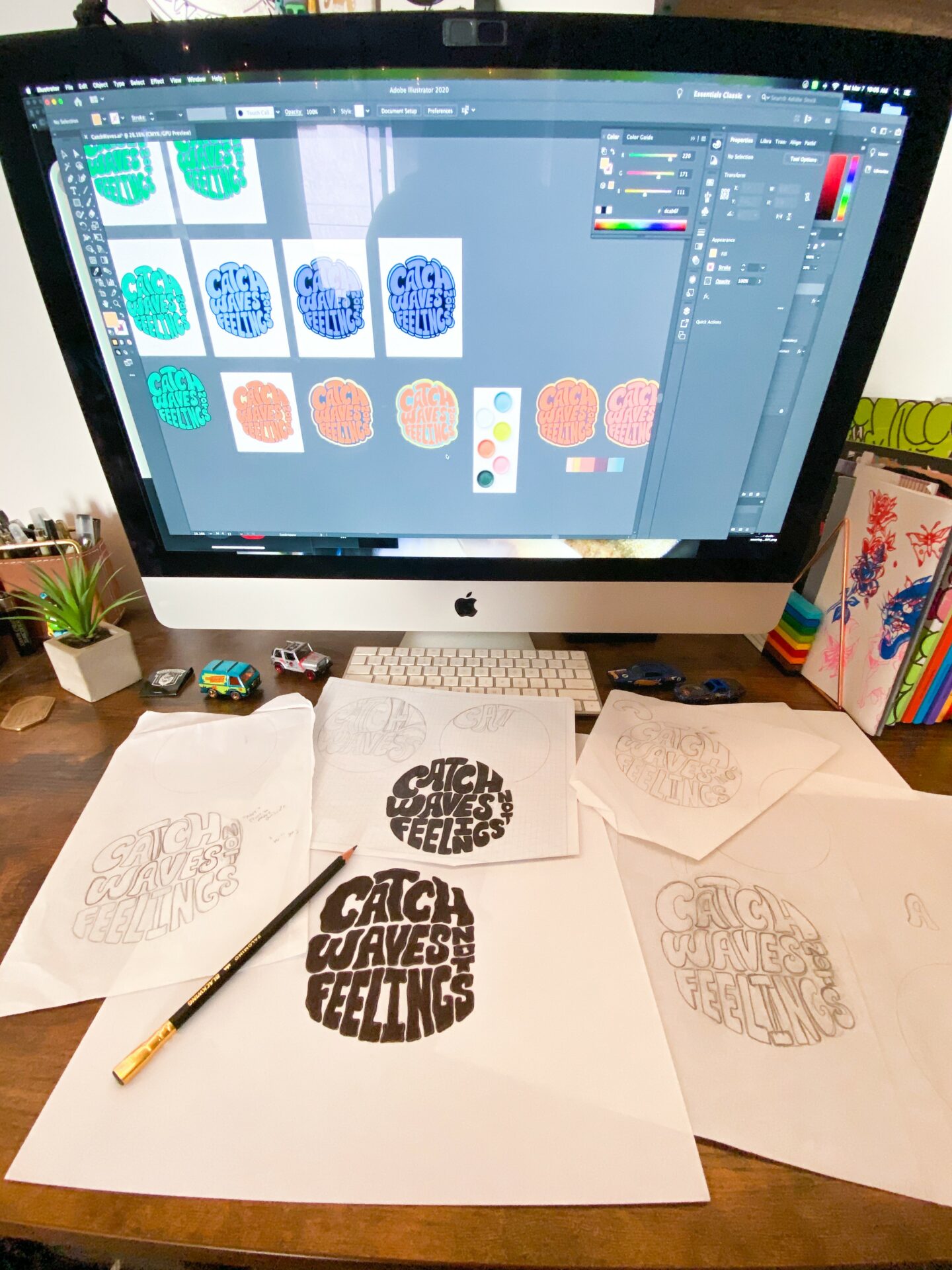
Aside from my professional career, I feel excited about the possibilities I’ve been led to by my career path. Being a designer has opened up many opportunities for me. One of my favorite opportunities was working with a San Diego-based and woman-owned coffee shop in Pacific Beach, Pump Coffee. One day I was skating to the beach and found them. Luckily, when I was there I got the opportunity to connect with the shop owner, Ashley. I now create some fun designs for them like stickers and coffee cups. There is something special about being able to connect with people, hear their stories, and help produce designs for something they have worked so hard to build. I feel honored to have been given those opportunities.
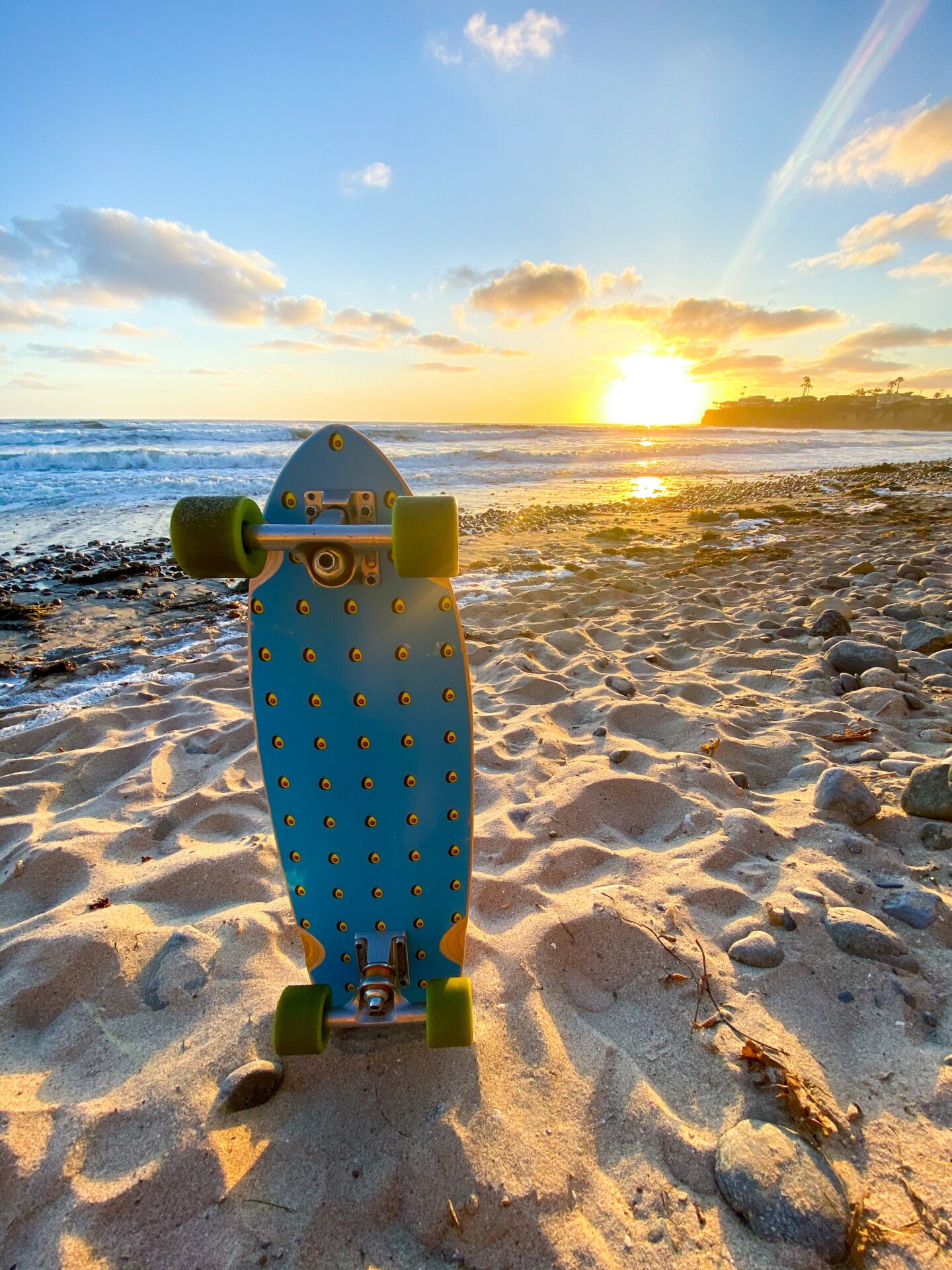
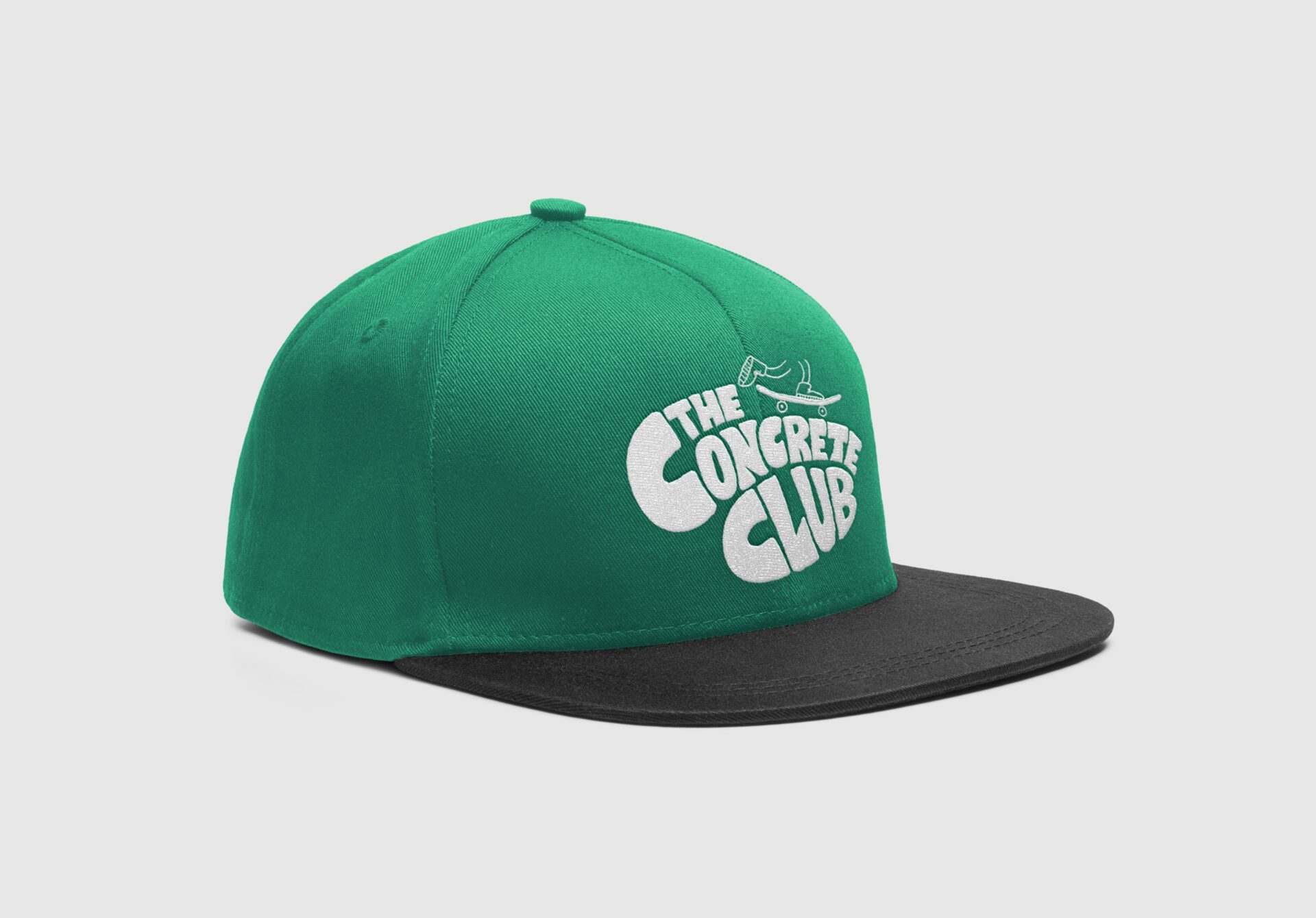
Some things that have always fed my soul creatively are sustainable apparel, skate/surf culture, and tactile art. I would love to re-open my apparel company, Tag. You’re It., in Portland (OR) now that I’ve moved. It was previously in San Diego. I had a wonderful community of fellow beach-goers and southern-California-coast humans that supported my sustainable apparel designs and company. I loved spending time screen printing shirts or on the beach thinking of the next design. I would love to bring that to the PNW and re-open shop.
If you had to pick three qualities that are most important to develop, which three would you say matter most?
I think the qualities that have most impacted my journey, and the ones I find pretty important to develop for any creative person, are communication, adaptability, and confidence. Communication is the basis of everything; it’s something I certainly work on every day. Strong communication is important in both developing strong relationships and being able to have your work resonate with people. One of the ways I try to develop that skill is asking for feedback. Feedback in how I present work, how I lead, how I discuss topics in a group setting. I often utilize the question ‘how might I improve upon…’. Strong communication leaves less room for misunderstanding, and more room for people to connect.
Adaptability is also critical. Mistakes happen. In fact, I love when I make mistakes, because it often presents an opportunity to be more creative. Being adaptable allows me to focus less on something not matching up to the vision I had and more on being able to create something even greater or learn something I didn’t know. As a Product Designer in a corporate space, it’s a nice skill to be able to pivot, and to be able to do so quickly. That skill allows me to redirect energy into overcoming a challenge instead of getting stuck. I think the best way to be adaptable is to remain open minded and open to possibilities.
Lastly, but just as important, is confidence. In my experience, people can see a difference when I’m confident in my work, especially when presenting a project to a group of people. Being confident allows me to speak more clearly about my work and be more receptive to having an open conversation around my work. For me, the best way to develop this is practice. I think a good way to practice confidence is knowing that everyday is an opportunity to learn and grow.
Before we go, any advice you can share with people who are feeling overwhelmed?
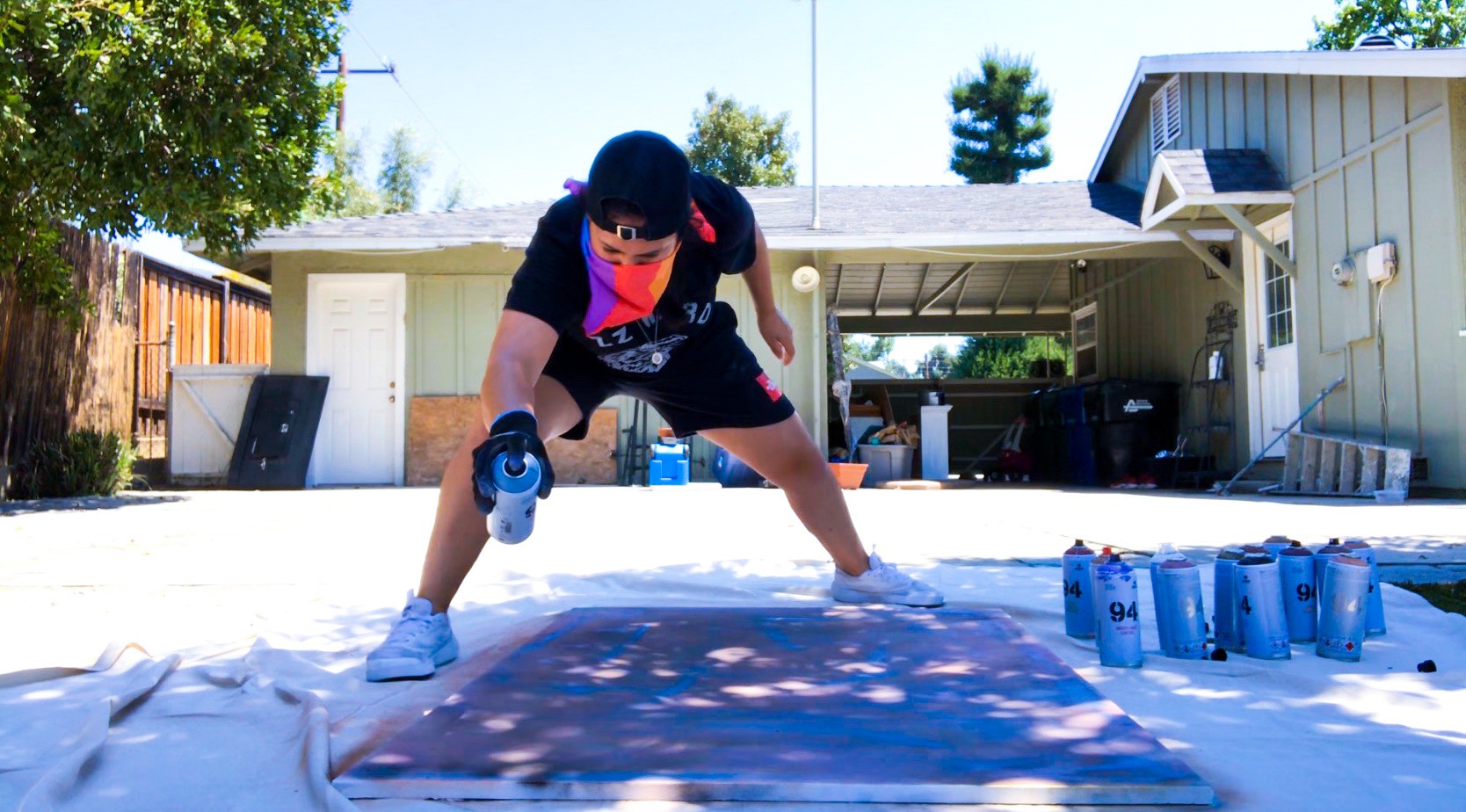
The best advice I have comes from my History of Graphic Design professor. When I am overwhelmed I often think back to when she had our class look out the window while we ate a brownie. At first, I thought it was weird as we all silently stared outside. I later realized she was teaching us something valuable. She told us to breathe in and out, focusing on nothing but eating the brownie and enjoying the view. The advice here is to step back, take a breather, and focus on your surroundings. Taking moments to focus on nothing but your breathing and surroundings is my favorite reset button. When I feel overwhelmed, I’ll often do this to clear my mind. It helps me focus on how to move forward efficiently. If I find I’m still feeling a lot of stressful energy, then I’ll take a break and do something to release that energy. I find it helpful to skate, bike, or paint. Finding activities that help regulate your mind and body allows those two parts of you to connect again and offers the opportunity to think more clearly about the best path forward to accomplish your tasks.
Contact Info:
- Website: Dribbble.com/tagyoureit
- Instagram: Tagyoureit.official
- Linkedin: LinkedIn.com/in/larmenta