We recently connected with Mike Penny and have shared our conversation below.
Mike, so great to be with you and I think a lot of folks are going to benefit from hearing your story and lessons and wisdom. Imposter Syndrome is something that we know how words to describe, but it’s something that has held people back forever and so we’re really interested to hear about your story and how you overcame imposter syndrome.
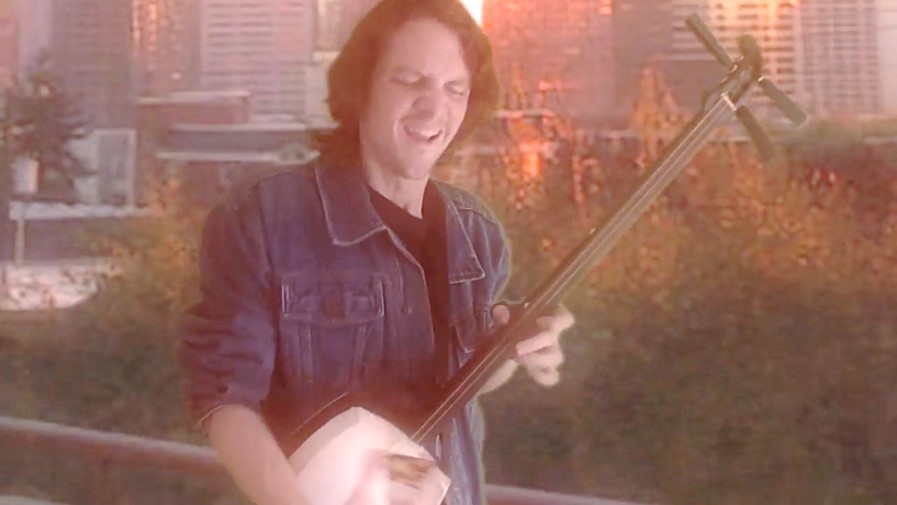
I’m not sure I’ve overcome it, or ever will, but I think staying grounded in my own truth and reality and realizing that other people’s ideas about me and their praise or criticism is not absolute truth has helped alleviate much of the pressure I’ve felt to live up to outside expectations. An interesting aspect of playing the Tsugaru shamisen as a non-Japanese person is that I have taken on an extra-musical role in presenting the history and culture of the instrument, which I take great care in so as not to misrepresent or appropriate that culture. Presenting the shamisen’s rich history and evolution to people who have no familiarity with the instrument is a real privilege, and it’s also a responsibility. That responsibility to accurately and respectfully represent the shamisen to audiences, or to be as good a player as others say I am can sometimes translate to internal pressure I put on myself to “not mess it up”, or to be the solemn, grave ambassador of shamisen that some people may want me to be, etc. My method of choice for overcoming these pressures and re-grounding myself, let’s say before a performance, is to distill things down to the facts and ask myself, “What actually is the situation in front of me?” I tell myself that I know who I am and what I need to focus on, and that I can’t worry about living up to any expectations that others have for me, be they lofty or lowly. As long as I remember who I am, regardless of who or what others say I am, I find I can keep my own imposter syndrome in check.
Thanks, so before we move on maybe you can share a bit more about yourself?
From broad to specific, I am a composer of many different styles of music and I also specialize in performing and teaching shamisen, a three-stringed percussive lute from Japan. I’ve had a YouTube channel for over a decade where I’ve posted all of my wild shamisen creations, including ’80s New Wave “shami-pop” songs, arrangements of Western classical pieces for solo shamisen, and more. In recent years, I have had the pleasure of recording shamisen for various TV/film/video game projects, and I hope to record even more in the future! I really enjoy exploring the versatility of the shamisen, and incorporating shamisen into many styles of music with which it has not traditionally been paired, such as Eastern European and Romani folk, Baroque, metal, etc. You can check out my albums by searching for Mike Penny Orchestra/Mike Penny on Spotify or Apple Music, and you can SEE what I do on my YouTube channel or my website!
If you had to pick three qualities that are most important to develop, which three would you say matter most?
The late Rev. Tom Kurai was the Director of a successful L.A.-based taiko drum ensemble called Taiko Center of Los Angeles, and he was tremendously helpful in acquainting me with, and getting me to think more about all of the skills OTHER THAN the actual playing of my instrument that I would need in order to advance. Rev. Tom was a close friend and professional mentor of mine, and I met him a couple of years after I had started playing out as a shamisen performer. In Santa Cruz, CA, where I lived for a year to study shamisen, I performed with taiko drum ensembles a few times and the combination of taiko and shamisen always seemed to work pretty well. So when I moved back to L.A. in 2005, I immediately started looking for taiko groups to perform with, and I came across Taiko Center of Los Angeles’s website. I sent an email through TCLA’s website asking if they were interested in collaborating with a shamisen player, and Rev. Tom wrote me back and started hiring me to accompany the taiko group at various performances throughout L.A. Sadly, Rev. Tom passed away in 2018, but I still have not forgotten so many of the insights and pearls of performer wisdom he imparted to me. He was the first person to say that it wasn’t enough to simply play the shamisen; I needed to think about my own personal approach to the instrument and its music and share that with audiences as well. I learned a lot about the power of personality in performance from Rev. Tom, too!
What is the number one obstacle or challenge you are currently facing and what are you doing to try to resolve or overcome this challenge?
The lack of time to do everything I want to do with music and with shamisen. I feel lucky in that I have so much inspiration all around me here in Hollywood, and I have so many ideas I want to produce, but of course…there is never enough time. In the past couple of years, there has been a sizable shift in my priorities and I now try to find more of a balance between my art and the rest of my life. Among some of my musician friends, I’ve always had a bit of a reputation for being a dogged, obsessive musician who will work non-stop on projects (sometimes to the detriment of my own self-care), and I have been trying to adopt a more sustainable lifestyle lately. Art is so important to me and my music projects can often be all-consuming for me, but I also feel like there will never be enough time, so why not take a break occasionally to smell the roses? I also think that it’s essential to LIVE in order to continue one’s own artistic development; one feeds the other.
Contact Info:
- Website: www.mikepennymusic.com
- Instagram: https://www.instagram.com/mikepenny01/
- Facebook: https://www.facebook.com/MikePennyOrchestra
- Youtube: www.youtube.com/mikepenny01


Image Credits
None