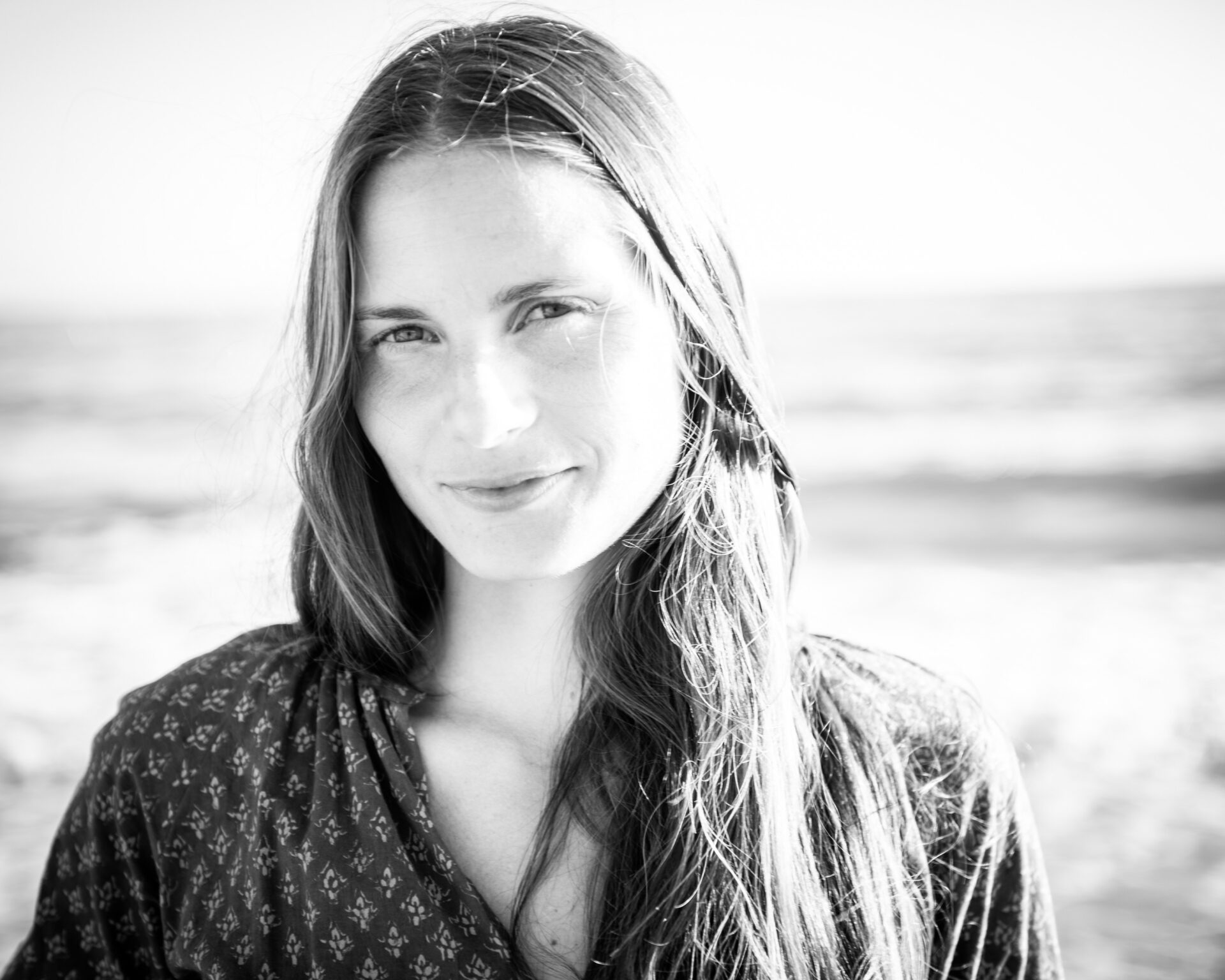
We caught up with the brilliant and insightful Molly Mitchell-Hardt a few weeks ago and have shared our conversation below.
Hi Molly, really happy you were able to join us today and we’re looking forward to sharing your story and insights with our readers. Let’s start with the heart of it all – purpose. How did you find your purpose?
I always envied those who knew what they wanted to dedicate their lives to from a young age, mostly because I was not one of those people. Finding my purpose became an all consuming labor of love and fear in my early twenties. I feared going down a path that did not align with the calling of my deep self and I refused to get a job that simply paid the bills. This inquiry paralyzed my forward motion for years after I graduated college and induced a gooey cocoon phase of confusion, disorientation and disillusionment.
In my efforts to “figure it out,” I worked with a healer in Thailand who helped me envision what a purposeful life would look and feel like, this helped to center me upon a path without knowing the specifics of how I would get there. I had lofty vague fantasies of making a positive impact on the world. I had done some work previously in the non-profit sector and was filling out my application for the Peace Corps. It wasn’t until I deepened into my then burgeoning yoga practice, when I slowed down and got quiet that I could hear that small voice within, guiding me elsewhere. It became clear that the next step forward was to take up serious training in the discipline and spiritual practice of yoga (though I did not dare speak this out loud for some years.) I continued to float in the cocoon, paralyzed by existential dread.
Once I started to integrate and orient myself in the direction of yoga and spiritual practice as a life path, I shared my desire with one person and not only did they support me, but they pointed me in the right direction for training. Not a few months later I sold the majority of my things and left for India where I trained at the School of Santhi with Swami Santhi Prasad and later traveled to Northern India to bathe in the Ganges during the Kumbh Mela Festival. This journey was the birth of the first iteration of purpose driven work in my life. I spent the next ten years practicing, learning, and teaching yoga all over the world. I loved this work as it laid the groundwork for my work now. I learned how important inner-knowing, practice, and embodiment are to healing.
As my own journey of inner work transformed, so did my work. I got the inkling that I would like to do deep one on one and group work with people and that beyond teaching yoga, I was meant to be a container of healing for others. My purpose continues to unfold in front of me as I believe it will for the rest of my life. I knew I had arrived onto my path when I experienced exuberance and excitement about learning and a sense of congruence in my work with people. The bonus is that parts of self that I once considered weak were now not only assets in my work, but growing more powerful including my sensitivity and intuition.
Thanks for sharing that. So, before we get any further into our conversation, can you tell our readers a bit about yourself and what you’re working on?
I work in private practice as a depth and somatic psychotherapist for teens, adults, and couples. In addition, I facilitate group work in the form of workshops, ceremonies, and movement practice. In the deepest sense I am a philosopher with a calling to sit with others through the dark nights that invite us all into the depths of life.
As a seeker of the depths, I am always peeling back the layers to find veritable truths, which is how I have arrived in this place in my work. My approach is eclectic in nature, I adapt to meet client(s) where they are. No two sessions are exactly alike, it is not a one size fits all approach, it is not prescriptive, it is more akin to a dance, staying present and attuned to what arises in the container to be seen and lifted up.
Depth psychology offers an incredibly rich medicine bag, the basis of the approach is the acknowledgement that there is more to this reality than meets the eye and more often than not it is the unseen reality (the unconscious) that dictates our behaviors, motivations, and impulses. The work entails exploring shadow material via the imaginal process, dreamwork, exploring parts of self and how they interact, mythological and ritual containers. I combine this with the somatic approach, which centers the body’s physiology, another world that exists primarily within the unconscious and out of linear time. Through slowing down and attuning to the physiology we meet those parts that often get lost when we focus primarily on the cognitive, thought or story-based content. I have found this fusion of approaches to be a powerful healing salve for the soul, ultimately revealing the wholeness that is always ever present and the healer within us all.
A great way to explore my work more is through my podcast The Whole Paradox, where I explore depth psychological concepts, somatic and healing work with experts in the field.
There is so much advice out there about all the different skills and qualities folks need to develop in order to succeed in today’s highly competitive environment and often it can feel overwhelming. So, if we had to break it down to just the three that matter most, which three skills or qualities would you focus on?
First, my studies in depth/Jungian psychology has had a lasting impact on my cosmological stance, has added an ocean of depth to my world, and increased my capacity to hold the human experience. An iteration of that from the work of James Hillman, sparked a simple, but profound shift, which is the concept of the polytheistic psyche, simply put, the psyche is made up of a vast many parts that can be understood as different archetypal energies. When we relate to the psyche as multitudinous and begin to identify and name these parts, we can forge a more clear and objective relationship with these parts. The final piece that has been world-reshaping for me has been the study of somatics, most fundamentally the acknowledgement and attunement to the felt sense, meaning the sensations that constellate in the body in any given moment. From there grows the capacity to learn and work with the nervous system in order to experientially create impact on well-being and re-negotiate past trauma.
If I were to advise folks around how to explore these three facets, I would say, if you are interested in depth/Jungian psychology you should check out the “This Jungian Life Podcast.” If you want to touch into parts work, you can begin by simply shifting the way you think and speak about yourself. For example, rather than saying or thinking, “I feel this way…” instead, saying or thinking, “a part of me feels this way…” It is a simple, but impactful and more accurate picture of what is going on in the inner landscape. Lastly, I would advise people who are interested in somatic work to start with the recognition that you are in a body and this body is always communicating with you through sensation or the lack thereof. The beginning of this journey is learning to become more mindful of the felt sense in the day to day and then if your curiosity runs deeper or you find when you tune in, the sensations are intense or void, you might consider finding a somatically trained practitioner to work with.
As we end our chat, is there a book you can leave people with that’s been meaningful to you and your development?
The Anatomy of the Psyche by Edward Edinger takes the theory of alchemy and maps the archetypal underpinnings of transformation embedded in the psyche. This has been impactful in many ways within myself and in my practice. When you can find yourself within an archetypal process that unfolds within all people, it not only normalizes your experience, but also places you in a framework larger and less personal than yourself. In addition, each operation or process in alchemy requires a death process, in the psyche this is often marked by uncomfortable or painful emotions, but are necessary in order to become a more authentic and essential version of self. This is not to negate or elevate suffering, but to acknowledge that the journey of becoming or self actualizing comes with a continual process of death and rebirth.
Contact Info:
- Website: http://yoursoulrising.love
- Instagram: https://www.instagram.com/mollymitchellhardt/
- Other: https://thewholeparadox.buzzsprout.com
Image Credits
Erick Madrid