We’re excited to introduce you to the always interesting and insightful Taylor De la Fuente. We hope you’ll enjoy our conversation with Taylor below.
firstName}, thank you so much for agreeing to talk with us about a deeply personal and sensitive topic. Postpartum depression affects so many in the community and hearing from someone who has overcome PPD might help someone who is going through it right now. For readers, please note this is not medical advice, we are not doctors, you should always consult professionals for advice and that this is merely one person sharing their story and experience
I figured out that I had postpartum depression (PPD) from listening to a podcast.
I’m a tough broad: my son arrived a month early after a normal pregnancy, and I handled it. He spent a week in the NICU under phototherapy lights, with a feeding tube up his nose, and I handled it. Once home, he ate constantly and never slept, and I handled it. He had colic and cried incessantly, and I handled it.
Or so I thought.
By the time he turned four months old, my resolve began to crumble. I was resentful of my husband, who didn’t know how to handle a baby that cried all the time. I pushed away help, even though I desperately craved it. I neglected my self-care routine. I felt guilty to be so excited to leave my baby and go back to work. I cried at least once a day.
And then, in the span of one week, three friends (separately) suggested that I might have PPD. Except that couldn’t possibly be true: I passed all of the mental health exams at my postpartum visits, I didn’t want to hurt myself, and I didn’t want to hurt my baby. I thought I was just having a hard time.
But a few days later, when my baby was crying inconsolably yet again, I decided to take him for a walk and listen to a podcast on PPD published by a reputable maternal health organization. Twenty minutes later, sitting on a park bench, I started crying.
They were talking about me.
They said that mild PPD can be described as not feeling like yourself, or making a big deal out of situations that previously wouldn’t have bothered you. They said mothers of NICU babies and colicky babies are more likely to have PPD. Most importantly, they said that go-getter, organized, entrepreneurial mothers — mothers like me — were less likely to get help because they were accustomed to being industrious and “figuring it out.”
Armed with my new self-diagnosis, I scheduled an emergency session with my therapist for the next day, and an emergency visit with my primary care provider the day after that. My Zoloft prescription was filled that same day, and about two weeks later I started to feel more like myself. Less overwhelmed by the little things. Less resentful of my partner. Less frustrated by these seismic life changes.
My son is now almost 9 months old, and I still wouldn’t say that I’ve “overcome” PPD. But I’m getting there. Regular therapy sessions, antidepressants, reliable childcare, and sharing my story publicly have put me on a road to recovery.
Let’s take a small detour – maybe you can share a bit about yourself before we dive back into some of the other questions we had for you?
The mission of my copywriting agency, Bigmouth Copy, is simple: to help creatives take over the world. They’re the ones with all the talent, after all. In a world full of same, same, same, they birth new ideas and create pure joy. They have a voice through their art — one that I think should be amplified. And that’s my job: to use words to help creatives woo more clients, sell more services, and get paid for their art. It’s the best job on the planet.
If you had to pick three qualities that are most important to develop, which three would you say matter most?
Three qualities that had the most impact on my journey have been bravery, honesty, and creativity. These are also three of my core values (as a person, and as a business owner). They have a symbiotic relationship, so I recommend attempting to cultivate all three at once. Start with something that scares you, even if it’s something small. Is it something little, like saying no to a friend, or something big, like quitting your 9–5? It doesn’t matter. Think about the thing you’re afraid of, and be honest about all of the “worst case scenarios.” Then go do something about it — something brave — even if it scares you. Use creativity to solve your problem, if you must.
Do you think it’s better to go all in on our strengths or to try to be more well-rounded by investing effort on improving areas you aren’t as strong in?
You’ve gotta go all-in on your strengths. Trying to be great at everything is A.) exhausting and, B.) asinine. Would you tell a fish to just try harder at flying, and one day she’ll learn how to fly? No. And even if she did learn how to fly, she’ll never be as good at flying as a bird.
Contact Info:
- Website: www.bigmouthcopy.com
- Instagram: @bigmouthcopy
- Facebook: @bigmouthcopy


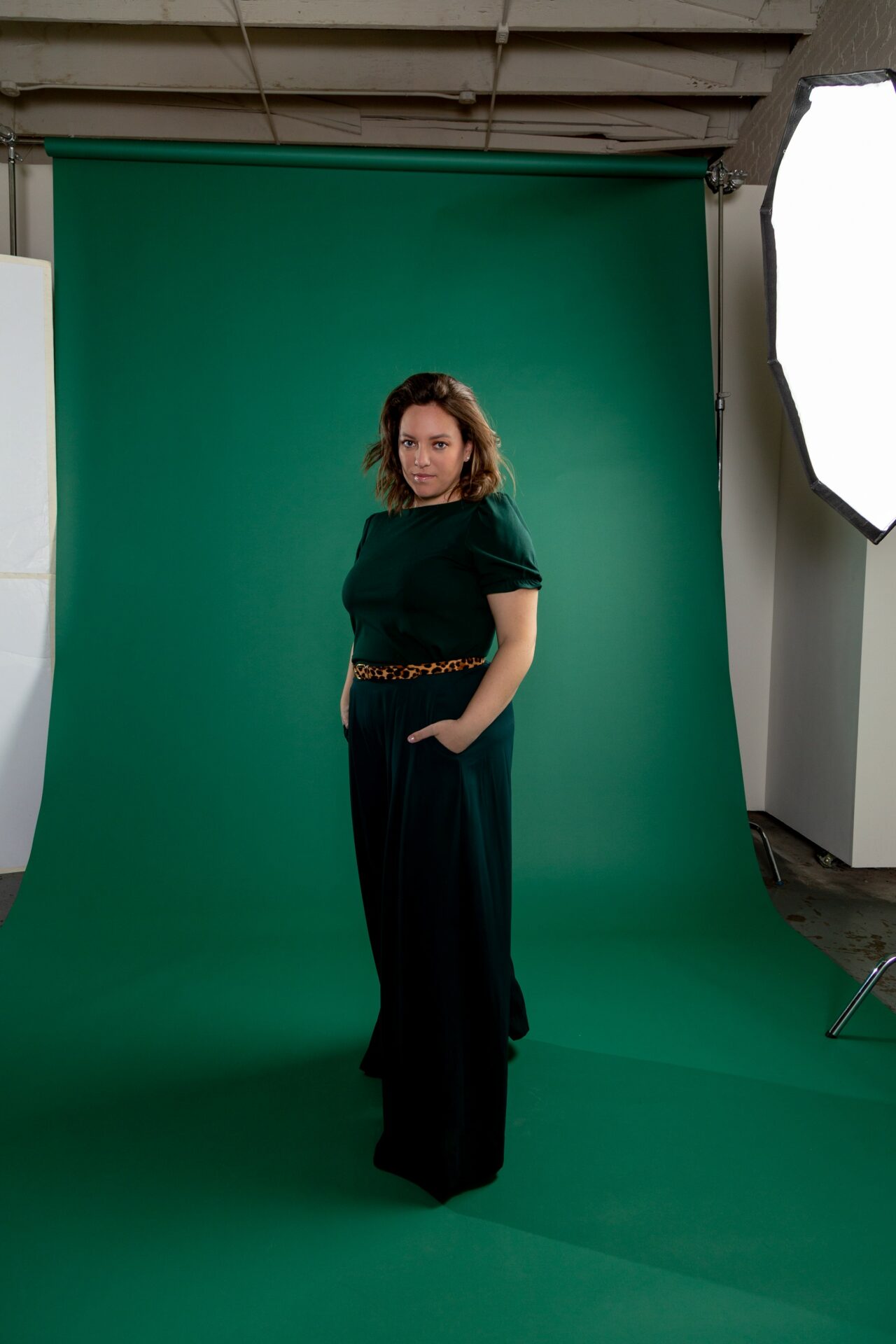
Image Credits
Photos by Yuvie Styles. Branding by Ameline Studio.