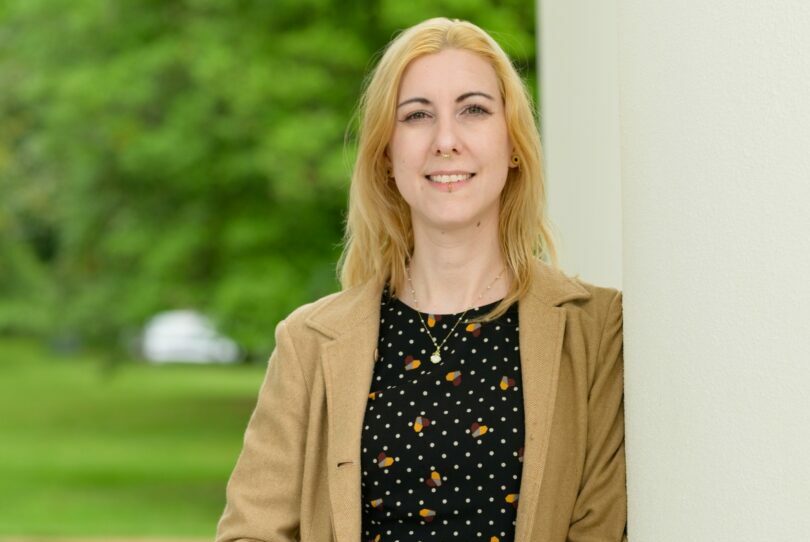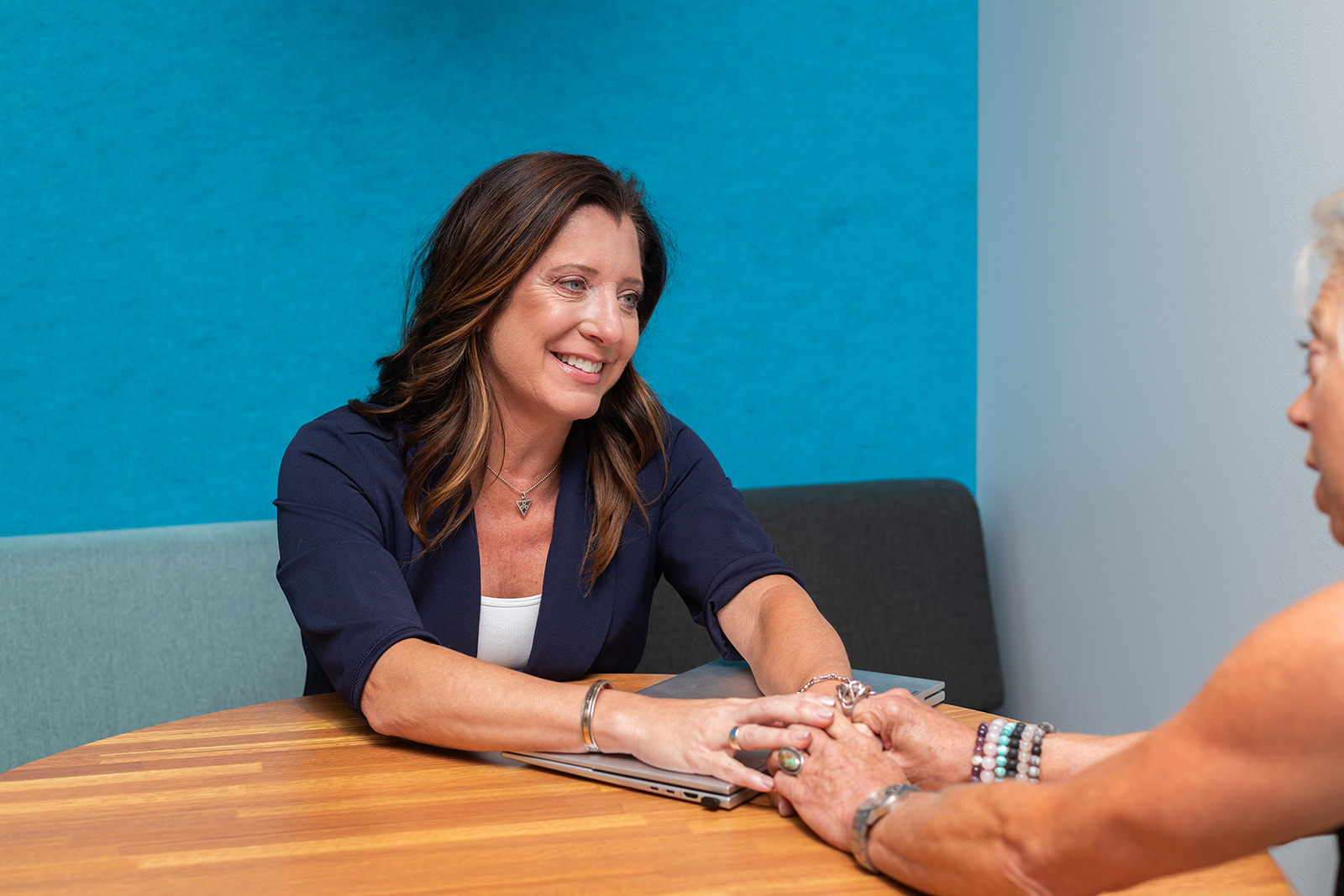
Shannon Carr shared their story and experiences with us recently and you can find our conversation below.
Hi Shannon , thank you so much for joining us today. We’re thrilled to learn more about your journey, values and what you are currently working on. Let’s start with an ice breaker: What are you being called to do now, that you may have been afraid of before?
Currently I am the National Director of Parish Partnerships for Decided Excellence Catholic Media. Even though I had founded Hopeful Hearts Ministry nearly 14 years ago, I never could feel confident in my abilities to work in a competitive business environment. The abuse I had incurred at such a young age left a main lie within me that “I didn’t have a right to success,” and when Covid forced me to seek employment outside of Hopeful Hearts Ministry in order to keep the ministry running, I was led into DE – and five years later I went from the bottom all the way to the top!
Can you briefly introduce yourself and share what makes you or your brand unique?
Absolutely! I’m the founder of Hopeful Hearts Ministry, a nonprofit dedicated to giving a voice to survivors of abuse. What began as my own journey of healing has become a mission to help others find hope and freedom beyond their trauma.
We provide peer-support services, trauma-informed educational workshops, and empowerment programs (like breathing/meditation practices, boundary-setting classes) to adults still navigating the after-effects of physical, emotional, or sexual trauma. Tamara, the Executive Director, and I do a fabulous podcast – Hopeful Hearts Podcast available on all podcast channels and I’m also the author of Exposed, Redeemed, and Reclaimed, which share my personal story of survival and faith and help survivors overcome trauma and gain healthy control of their lives.
What makes Hopeful Hearts unique is that it’s built from lived experience and rooted in compassion and faith. We remind survivors they are not alone, and that their story isn’t over. We focus on long-term recovery and thriving, not just crisis response. Many support services focus on immediate intervention; we walk with survivors beyond the first steps, toward rebuilding identity, community, and purpose.
Okay, so here’s a deep one: What was your earliest memory of feeling powerful?
The first time I truly felt powerful wasn’t about control or achievement, it was about connection. I was in my mid-to-late twenties when my neighbor’s niece from Peru came to visit. She had been brutally assaulted and was struggling to heal emotionally. Though I hadn’t yet shared my own story of abuse, she somehow sought me out.
I remember sitting with her, simply listening, offering the understanding I didn’t yet know how to give myself. That summer, I witnessed her slowly begin to heal. She smiled more, carried herself lighter, and rediscovered a sense of peace. In that experience, I realized that when we bring what’s been done to us out of the darkness and into the light, there is incredible freedom and strength.
That was the moment I first understood the quiet power of empathy, and how God can use our wounds to help heal others.
If you could say one kind thing to your younger self, what would it be?
If I could say one thing to my younger self, it would be: You are worthy. I’m grateful for the suffering I’ve endured because it shaped me into who I am today, resilient, courageous, and unwilling to give up. But I wish I’d learned sooner to appreciate and love myself enough to silence the lies that abuse and trauma planted deep within me.
So many choices might have been different if I had known I had the right to say no, to follow my dreams, to insist, “You can’t talk to me that way,” or “I’m worth more than this.” I would tell that young girl she is amazing and strong, that her feelings matter, and that her light is not something to hide, it’s a gift meant to shine.
So a lot of these questions go deep, but if you are open to it, we’ve got a few more questions that we’d love to get your take on. Is the public version of you the real you?
This question hits home because if you had asked me ten years ago, I would’ve said “yes”, but deep down, I knew I was still hiding parts of myself. Back then, I was confident speaking up for others, but I hadn’t yet claimed that same voice for myself.
Today, I can honestly say the public version of me is the real me. What you see is what you get – sometimes awkward, often loud and full of laughter, yet always determined and grounded in purpose. I’ve learned through healing and time that there’s no need to hide anymore. There’s a quiet freedom in being fully seen and fully me.
Before we go, we’d love to hear your thoughts on some longer-run, legacy type questions. What is the story you hope people tell about you when you’re gone?
I hope the story people tell about me is that I loved them deeply, whether I knew them for a minute or a lifetime. I want people to remember feeling seen and heard, to know that their story mattered to me. More than anything, I hope they felt empowered, by my words, my actions, or my own story and to believe in their worth and the hope that never fades.
Contact Info:
- Website: https://www.HopefulHeartsMinistry.org
- Instagram: Hopeful Hearts Ministry
- Linkedin: Shannon Carr
- Facebook: Hopeful Hearts Ministry
- Youtube: Hopeful Hearts Ministry
- Other: Hopeful Hearts Podcast on Spotify and Apple

Image Credits
Houston Studio
so if you or someone you know deserves recognition please let us know here.