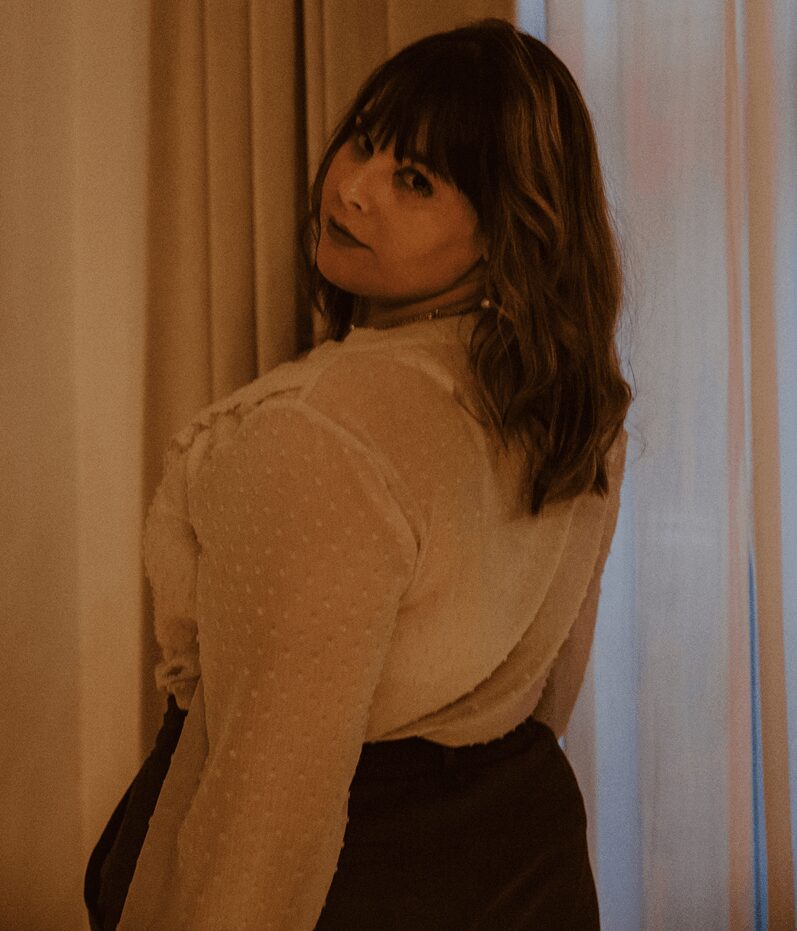
We’re looking forward to introducing you to Bailey Merlin. Check out our conversation below.
Bailey, really appreciate you sharing your stories and insights with us. The world would have so much more understanding and empathy if we all were a bit more open about our stories and how they have helped shaped our journey and worldview. Let’s jump in with a fun one: What battle are you avoiding?
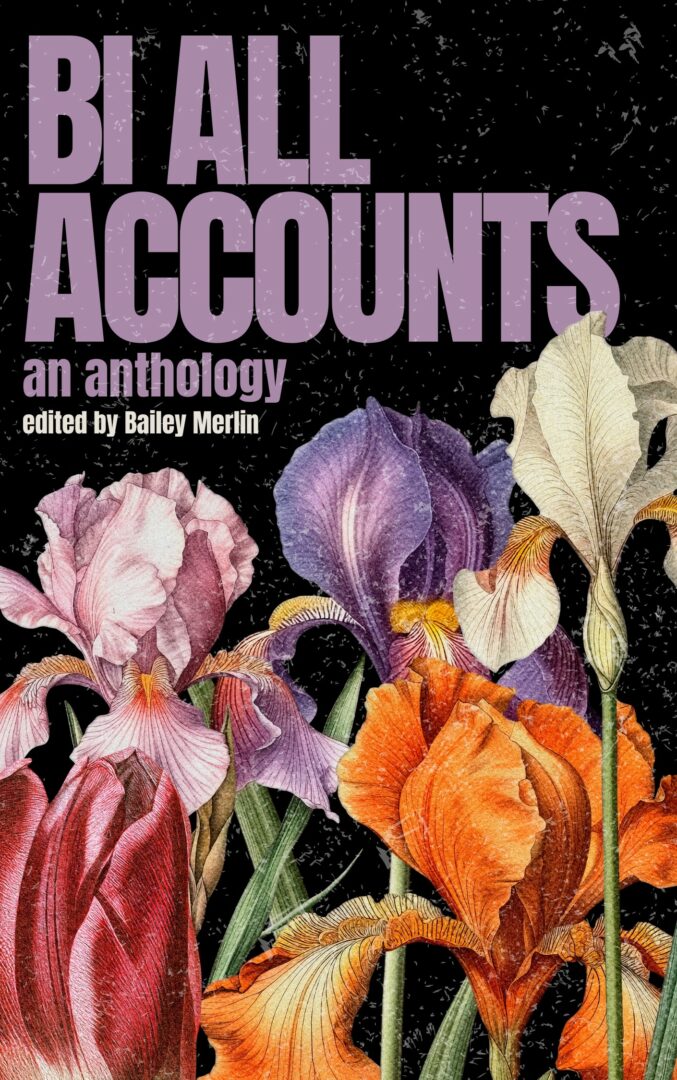
Honestly? The battle between rest and productivity. I keep trying to negotiate a peace treaty, but neither side is reasonable. I’ve built a career out of creating spaces for other people (the Bi+ Book Gang, Bisexual Killjoy, the Bi All Accounts anthology, the Bi+ the Book Writers’ Conference) and I love it. But there’s a constant tug-of-war between wanting to nurture everything I’ve built and wanting to lie face-down in the grass for a week.
I’m also avoiding the battle of “enoughness.” Doing community work, especially in the bi+ world, can feel like shouting into a void that keeps asking for more. More events, more posts, more advocacy. I want to give it all, but I’m learning that martyrdom isn’t actually activism (rude). Rest is part of the work, too, even if I’m terrible at it!
Can you briefly introduce yourself and share what makes you or your brand unique?
I’m Bailey Merlin: writer, community builder, and professional bisexual. I run the Bi+ Book Gang, an international collective that celebrates bi+ writers, and I co-host Bisexual Killjoy, a podcast where we talk about bisexuality, history, and culture with equal parts humor and honesty. Basically, I build spaces for bi+ people to see ourselves as whole, complex, and worth taking seriously (even when we’re being ridiculous).
My work lives at the intersection of art, academia, and activism but it doesn’t feel like homework. The Bi+ Book Gang is my love letter to storytelling as survival, and Bisexual Killjoy is a playground for big ideas told through laughter and rage, but also joy. Together, they form a growing archive of what it means to live bi+ out loud in a world that still struggles (or even refuses) to understand us.
Right now, I’m promoting Bi All Accounts, an anthology of bi+ writing that came out in September, and the first-ever Bi+ the Book Writers’ Conference in 2026. Additionally, Jace and I have just signed a book deal with Jessica Kingsley Publishing for a survival guide for bi+ women, and we’re in the writing trenches. Basically, my calendar is a disaster and just about everything is related to bi+ness.
Okay, so here’s a deep one: What’s a moment that really shaped how you see the world?
It happened during my time in the Media, Medicine, and Health program at Harvard Medical School. I was researching the “loneliness epidemic” and came across a statistic showing that LGBTQ+ people are significantly more likely to experience loneliness than their straight counterparts. No surprise there. But when I looked closer, I noticed something strange: The majority of respondents weren’t gay or lesbian, they were bisexual.
At first, I thought it was a mistake. How could we be most of the queer community (almost 60 percent!) and still feel invisible even in our own spaces? That question sent me spiraling down the research rabbit hole. I started looking at bi+ health data and what I found was staggering: higher rates of anxiety, depression, suicidality, substance use disorders, domestic violence, poverty, you name it.
When I asked my professors where I could learn more, they didn’t have answers. Not because they didn’t care, but because no one had ever really asked the question before. So I had to go find them myself.
That moment changed everything for me. It cracked open my purpose. I realized that if no one else was going to study us, write about us, or advocate for us, then I would. Honestly? Spite changed my life.
What did suffering teach you that success never could?
Suffering taught me how to stay. Success photographs well. We all want to look good. But suffering asks you to sit still and face the parts of yourself you’d rather edit out. It’s where I learned how to hold contradictions: to be angry and grateful, heartbroken and hopeful, lost and still moving.
In the moments where life fell apart, I think I realized that meaning doesn’t live in achievement; it lives in connection. Community is my lifeline. I didn’t start building spaces like the Bi+ Book Gang and Bisexual Killjoy because I felt good; I started them because I was lonely and needed proof that I could build something better with other people.
Suffering also made me funny. There’s something about being cracked open that rearranges your sense of humor. You stop trying to perform perfection and start saying the quiet parts out loud.
Success feels good, don’t get me wrong. But it never taught me how to keep going when the email doesn’t come, the money falls through, or the world stops making sense. Suffering did. It taught me how to turn pain into community, exhaustion into curiosity, and despair into something resembling purpose.
Next, maybe we can discuss some of your foundational philosophies and views? Is the public version of you the real you?
Yes, but she’s got better lighting.
The public version of me is real, but curated in the same way any storyteller shapes a narrative. I don’t lie, but I do edit. The “me” you see on Bisexual Killjoy or Bi+ Book Gang is the same person writing, organizing, overthinking behind the scenes, and a LOT less screaming into a pillow.
The truth is, I don’t believe in the idea of a single “real” self. We all shapeshift depending on where we are and who’s in the room. My public self is an amplifier for the parts of me that have a purpose: to make people feel less alone, to tell the truth about bisexuality, to make someone laugh on a day that feels impossible. That version of me isn’t fake; she’s focused. She’s also a bit of a caretaker, and we have to talk about that in therapy.
But there’s the private side of me, the side only my partner sees because, well, he lives with me and you can only mask for so long. That’s a darker side, a more pessimistic side, a tired side. That side is cranky. That side can’t sit still. That side is never satisfied. I’m not ashamed of her. If anything, I want her all to myself.
At the end of the day, I think authenticity isn’t about showing everything. It IS about showing what matters, and not pretending the rest doesn’t exist.
Okay, so before we go, let’s tackle one more area. What light inside you have you been dimming?
My softness.
It’s easy to be loud about bisexuality, about injustice, about the things that make me angry. Don’t get me wrong, anger is important (I told you what spite made me do). It fuels me. Somewhere along the way, I learned to armor up and pretend like my feelings don’t exist.
Running Bi+ Book Gang and Bisexual Killjoy means I’m constantly in motion managing, producing, advocating. But that quiet, creative light, the one that writes without agenda or deadline, got dimmed under the weight of doing so much of “the work.” I’ve been trying to let her out again. To write for joy. To rest. To remember that softness isn’t the opposite of strength; it’s what makes the strength worth having.
Contact Info:
- Website: https://www.bisexualkilljoy.com/
- Instagram: https://www.instagram.com/biplusbookgang/
- Other: https://sites.google.com/biplusbookgang.com/bpbg/home

so if you or someone you know deserves recognition please let us know here.