Eileen McKeon Butt shared their story and experiences with us recently and you can find our conversation below.
Hi Eileen, thank you so much for joining us today. We’re thrilled to learn more about your journey, values and what you are currently working on. Let’s start with an ice breaker: What do you think others are secretly struggling with—but never say?
I’m pretty sure that a lot of us are struggling with “hustle culture” and the constant “grinding” that seems to be an inextricable part of it. I get really tired if I read certain social media channels for too long; there are just too many earnest tales of sleep deprivation, boss-loyalty, and selfless acts…. Sadly, this has penetrated into the heart of the creative community, and I know many fellow-artists who are petrified of stepping off the treadmill.
In terms of creative professions, I do think that people should “go for it,” and chase their dreams, but I disagree that success is always proportionate to one’s efforts. Poor Vincent only sold one painting during his lifetime, and he was definitely “grinding.”
For me, focusing on outcome blunts my creativity, so even if I have to trick myself into not thinking about that upcoming show or event, it helps me to maintain the integrity of the project at hand. I want my work to be authentic, and I try to maintain trust that it will find its audience (with a sane amount of promotion on my end).
We artists need to resist insanity and stay true to our own unique visions. Commercial culture just can’t be relied upon to inspire artistic originality, and our creative spirit is the only thing that actually gets subjected to “grinding.” I think we would all benefit from tuning in to ourselves more, unplugging from all the external noise, and just Create.
Can you briefly introduce yourself and share what makes you or your brand unique?
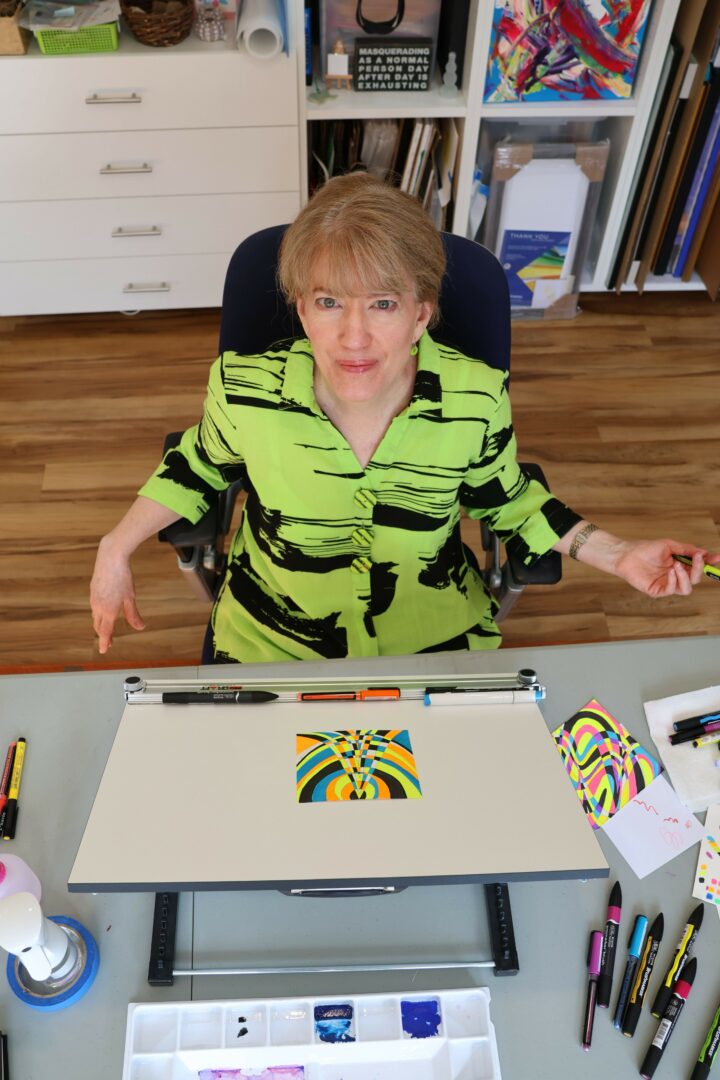
I work from my home studio in Austin, Texas, focusing primarily on abstract art. I’ve recently been creating high-energy geometric abstractions that fuse precision with rhythmic, kinetic movement. Through the interplay of color tension, spatial layering, and shifting perspectives, my work explores how vibrancy, structure, and optical motion can create emotional charge.
In my recent “Neon” series, I created a group of small abstract drawings in vivid fluorescent inks. Once I had a large number of them completed, I displayed them in a grid format on Plexiglas. This approach to display enabled me to change their positioning easily, and it allowed new relationships and synergies to emerge between the individual pieces.
I also used blacklights for the grids in order to intensify the colors. As I had hoped, they really popped off the wall!
Another recent exploration is based on my love of puzzles, mirroring, and tessellations; and the possibilities of creating images that function well in multiple orientations.
In my latest series, “CityScapes,” I used a simplified skyline as the basic image, and then created different variations that would make sense even when rotated in different directions (I was channeling Escher for sure!). The first few worked well either right side up or upside down, so I kept experimenting until I had drawings that worked well in all 4 directions.
It was a little tough figuring out how to display them so that they could move easily, but with the help of some magnets, I managed to enable the rotation I wanted, and the end result was interactive and fun!
The cool thing about all of these designs is that they can be scaled, they’re very dynamic and eye-catching, and can be used for a number of different purposes (murals, prints, fabric, cards, etc.). I’m excited to see how far I can take them!
Thanks for sharing that. Would love to go back in time and hear about how your past might have impacted who you are today. Who were you before the world told you who you had to be?
It’s so strange, but even after all these years, I don’t think my self-image has changed very much…I’ve always seen myself as a curious, energetic, creative-at-large, and even though I haven’t always been able to act on all of these attributes fully at every stage of life, it’s still an accurate description.
My biggest issue with regard to the world and its expectations is that I had no idea how to integrate my creative energies with what was available in the job market. My parents were both really practical people, so their view was that you just plug your skills into whatever the marketplace needed, and Boom: you were done! The need for creative fulfillment or self-expression wasn’t something that they, or most of the other adults I knew, thought was something that belonged in the workplace. Of course, the problem with this is that one spends SO much of one’s life at a job; if it’s not fulfilling and you’re creative, there’s going to be a Big problem.
But you can be creative at work, even if it’s not artistic. You can contribute novel ideas, optimize tasks that are inefficient, bring people together to create a sense of community…there are many ways.
What’s something you changed your mind about after failing hard?
I used to think that failure meant a full stop; that it signified a disastrous choice or action from which one should repent and divert from forever.
I had a horrendous first year in art school; it was all I’d ever dreamed of, but to my shock, the day-to-day reality of constant creation was something I found absolutely stultifying, and I longed for some juicy Elizabethan sonnets to analyze, or a dive into an energetic debate on Behaviorism vs. Humanism! I learned that my needs as a maker were easily served within a 3-hour class, but not an entire curriculum.
After struggling for months in a quagmire of unmet expectations, I decided to leave, with absolutely no plan for what was to come next.
A long series of new decisions ensued; there were many stops and starts, but there were also new skills and knowledge gaining momentum all along the way. Eventually, after a few career shifts and life events, I found myself right back where I started: taking art classes! I don’t regret a single step of my path, even though at the time, many things didn’t seem to be working out, and I felt like I was lost in the fog.
The biggest lesson I’ve learned from failing is that it is so, so important to be shamelessly, and even defiantly optimistic about the future. Failure does not mean you should hang your head low; it just means your actions and perhaps also your timing were wrong at a particular juncture. It means that it’s time to do things differently, have a rethink about the direction you were going in, and make a better plan.
If you’re thoughtfully moving forward, learning, and trying to improve, then there is no failure.
Next, maybe we can discuss some of your foundational philosophies and views? What are the biggest lies your industry tells itself?
One mistruth is that the most important art has, for the most part, already been identified, and is worth tons of money. The czars of the art world make these decisions, and they’re as subject to trends and fads as the rest of us. Will the pickled shark and the balloon dog still be worth millions 50 years from now? I’m not so sure….
It’s a little different when an artist is no longer with us, and can’t create new art; I don’t have any issue with Van Gogh’s art being highly valued, although I think he must be rotating in his grave at the prices his work commands, considering his extreme lack of financial success during his lifetime.
I just think that there’s some questionable art out there with giant price tags, and this reflects the trend of selling fine art as an investment: like jewelry, yachts, and real estate. But art is a different kind of investment; one that gives back in intangible ways. Sure, you can flip a painting (that the artist probably didn’t get a lot of cash for) and increase your profits, but I think it’s better to let art do what it’s best at: enhance your daily life by giving you something profound, beautiful, thought-provoking, complicated, or stimulating to consider as you make it a part of your personal environment.
This type of work is being made every day, but it rarely hits the big auction houses. I see it all around me here in Austin, but have no doubt it’s all over the globe.
Until things change in the art world, whatever you’re making today will be undervalued unless a gatekeeper has already “anointed” you; if you’re dead, you have a chance; if you’re a woman, or from a non-Western country, good luck; and the big lie that the industry tells itself is that the status quo can continue indefinitely. Wealthy collectors are going to catch onto the scam, and I hope, will start buying only what they love and then either keep it or loan it to a museum.
Okay, we’ve made it essentially to the end. One last question before you go. When do you feel most at peace?
This has to be when I’ve got lots of time, am in the studio absorbed in a project, and I don’t know what day it is, what time it is, who I am, or who anyone else is.
Most creative people recognize this state, and value how sacred and unique it is. I will say that it doesn’t always happen on cue: there are smaller brainstorms that pop up during ordinary activities far away from any sort of creative space. I believe that once you’re open to them, they will actually show up fairly often (my phone Notes app gets a lot of use!).
I don’t have a clock in the studio, and this is mainly because I want to be totally open to any potential creative flow that wants to happen. It’s a little funny, because my complete failure to keep track of time when working makes it a bit difficult when people ask me how long something took to make. I have to vaguely guess at how many days…and then try to figure out what portion of those days was spent on that particular project (does anyone work on just One project?), and I probably end up sounding like a total space cadet, but I don’t care. The right brain rules the studio, and she doesn’t care about time…ever.
We all need to protect whatever it is that gives us peace; the world is a challenging place, and mental health is something we need to preserve at all costs. Whether it’s a studio, a time of day, a state of mind, a ritual, we must safeguard it in order to be happy and effective as creative people.
Contact Info:
- Website: https://eileenmckeonbutt.com
- Instagram: @eileensmb
- Linkedin: eileen-mckeon-butt-9b273842/
- Twitter: @sciencesart
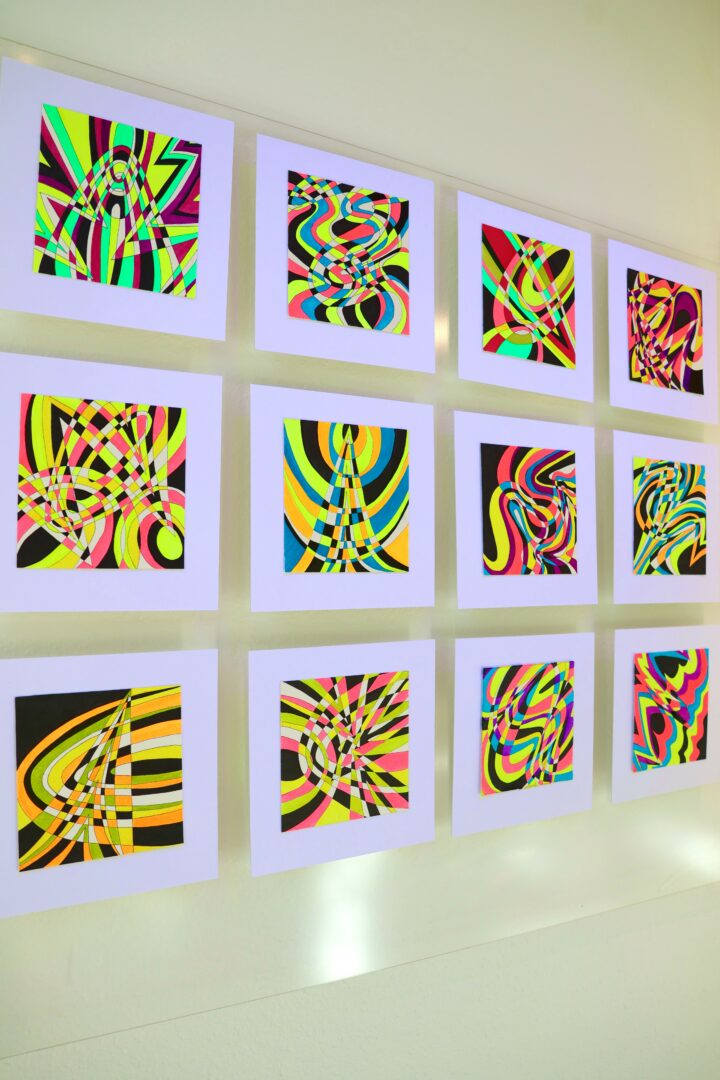
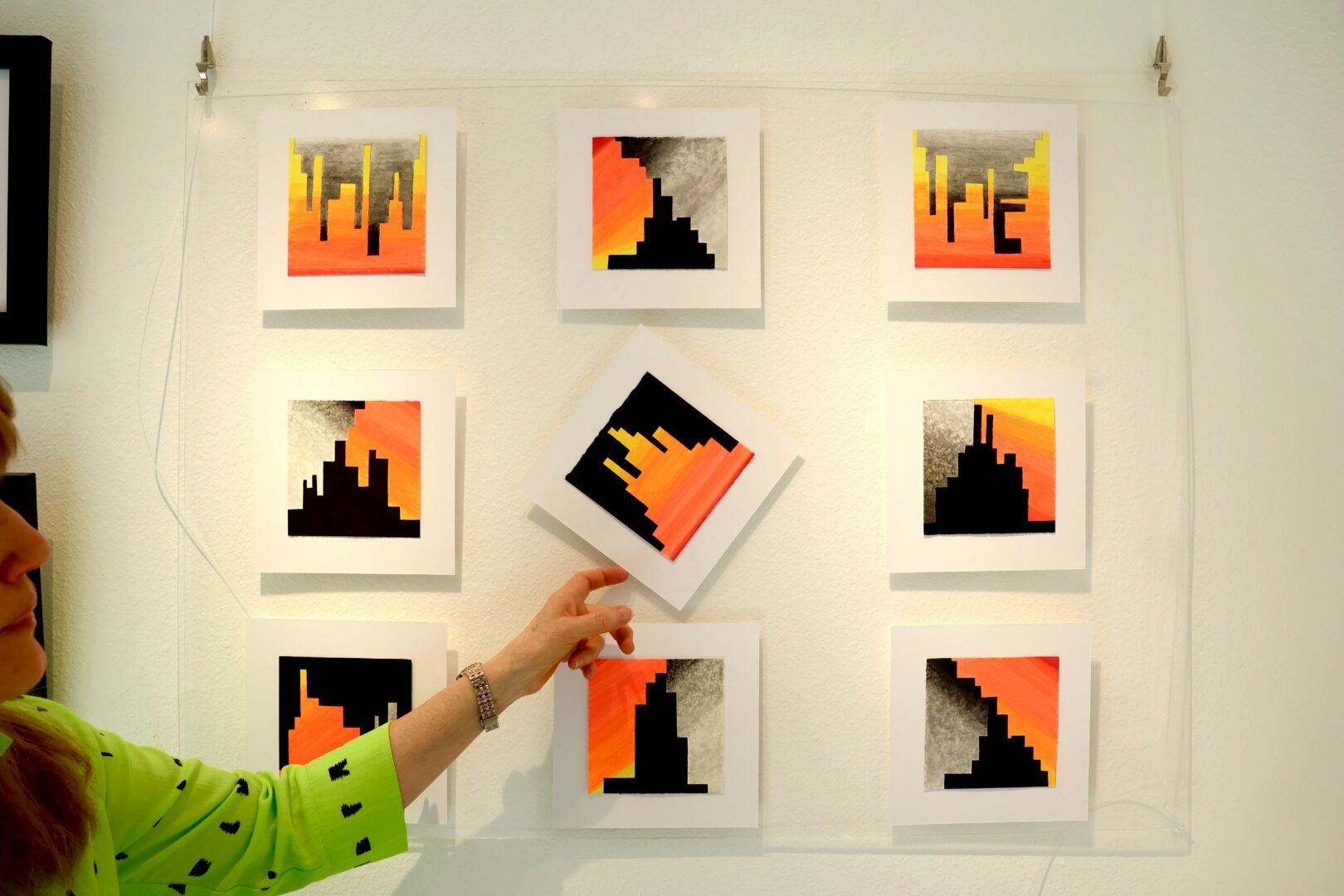
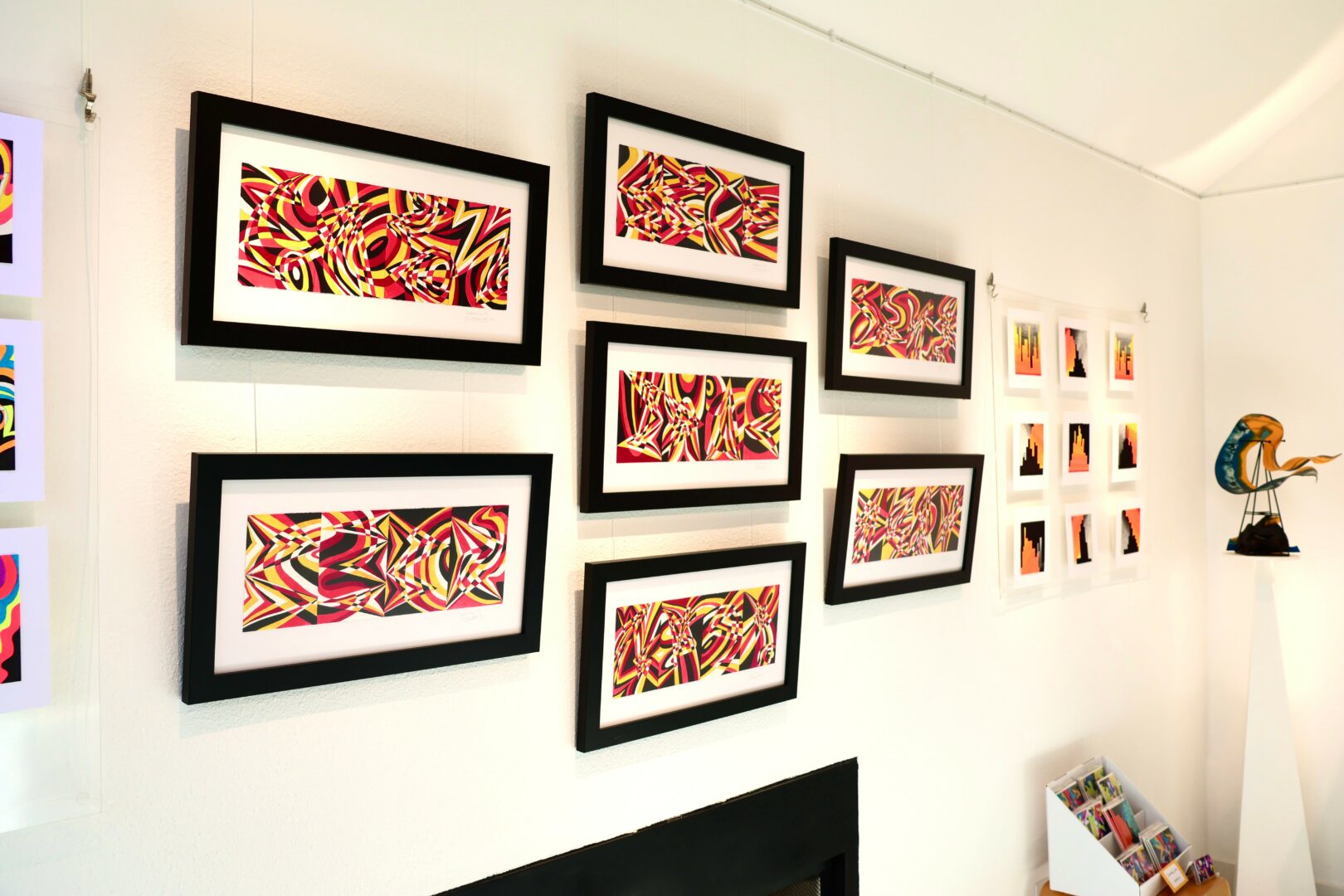
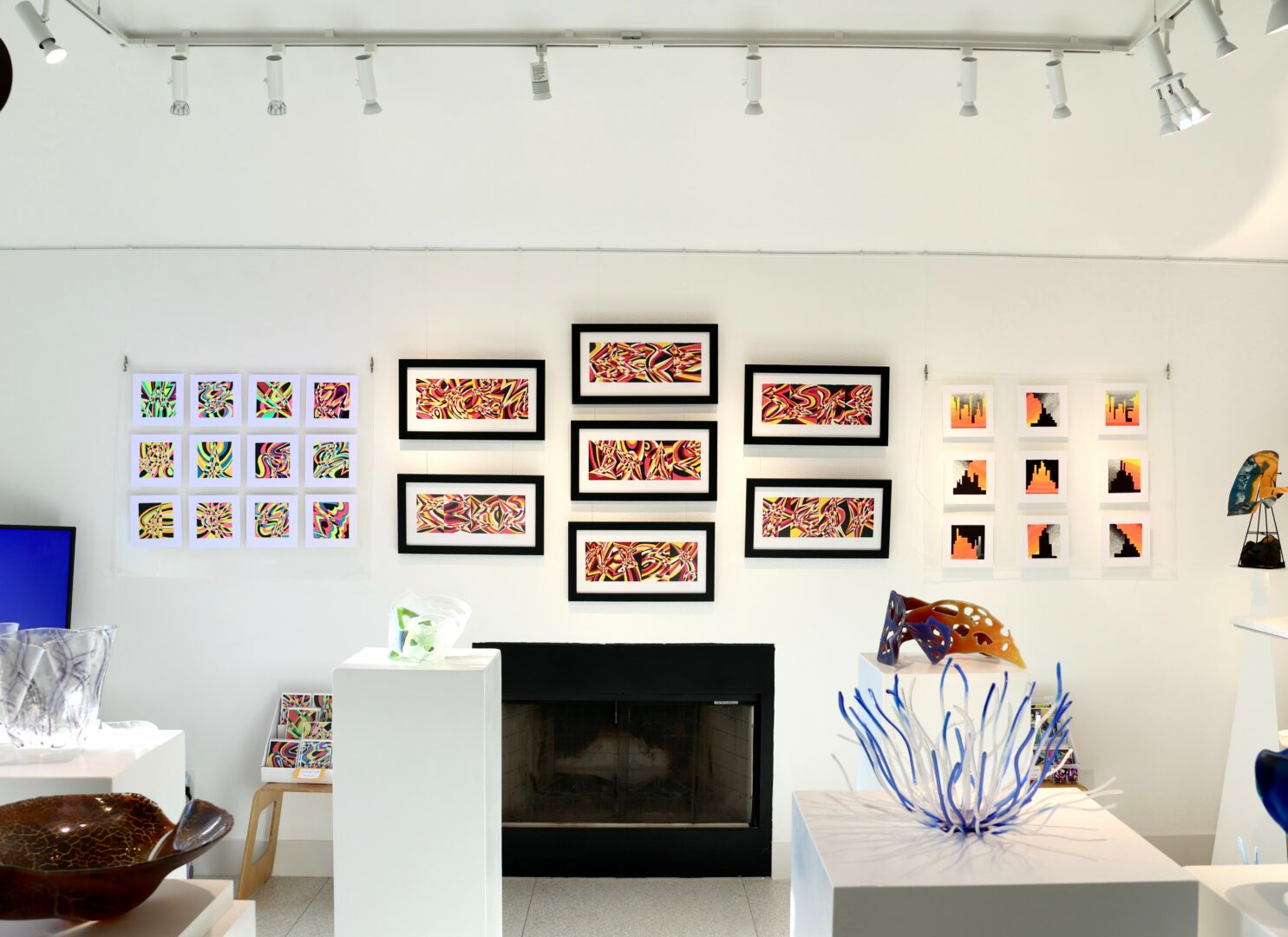
Image Credits
Alia Jehan
so if you or someone you know deserves recognition please let us know here.