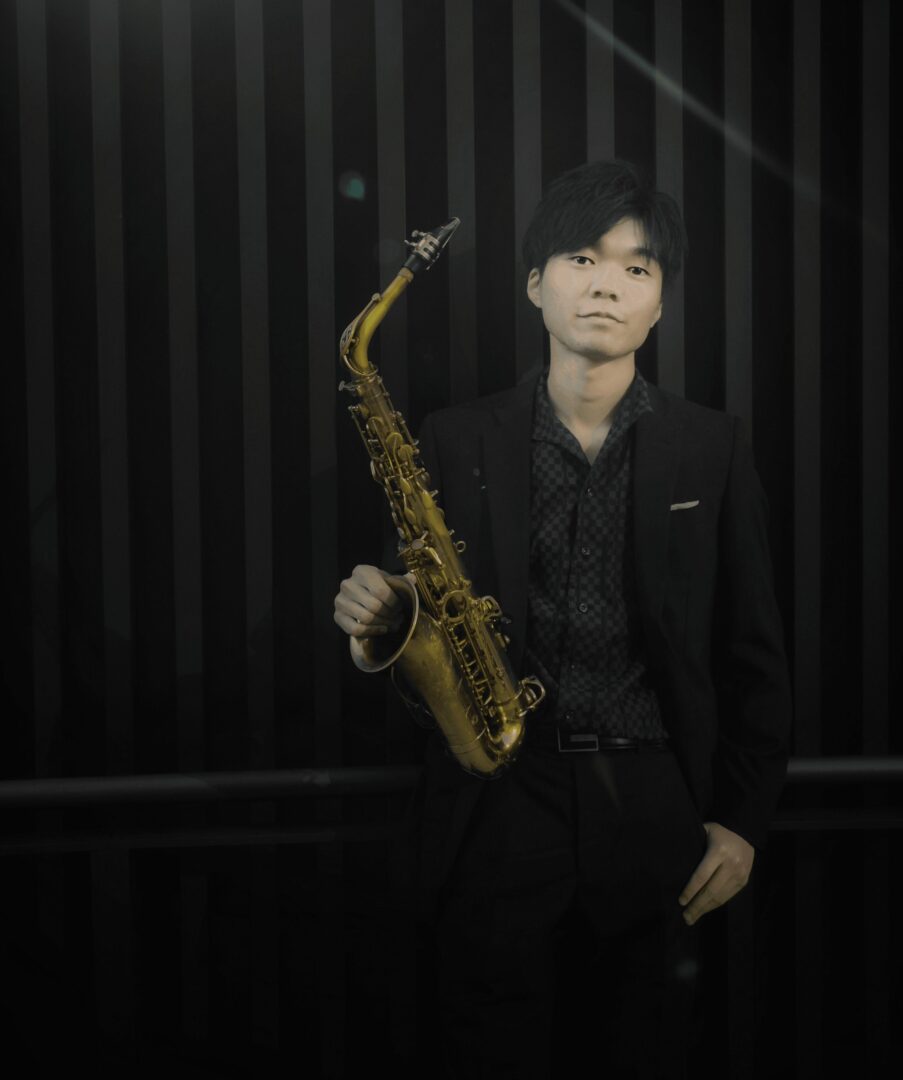
We’re looking forward to introducing you to Sen Yoshimura. Check out our conversation below.
Sen, a huge thanks to you for investing the time to share your wisdom with those who are seeking it. We think it’s so important for us to share stories with our neighbors, friends and community because knowledge multiples when we share with each other. Let’s jump in: What is a normal day like for you right now?
My schedule changes every day and week, which is probably typical for a musician. Most mornings, I spend time reading books about music or studying complex music theory, which I’m interested in. I also take care of essentials like replying to emails. In the afternoon, I go for teaching. Fortunately, I got a solid amount of students, and I am grateful to feel that I’m learning through teaching as well as it helps me to understand my own performance. At night, I practice the saxophone or work on composing new pieces for upcoming shows and recording projects. When I have free time, I go for a walk, or watch movies to expand my perspective.
Can you briefly introduce yourself and share what makes you or your brand unique?
I am a saxophonist and composer from Japan, currently living in Boston, USA. I graduated from Berklee College of Music last year for Bachelor’s degree, and from this Fall 2025, I’m going to start my master’s program at Berklee Global Jazz Institute, directed by the renowned pianist and educator, Danilo Perez. I am a performer and I play a wide range of styles including jazz, Latin, funk fusion, film music, and so on. I always feel honored and happy to contribute to someone’s show or recording project. So far, I’ve released two original compositions with my own group, and I’m currently working on a new album that I’m excited to share more about soon.
In addition to performing, I’ve started my career as an educator. I appreciate the opportunity as it allows me to revisit things again by describing it to other people. It is my pleasure to share the time and my experiences with my students and see them improving and falling more in love with music.
Appreciate your sharing that. Let’s talk about your life, growing up and some of topics and learnings around that. What’s a moment that really shaped how you see the world?
When I was younger and still maturing mentally, still I was lucky to be surrounded by thoughtful friends. One of them showed me kindness through small but meaningful supports. If I choose one story, one day when I was overwhelmed and hadn’t eaten, he noticed it and a few minutes later, he came back and brought me a lunch, skipping his own. Another time, when I made a mistake, he listened to me and helped me to fix it. I really appreciated those number of small helps, so I decided to help him as well whenever needed for anything.
Opposite thing also happens. I once said yes to a project led by someone I didn’t know well, without expecting anything in return. However, thankfully we could make a great friendship and he gave me a lot of great opportunities later as well. In addition, after I said yes to that project, I found out that one of the musicians of that project was someone I really wanted to play with someday. These experiences taught me that being a nice person and offering even a small help can make unexpected and meaningful rewards in the future for both others and myself.
What did suffering teach you that success never could?
Suffering taught me how success is special and delightful. It is like rainy day tells you how happy the sunny day is. I think suffering and success are the equal balance. Someone who achieved significant success went through long way of hard work and effort. I have several example about this. When I started studying music theory, I struggled a lot to understand the concepts. However, I was passionate and kept asking questions again and again to my first incredibly patient music theory teacher, Mitsuko Inomata, until I fully understand the concept. Thanks to her kind patience, although it took longer time and hard work for me, I was able to understand it. From that experience, now I am able to compose my original tunes using those theories and I genuinely enjoy it. Furthermore, I got opportunities to record those tunes. However, things didn’t go smoothly at first. On the day of the recording of my first single, the session was cancelled due to the water leak of the building. We rescheduled, but it got canceled again because of a snowstorm. Sometimes even this kind of issue which is impossible to control happens. However, on the third attempt, I got a better studio and time for everyone’s schedule, so the recording was very successful. From that experience, I got managing skill more, and learned that how valuable it is. Those are one of the examples success alone can’t teach.
Next, maybe we can discuss some of your foundational philosophies and views? What’s a cultural value you protect at all costs?
Living in Boston, I’ve had the amazing opportunity to meet people from all over the world and learn about their cultures. While each culture is different, it’s fascinating to discover similarities too. Although I completely respect all the cultures, I am proud of being Japanese and I love Japanese culture. There are quite a few cultural values which make Japan original, but today I want to highlight is the use of respectful language, particularly “Keigo,” which is a formal and polite way of speaking in Japanese. We upgrade words to make it politer when talking to elders or in formal situations. While similar ideas exist in other languages, Keigo is quite nuanced and unique. These days, young Japanese people who cannot use it in a proper manner, or even don’t care about attitude are increasing. Sometimes people say that we are in Global world so we shouldn’t be stuck on domestic rules. I do understand and agree with the idea that we can communicate each other friendly and easily beyond generations. However, this culture “Keigo”still exists in normal life in Japan, so I think it is important and there is a deep meaning behind. In order to respect each other and build a good relationship, I think it is good to have the ability to use it correctly at least as a Japanese.
Thank you so much for all of your openness so far. Maybe we can close with a future oriented question. Could you give everything your best, even if no one ever praised you for it?
I don’t think so. At least I can try so hard again and again until I can get praised, but praise can leads you to a better performance. As musicians, we aim to express positive energy through music, and we are trying to exchange the energy with audience. Thus, if there is no audience, there is no meaning and the performance feels incomplete, which shows how important audiences are. This is true not only for music but also for other fields like sports. Take marathons for example, if there is no cheering or encouragement from the start to the goal, the runner’s time would be decline or might even give up and not be able to finish at the goal.
Sometimes it is the same thing in music too. I experienced something similar in my own music career. For example, I once played in a concert at the biggest venue I’ve ever performed in and over 8,000 people were in the audience. Very honorably, I was assigned a solo, and I got nervous to play in front of 8,000 people, gathering all the 16,000 eyes on me. But during the solo, I received so much encouragement from friends, the audience, and even fellow performers. That allowed me to connect deeply with the music, and I felt much comfortable to play, which I really appreciate everyone. Therefore, I think I can give my best with being praised sometimes.
Contact Info:
- Website: https://sensaxophone.wixsite.com/yoshimuraweb
- Instagram: https://instagram.com/sen.yoshimura1?igshid=MzMyNGUyNmU2YQ==
- Linkedin: https://www.linkedin.com/in/sen-yoshimura-71ab652b6/
- Twitter: https://x.com/senyoshimura?s=21
- Facebook: https://www.facebook.com/sen.yoshimura.98?mibextid=LQQJ4d
- Youtube: https://www.youtube.com/channel/UC0Ber89r4oXWZQ917S-czCA
- Other: Spotify:
https://open.spotify.com/artist/1quvBEszaUgIuLMwmy5Avz?si=t86PnCNvR5ufwk0-xGhIqg
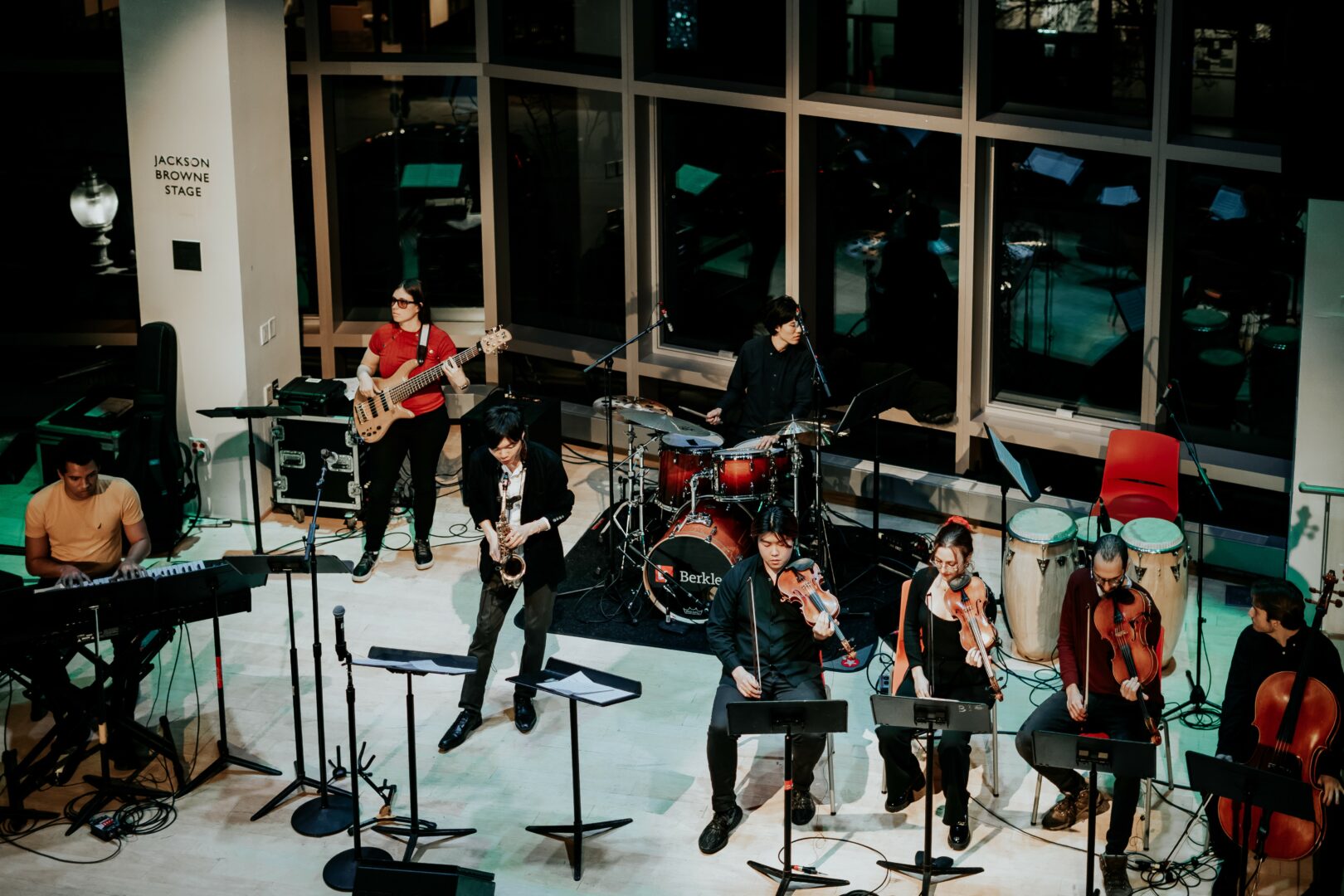
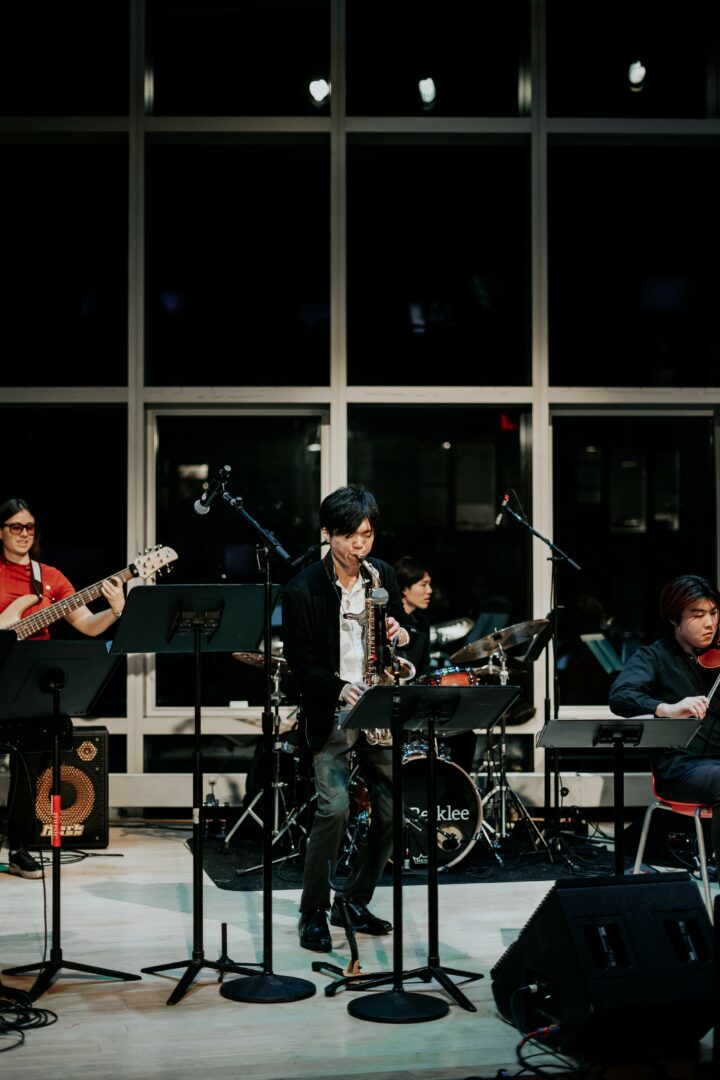
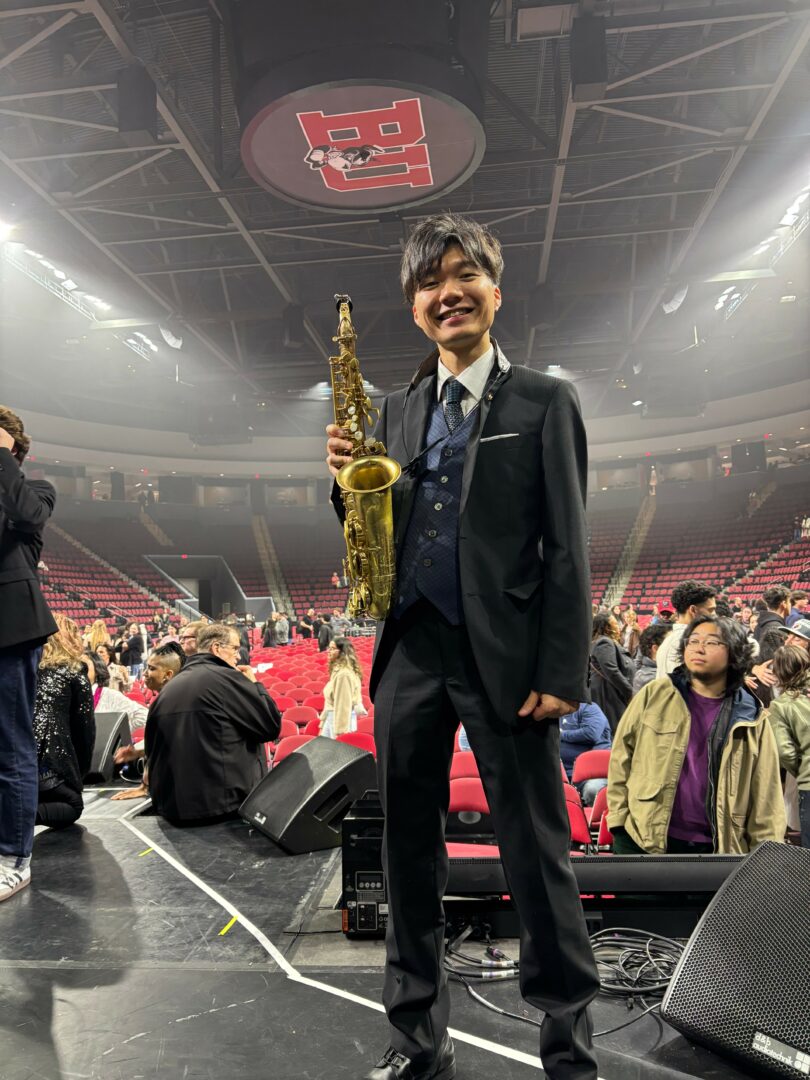
Image Credits
Mark Kang, Elia Ma
so if you or someone you know deserves recognition please let us know here.