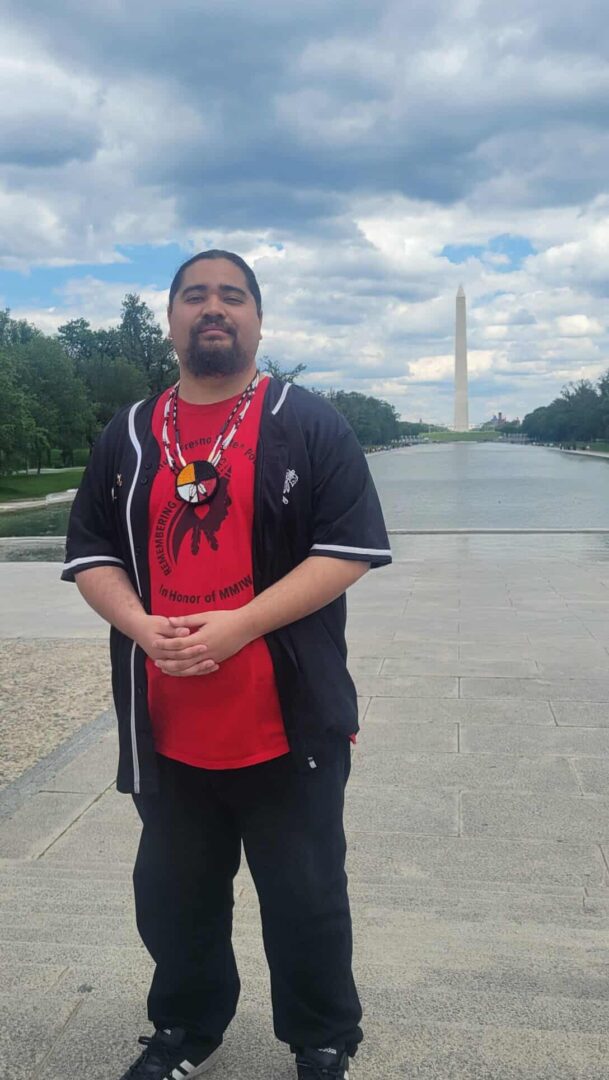
We recently had the chance to connect with Shane Lara and have shared our conversation below.
Good morning Shane, it’s such a great way to kick off the day – I think our readers will love hearing your stories, experiences and about how you think about life and work. Let’s jump right in? When have you felt most loved—and did you believe you deserved it?
I felt the most loved when the tribal educator of my tribe adopted me as her son. I was going through a very tough time with depression and finding out who I was. She welcomed me into her home, she fed me, gave me gifts and taught me about my Indigenous culture. She didn’t ask for anything in return. My past didn’t matter. I was her one and only. It was unconditional love to the fullest extent and I didn’t feel like I deserved such kindness at the time but that was because I didn’t love myself. Now I look back and I know I was worthy of her love.
Can you briefly introduce yourself and share what makes you or your brand unique?
My name is Shane Lara Jr. I am a Native American Hip-Hop artist, Slam Poet, Academic, Public Speaker, and Author. As an enrolled member of the Caddo Natchitoches Tribe of Louisiana, all my roles tend to blend together in my work. Oftentimes I give presentations on Indigenous cultures and read a poetic piece to close out the discussion. Other times I host poetry workshops to help inspire other creatives. If I’m not recording rap music, I am writing novels told from an Indigenous perspective. The purpose of all my work is to represent my community and show the world a perspective that has historically been suppressed. My identity is central to my work—without my culture, there is no me. I want to honor my ancestors and be a voice for those who were unable to use theirs.
Great, so let’s dive into your journey a bit more. What breaks the bonds between people—and what restores them?
What breaks bonds between people is jealousy and resentment. I believe that is by design—it’s deeper than emotion. In our society we are deeply individualistic. We are taught to feel ashamed when someone else finds success or gains an opportunity because we’re told we simply aren’t working hard enough, even when we are. We are taught that it’s okay to gossip and talk down on others. Everything becomes a competition, and we are only seen as valuable if we are producing something.
Before colonization, Native American tribes worked collectively. One person’s success meant the whole tribe succeeded. Success was measured by how you treated others and how you used your gifts. We believed in living in balance with the natural world. The animals and trees were considered our relatives. We are not separate from nature—we are a part of it, even now. When colonists came to America, they tried to destroy my people’s way of life. Rich men like Andrew Carnegie observed Indigenous tribes and couldn’t comprehend that the chief lived like every other tribal member. He wasn’t above his people—he was an equal.
What restores bonds is wisdom, self-love, community, and an open mind. Have the wisdom to understand that there is more than one way to view the world. Keep an open mind and listen to other people’s experiences. Reconnect with community. Colonialism detribalized many of our people and broke the sense of community that once held us together.
But the most important piece is self-love. A person who truly loves themselves doesn’t need to compare themselves to others. How can you love or support your community if your heart isn’t healed? I am very happy when I see another Indigenous person succeeding. Their success is my success. Their pain is my pain. Individualism has given us an ego—and that can only be cured with humility.
What have been the defining wounds of your life—and how have you healed them?
The biggest wound in my life was growing up without my tribe. When you grow up with no community and no sense of identity you feel empty. You try to search for meaning in your life and you feel this pull that you belong some place else but you don’t know what that place is. I kept asking myself “Am I just supposed to work 9 to 5 until I die? Isn’t there more to life than just working? Why am I not happy?”. The healing came when I reconnected to my tribe and accepted their guidance. Their love was unconditional. I was far from a perfect human being but they loved me and welcomed me home. Despite colonialism robbing me of a childhood with culture I am very grateful I have my connection to spirit now. So many people all around the world have lost their connection to spirit. Many try to find it through material objects but no amount of wealth can fill that emptyness. For me I had to look inward, confront my traumas but most importantly I had to learn to forgive myself. Healing is not easy work. Being the one to break generational traumas is a heavy role but when you heal you pass that good medicine not only to the next generation but to the generations that came before you.
My culture has also taught me healthy masculinity. For a long time not knowing what a man is was a big wound. Early on I was taught that a man doesn’t cry, doesn’t show emotion and if he does, he is weak. The masculinity I learned told me that I must dominate and control others. Through my tribe, being a man meant being in balance, being humble and treating the women in your life as equals. One of the highest callings in a Native mans life is to make sure the women in his community can walk mother earth unharmed. It means being gentle and listening more than you speak. I am proud to come from a matrilineal society where we trace our family lineage through our mothers. Learning and challenging myself has made me a more whole person.
Next, maybe we can discuss some of your foundational philosophies and views? Whom do you admire for their character, not their power?
One person I admire is Lily Gladstone, a Native American actress from the Blackfeet nation. What I admire most is her dedication to Indigenous representation in the film industry. In Hollywood Native Americans have been portrayed as stereotypes like the “Savage Indian” that served to dehumanize us. Lily doesn’t engage in acting to become a big Hollywood star but rather to serve her community. Some of her biggest roles were Killers of The Flower Moon and Reservation Dogs that both brought Native people to the forefront as well as our struggles. Acting for her is love and passion. I feel that same way when I write novels and poetic raps. To see someone on the screen that looks like me inspires me to pursue my craft. Her character is power. Her character is medicine.
Okay, we’ve made it essentially to the end. One last question before you go. When do you feel most at peace?
I feel most at peace when I am home. When I speak about home it’s not always a place. It is a people. I feel peace when I am with my tribe. I feel peace when I go to powwows and spend time among other tribes. I feel peace when I spend time with my wife. I feel peace very deeply when I speak to my ancestor Angelique. In Caddo spirituality we believe our ancestors are still with us. I speak with her frequently, I leave food and water on an alter I made for her. She reminds me that I am worthy of love and care. Most importantly she helps me stay in balance. I am currently working while being in a Masters program full time and when I am overwhelmed she reminds me that the path I am pursuing will be worth all the challenges I have overcome. It does not matter where in the world I am. As long as I have my people I will have peace.
Contact Info:
- Instagram: https://www.instagram.com/shanedarapper98?igsh=MzRlODBiNWFlZA==
- Youtube: https://youtube.com/@decapitationmusic4295?si=Dzccjwt8C1AfMNk5
- Other: Amazon Kindle
https://a.co/d/e931diCTikTok
https://www.tiktok.com/@decapitation0917?_r=1&_t=ZT-91gIBFY3j5x
so if you or someone you know deserves recognition please let us know here.