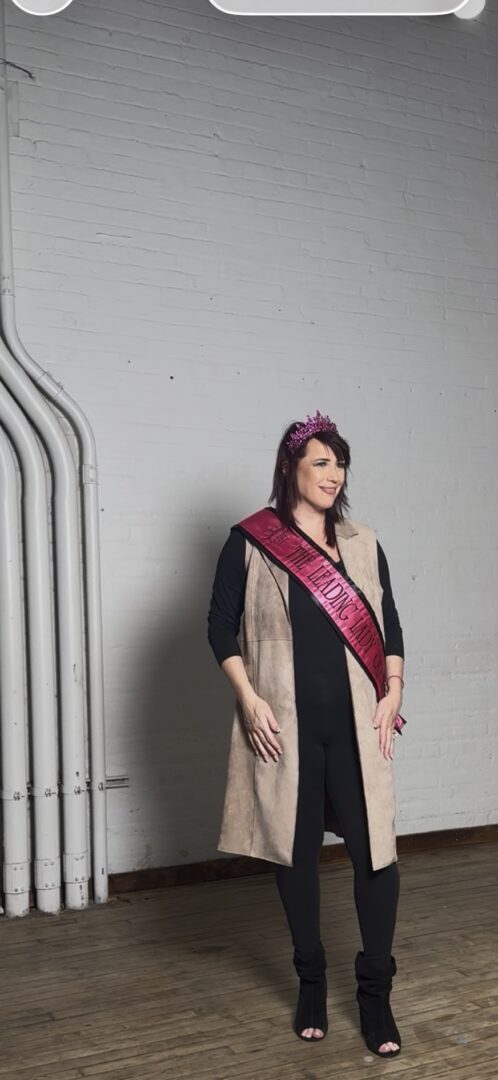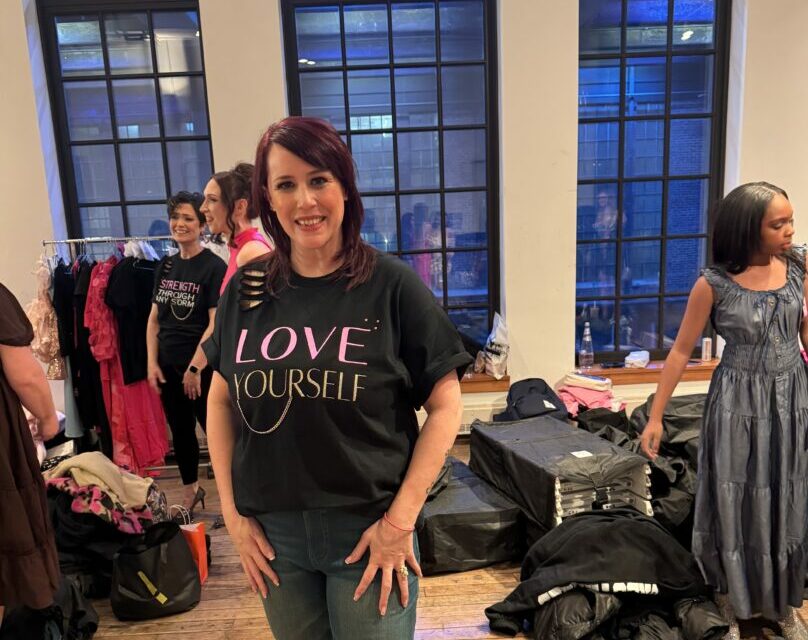
For Lisa Jacovsky, being named a “Queen of Impact” while walking New York Fashion Week wasn’t about fashion—it was a visible affirmation of a life’s work rooted in psychology, education, and advocacy. Through Unstoppable Voices LLC, award‑winning children’s books, and inclusive collaborations with artists through Brainstorm Productions, Jacovsky is reshaping how children understand identity, ability, and possibility—proving that when belief meets opportunity, impact can reach far beyond traditional spaces.
Lisa, you were recently recognized as a “Queen of Impact” while walking at New York Fashion Week—what did that moment represent for you and the work you’ve done in psychology?
It was more than a title—it was a full-circle moment.
Walking at New York Fashion Week represented validation. It symbolized that everything I’ve been through—the long nights of studying, earning two master’s degrees, stepping into classrooms, supporting families, advocating for children, launching books, hosting my podcast—was worth it. Every setback, every lesson, every pivot had purpose.
The recognition wasn’t just about fashion. It was about impact. It was about psychology. It was about showing that you can merge purpose with passion. That mental health professionals don’t have to stay in one lane. That we can educate, empower, advocate, create—and yes—walk a runway too.
For me, it meant that the work I’ve done in psychology is reaching people beyond traditional spaces. It’s influencing conversations. It’s inspiring others to believe that their story matters.
And most importantly, walking that runway meant a dream come true. A girl like me—who built her path step by step—could stand in that moment and own it. Not because it was handed to me, but because I earned it.
That title felt like confirmation: I am making an impact. And I’m just getting started.
You founded Unstoppable Voices LLC to amplify impact through award‑winning children’s books and educational resources—what gap were you hoping to fill when you launched the company?
When I founded Unstoppable Voices LLC, I was responding to a gap I kept seeing—both in education and in the broader world of children’s media.
I wanted to create stories and resources that show children something powerful: anyone can make a difference. Anyone can make a dream come true. Hard work truly does pay off. So many narratives focus on limitations, labels, or deficits. I wanted to center possibility.
One of the biggest gaps I hoped to fill was the lack of positive, empowering portrayals of autism. Too often, autism is framed through struggle alone or through stereotypes that don’t reflect the depth, brilliance, creativity, and humanity of autistic individuals. I wanted to present a strengths-based lens—one that honors differences while celebrating gifts.
As someone deeply rooted in psychology and education, I saw how representation shapes self-concept. When children see characters who look like them, think like them, or experience the world like they do—and those characters are capable, kind, and impactful—it changes what they believe is possible for themselves.
Unstoppable Voices was built on that belief: that stories shape identity, and identity shapes impact. If we can shift the narrative early, we don’t just change how children see themselves—we change how the world sees them too.
Your upcoming children’s book is illustrated by individuals with autism—why was inclusive collaboration so important to you for this project?
Inclusive collaboration was essential to me because representation should go beyond the page—it should live in the process.
For this upcoming book, partnering with illustrators with autism—through Brainstorm Productions—was about more than inclusion. It was about visibility, opportunity, and growth. I wanted to showcase their talent in a way that the world could truly see. Their creativity, attention to detail, imagination, and perspective bring a richness to the story that simply can’t be replicated.
It was also important to me to help create real opportunities. When we talk about empowerment, it can’t just be words—it has to translate into experience, portfolio development, confidence building, and professional growth. Collaboration creates space for artists to stretch, to be seen, and to be celebrated.
And just as importantly, I want families to see what’s possible. I hope this project encourages parents to let their children fly—to explore their talents, to try new things, to step into creative spaces without fear. Too often, families are told what their child may struggle with. I want to highlight what they can become.
This project is a statement: talent deserves a platform. When we lead with belief instead of limitation, we don’t just create books—we create possibility
How do you see your work in psychology influencing the stories you tell and the resources you create for children and families?
My work in psychology deeply shapes the stories I tell and the resources I create because it gives me a lens that goes beyond surface-level storytelling.
Psychology has taught me how identity forms, how self-concept develops, and how powerful early messages can be. But what truly influences my work is the intersection of professional knowledge and personal experience. I don’t just understand theory—I understand what it means to be given a chance.
So many children are defined by data points, diagnoses, or circumstances. In my work, I intentionally shift that narrative. I focus on possibility. I focus on growth. I focus on what can happen when someone believes in you, invests in you, and refuses to limit you.
Because I’ve experienced firsthand what can come from being given an opportunity, my stories reflect resilience, confidence, and upward momentum. They show children that setbacks don’t define them. That hard work matters. That their voice matters. That their differences can become strengths.
Psychology helps me structure resources in a way that supports emotional development, social understanding, and positive self-talk. But my lived experience gives those resources heart. Together, they allow me to create work that isn’t just inspirational—it’s transformational.
At the core of everything I create is this belief: when a child is given a chance, the outcome can exceed every expectation.
As you look ahead to this next book release, what kind of impact do you hope it has on readers, educators, and the broader community?
For readers, I want it to spark courage. I want children to step outside their comfort zones, to try the audition, enter the contest, raise their hand, share their idea, explore their talent. Growth rarely happens in “safe” spaces. Sometimes stable feels secure—but it can also quietly limit potential. I want kids to understand that stretching themselves is where confidence is built and dreams begin to take shape.
For educators, I hope it serves as a reminder that encouragement is powerful. A teacher’s belief can shift a child’s trajectory. When educators create environments where creativity, differences, and ambition are nurtured, students learn that their dreams are not unrealistic—they’re possible.
For the broader community, I want this book to challenge the narrative that stability is the ultimate goal. There is nothing wrong with stability—but sometimes purpose requires risk. Sometimes impact requires movement. Sometimes dreams require courage.
If this book inspires even one child to think bigger, one family to support a bold idea, or one adult to say, “Why not me?”—then it will have done exactly what it was meant to do.
Because at the heart of it all, making dreams come true isn’t accidental. It’s intentional. And it starts with believing you’re allowed to chase them