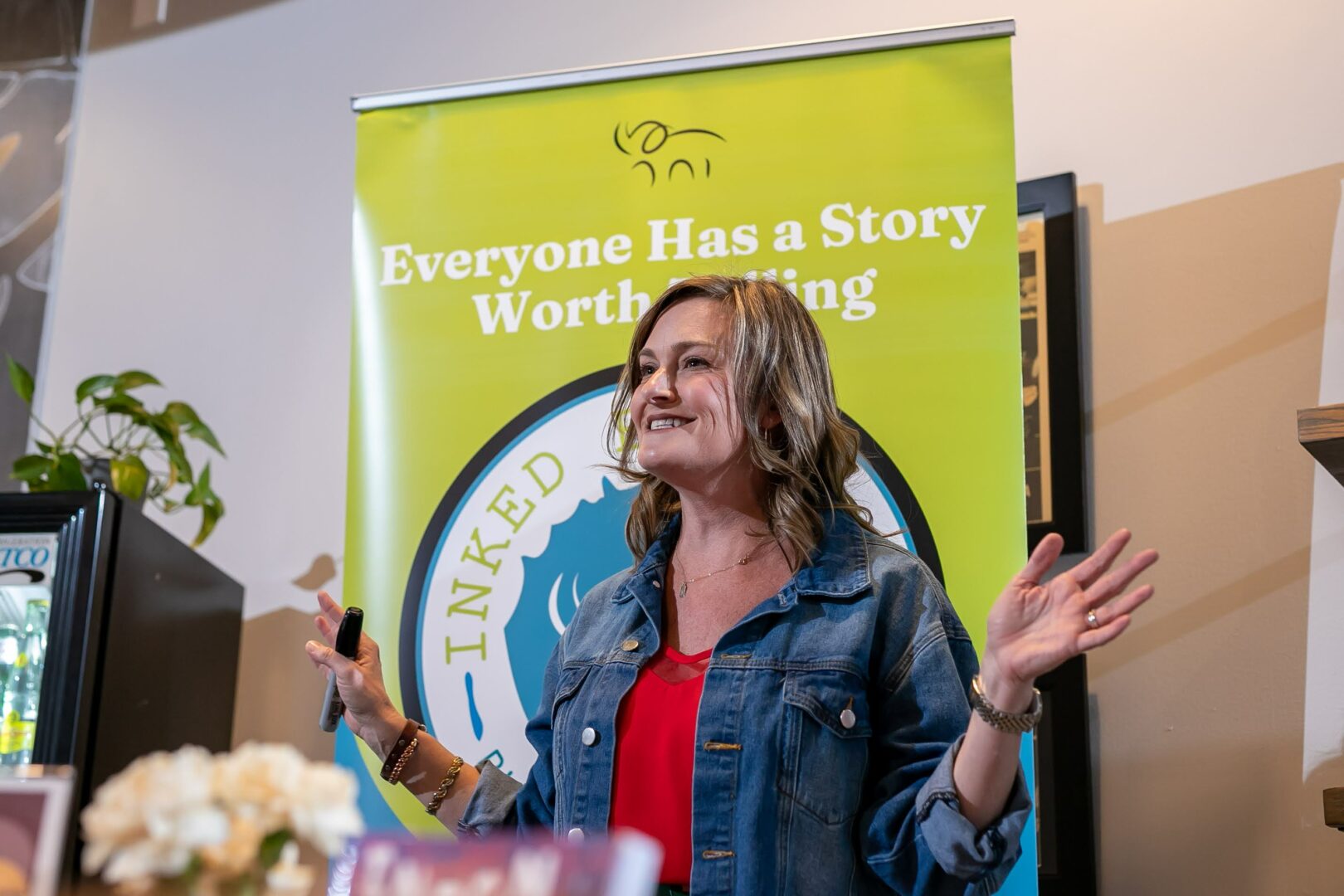
For Melanie Sue Hicks, leadership and storytelling are two sides of the same mission: helping people amplify their impact. Through InPursuit Research, she advises organizations on human‑centered leadership, tackling burnout, role clarity, and the often‑ignored gap between workplace rhetoric and reality. At the same time, her nonprofit Inked Elephant Publishing House champions emerging authors whose lived experiences might otherwise go unheard. Drawing on lessons from global service across 47 countries and personal reflection in her memoir Incongruent—inspired by her journey to Everest Base Camp—Hicks continues to build spaces where authentic stories shape stronger leaders, more empathetic communities, and a more inclusive public narrative.
Melanie, you lead two very distinct but deeply connected ventures — your personal brand through InPursuit Research and the nonprofit Inked Elephant Publishing House. How do these two bodies of work inform and strengthen each other at this stage of your career?
At my core, I am an amplifier. My purpose in this life is to help others amplify their own impact on the world and both InPursuit and Inked Elephant are vehicles to achieve that.
InPursuit Research focuses on leaders and organizations. I teach and speak about expectation alignment, human-centered leadership, role clarity, workload design, psychological safety, and the psychological contract. I am deeply passionate about workplace dynamics especially as they relate to various generations working together.
Inked Elephant is all about the power of storytelling. The publishing industry can be a cold and harsh place, especially for first-time and emerging authors. I founded Inked Elephant to give a voice to those talented authors who are often overlooked. Just because someone is not yet famous or doesn’t have connections “in the biz” doesn’t mean the world would not benefit from their story. IE is another way I can amplify the impact of others and make the world a better place.
As a workforce and employee experience expert, you’ve advised hundreds of organizations on leadership, resilience, and human potential. What patterns are you seeing right now in how people relate to work, purpose, and burnout — and what do leaders most need to rethink?
The dominant pattern is a mismatch between rhetoric and design. Many organizations talk about wellbeing, purpose, and flexibility while maintaining operating systems built on chronic urgency, ambiguous priorities, and performative measurement.
Burnout is often treated as an individual resilience deficit. In most cases, it’s a predictable outcome of structural features: sustained overload, low autonomy, unclear success criteria, weak managerial capability, and constant context-switching. People don’t simply “burn out”; they disengage when the psychological contract is repeatedly violated and they lose trust.
Leaders need to rethink three things:
- Workload as a design problem, not a personal time-management problem. If everything is a priority, you’ve created a system where failure is inevitable and blame becomes the management tool.
- Management as a profession. Too many organizations promote for technical competence and then outsource human leadership to good intentions.
- Meaning as a byproduct of integrity. Purpose statements don’t create purpose. Coherence between values, incentives, and daily decisions does.
Your global service work and travel across 47 countries clearly shaped your worldview. How have those lived experiences influenced the way you approach leadership development and human-centered strategy?
Global service and travel are the foundational lenses through which I see the world. Getting uncomfortable, especially in service settings, forces you to confront your own humility in a way that our social media and ego-driven society doesn’t often do. Not only do I reframe my own lived experience through my own relative privledge but I am reminded of the power of the collective. And these things have become central to my leadership style. You can’t lead effectively in a context you don’t understand, and you don’t understand a context you haven’t listened to. In practice, it pushed me toward human-centered strategy that is rigorous: start with lived experience, test assumptions, and design interventions that respect dignity and reduce friction for real people, not idealized employees.
Your writing spans memoir, poetry, and thought leadership. What role does storytelling play in healing, resilience, and connection — both inside organizations and in the broader community?
We all have a story worth telling and we are all connected by our stories. Stories organize experience, assign meaning, and transmit norms. Healing often requires narrative integration. We must move from raw, fragmented experience to a coherent account that reduces shame and restores agency. My first book Incongruent, did exactly this for me. I was able to craft a narrative around my trek to Everest Base Camp that weaved in my own healing and resilience journey in a way that could connect with others’ lived experience.
In communities, storytelling increases social cohesion by expanding empathy and reducing isolation. Nothing can help or hurt humanity more than the stories we tell. It’s more important than ever to tell the stories of righteousness, inclusion and love.
Through Inked Elephant Publishing House, you intentionally uplift emerging and overlooked voices. Why is it so important to center lived experience in publishing, and what impact do you hope these stories have on readers and communities?
Lived experience is a legitimate form of knowledge, and the publishing ecosystem has historically treated it as secondary to credentialed, institutionally sanctioned perspectives. Inked Elephant is intentionally oriented toward voices that are often excluded, not as charity, but because the public sphere is distorted when only certain lives are considered publishable. The impact I want is practical: readers gain language for experiences they’ve had but couldn’t name; communities gain narratives that increase understanding and reduce stigma; and emerging authors gain access to a process that is transparent, ethical, and built to protect them rather than extract from them.
Links:
- melaniesuehicks.com
- inkedelephantpublishing.com
- Instagram: @inpursuitmelsue, @inked_elephant_publishing