Alright – so today we’ve got the honor of introducing you to Aaron Bethune. We think you’ll enjoy our conversation, we’ve shared it below.
Hi Aaron, thank you for being such a positive, uplifting person. We’ve noticed that so many of the successful folks we’ve had the good fortune of connecting with have high levels of optimism and so we’d love to hear about your optimism and where you think it comes from.
I’ve come to believe we’re born into a field of endless possibility. Anything is truly possible at the start. But then life happens, and with every negative experience, we lay down a brick. One experience says “don’t do that again.” Another says “protect yourself here.” And over time, without even realizing it, you’re living inside a fortress you built yourself.
So for me, optimism is about seeing past the walls and not laying another brick.
Then there’s curiosity. When you approach life with genuine curiosity, you stay open. You don’t close yourself off to a bigger picture.
Another big thing for me is the ability to find a new perspective. There’s always another way to see things. We can be in the same place at the same time, yet have completely different experiences. Same facts, different lens.
Optimism is about recognizing that how you perceive something shapes what it becomes for you. Fear only exists in the future. Stress is something we largely create ourselves. And if you can hold onto awareness, the part of you that observes all of this rather than just reacts to it, you have a lot more choice than you think.
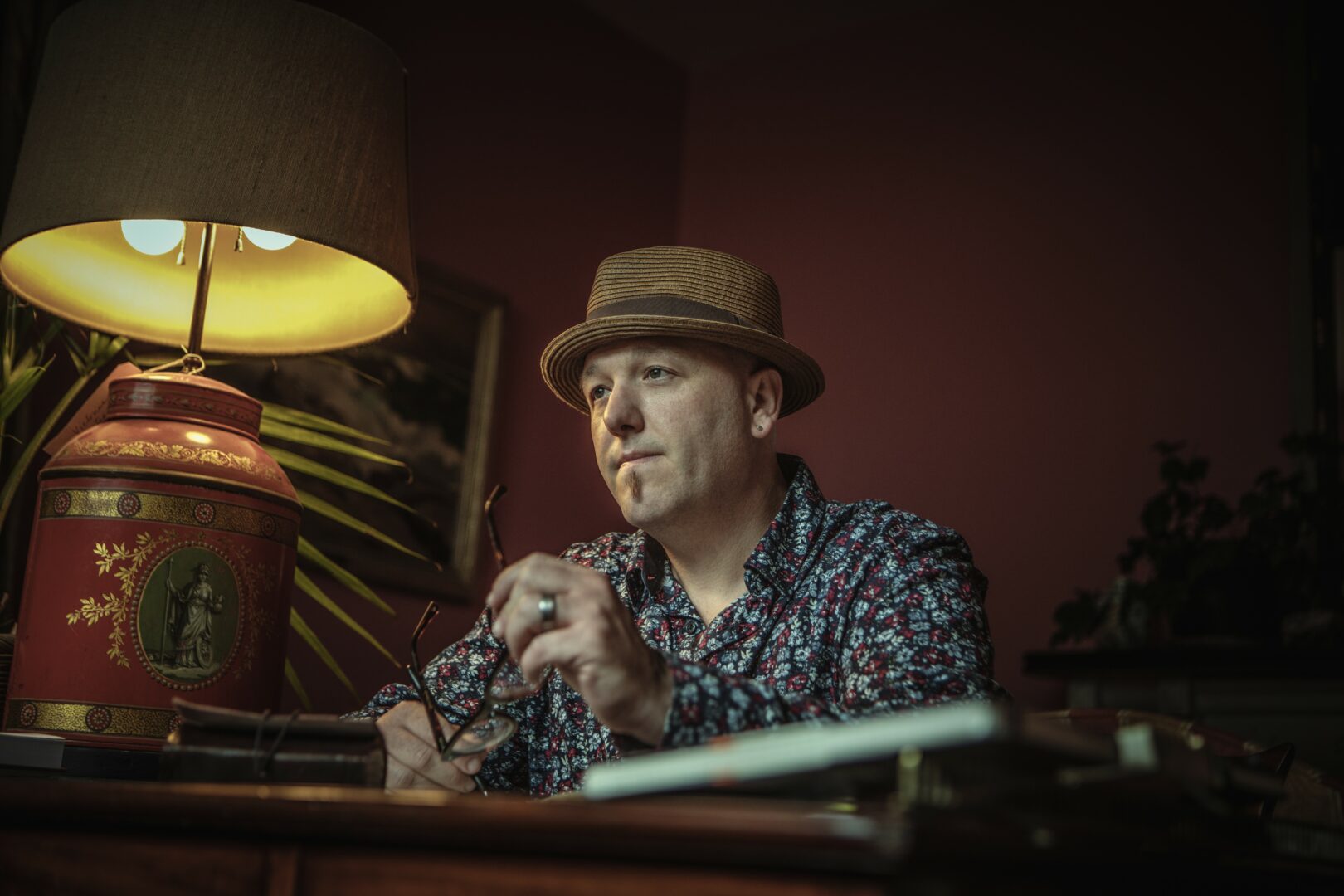
Thanks for sharing that. So, before we get any further into our conversation, can you tell our readers a bit about yourself and what you’re working on?
My path has never been a straight line. I connect dots.
It started with music. I have a degree in Jazz Performance, played in bands. I started a music business out of my dingy little apartment in universtiy. I was curious to learn how the business worked which led me to music licensing, publishing, artist management, labels, producing, coaching, advising,etc. I wrote my first book, Musicpreneur: The Creative Approach to Making Money in Music, because so many people kept asking me how I was doing what I was doing. At some point it just made more sense to write it all down.
Later after a seires of serendiptous events I launched We Write Stories. Often people who have something genuinely worth saying never write a book, not because they don’t have the content, but because they don’t know how to get it out. We solve that. Through our process called Story Exploration we draw out someone’s lived knowledge and transform it into a professionally produced book. No pen to paper required. We distribute to over 42,000 retailers, and the whole process is designed so that the person’s voice stays intact.
As we get to know our clients so well through the Story Exploration process we then help them build out a thought leadership and authority platform.
When you spend enough time extracting people’s stories, you start to recognize that those stories contain something AI doesn’t have, lived human context. That realization gave birth to what we now call Rare Stories Projects and the concept of Knowledge Islands.
AI is increasingly learning on its own outputs. It remixes what it’s already produced. And when that happens, the output doesn’t really improve. What AI can’t replicate is genuine human experience. What someone actually went through, what they actually learned, how they actually see the world. That’s rare. That’s valuable. So we’re building a framework where an individual’s knowledge, stories, wisdom, and context become a structured knowledge asset. Something they own. Something that can be licensed, accessed, and eventually compensated.
We’re calling those assets Knowledge Islands. And the interface that lets you interact with them is the MindTrust.
One Knowledge Island we are currently working on contains the stories of families of children with a very rare disease. Our belief is that their stories contain data that traditional medical research overlooks.
I define success as doing what you want with your time. And right now, I get to spend my time helping people see the value in what they already know. That feels like exactly where I’m supposed to be.

There is so much advice out there about all the different skills and qualities folks need to develop in order to succeed in today’s highly competitive environment and often it can feel overwhelming. So, if we had to break it down to just the three that matter most, which three skills or qualities would you focus on?
Looking back, I think the three most impactful things in my journey were curiosity, perspective, and authentic communication.
Not because they made life easier but because they changed how I moved through challenges, opportunities, and relationships.
The interesting thing is that none of them are really “destination” skills. They’re ways of being. And they compound over time.
1. Curiosity
Curiosity has probably shaped my life more than anything else.
I’ve moved between countries, climbed mountains in South America, worked in hotels, studied jazz, toured as a musician, booked headlining tours for other musicians, written books, built companies, explored meditation, AI, publishing, and storytelling. On paper those things can look disconnected, but to me they were all driven by the same thing: curiosity.
What I’ve found is that curiosity creates momentum.
A curious person asks:
* “How does this work?”
* “Why does that resonate with people?”
* “What happens if I try this?”
* “Who can I learn from here?”
And over time, curiosity helps you connect dots other people don’t see yet. I’ve often described myself as someone who “connects dots.”
The challenge for people early in their journey is that they often think they need certainty before they begin.
But certainty usually comes after movement, not before it.
So my advice would be:
* Follow genuine interest.
* Learn broadly.
* Talk to people outside your industry.
* Read beyond your field.
* Stay open longer than feels comfortable.
Sometimes what looks unrelated becomes the exact thing that differentiates you later.
It’s a bit like climbing a mountain in fog. You rarely see the whole path at once. You just keep moving toward the next visible step.
2. Perspective
Perspective changed my internal experience of life.
One of the biggest realizations I’ve had is that we are constantly experiencing life through what I call our “Personal Reality.” In many ways, our thoughts and interpretations shape the experience we have of the world.
Two people can go through the exact same event and experience it completely differently.
That matters.
Because if you don’t develop perspective, challenges can define you.
But if you do develop perspective, challenges become teachers.
That doesn’t mean pretending difficult things aren’t hard. It means recognizing that suffering often increases when we cling too tightly to how we think life is “supposed” to look. I often speak about non-attachment, impermanence, and learning to let go rather than fighting reality.
For people early in their journey, I’d say:
* Don’t compare your beginning to someone else’s middle.
* Stop treating setbacks as identity statements.
* Learn to zoom out.
A lot of what people call failure is actually process.
The seed doesn’t become the tree overnight.
And honestly, some of the hardest periods of my life created the most growth in confidence, resilience, and self-awareness later on.
Meditation also helped me enormously with this. Not because it magically removes problems, but because it creates space between you and your thoughts.
That space changes everything.
3. Authentic Communication
The older I get, the more I think authentic communication is one of the most underrated skills in the world.
Not performative communication.
Not networking for the sake of networking.
Not trying to sound impressive.
Real communication.
Listening deeply.
Being genuinely interested in people.
Being willing to say something imperfect but true.
In music, I became fascinated by the idea that technically perfect performances often lacked soul, while imperfect performances could move people emotionally.
I think people are the same.
Perfection is often less relatable than honesty.
A huge amount of my career, whether in music, publishing, coaching, or business, came from relationships and trust.
And trust usually comes from authenticity.
One thing I often tell people is that if you share something real about yourself, it gives other people permission to be human too.
For someone early in their journey:
* Learn to communicate clearly.
* Learn to write.
* Learn to listen.
* Ask better questions.
* Focus less on “being impressive” and more on being real.
Writing, especially, is incredibly powerful. It allows you to refine your thinking and develop confidence in your voice.
And honestly, your ability to communicate your ideas may matter just as much as the ideas themselves.

What do you do when you feel overwhelmed? Any advice or strategies?
I get overwhelmed too. Especially when there are too many moving parts, emotional weight attached to things, or when everything feels equally important. Often in results in me getting a migraine.
What I’ve found is that overwhelm usually isn’t just “too much to do.”
It’s often too much mentally, emotionally, or energetically happening at once.
And the interesting thing is that when we’re overwhelmed, the mind starts trying to solve everything simultaneously. That’s usually where the suffering ramps up.
So here’s what tends to help me.
1. Reduce the horizon
When I’m overwhelmed, I stop trying to solve the next six months. Instead, I focus on the very next right thing I can do. And dismiss what is out of my control right now.
I ask:
* What actually matters today?
* What’s the next step?
* What would make tonight feel a little lighter?
Sometimes overwhelm comes from mentally carrying an entire mountain instead of taking the next step on the trail.
You don’t climb the mountain in one movement. You just keep finding stable footing.
2. Write everything down
This one is huge for me.
A lot of overwhelm is unprocessed mental looping.
Thoughts feel heavier when they remain abstract.
So I’ll often:
* brain dump everything onto paper,
* separate what’s real from imagined,
* identify what’s urgent vs emotional,
* and ask what’s actually within my control.
I’ve found writing incredibly powerful throughout my life because it slows thinking down enough to see it clearly.
Otherwise the mind just keeps spinning.
3. Stop fighting the feeling
This sounds counterintuitive, but resisting overwhelm tends to intensify it.
There’s a difference between:
* “I feel overwhelmed right now”
and
* “I shouldn’t feel this way.”
The second layer creates additional suffering.
A lot of Buddhist philosophy and mindfulness practices helped me recognize this idea of non-attachment and not clinging so tightly to emotional states.
Feelings move. They change.
You don’t need to become the overwhelm.
You can observe it without fully identifying with it.
Meditation helped me a lot with that, recognizing that thoughts keep appearing, but you don’t have to believe every single one or follow all of them.
4. Take care of your nervous system first
Sometimes we try to philosophize our way through what is actually exhaustion.
Sleep matters.
Water matters.
Food matters.
Movement matters.
If your nervous system is overloaded, everything feels heavier and more dramatic.
I’ve learned that sometimes the most productive thing you can do is actually recover enough clarity to think properly again.
5. Talk to someone honest and grounding
Not someone who amplifies panic.
Someone who helps you zoom out.
One of the most powerful things in life is having people around you who remind you:
* this moment isn’t forever,
* you’re not alone,
* and you don’t need to solve your whole life today.
Perspective changes emotional intensity.
6. Remember that overwhelm is often a sign of caring
A lot of overwhelmed people are thoughtful people.
They care deeply.
They want to do well.
They’re trying to hold many things together.
That’s different from failure.
And sometimes what’s needed isn’t more pressure, it’s more clarity and self-compassion.
One thing I come back to often is this:
You can only experience life in the present moment. Not next month. Not all future possibilities simultaneously.
Just this moment.
So when overwhelm hits, I try to come back to:
* one breath,
* one conversation,
* one task,
* one step.
That’s usually enough to begin finding solid ground again.
Contact Info:
- Website: https://www.aaronbethune.com
- Linkedin: https://www.linkedin.com/in/aaronbethuneofficial/

Image Credits
David Hamilton
so if you or someone you know deserves recognition please let us know here.