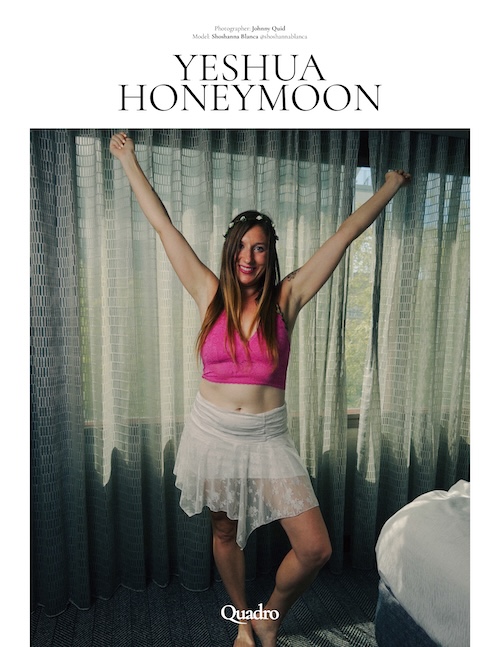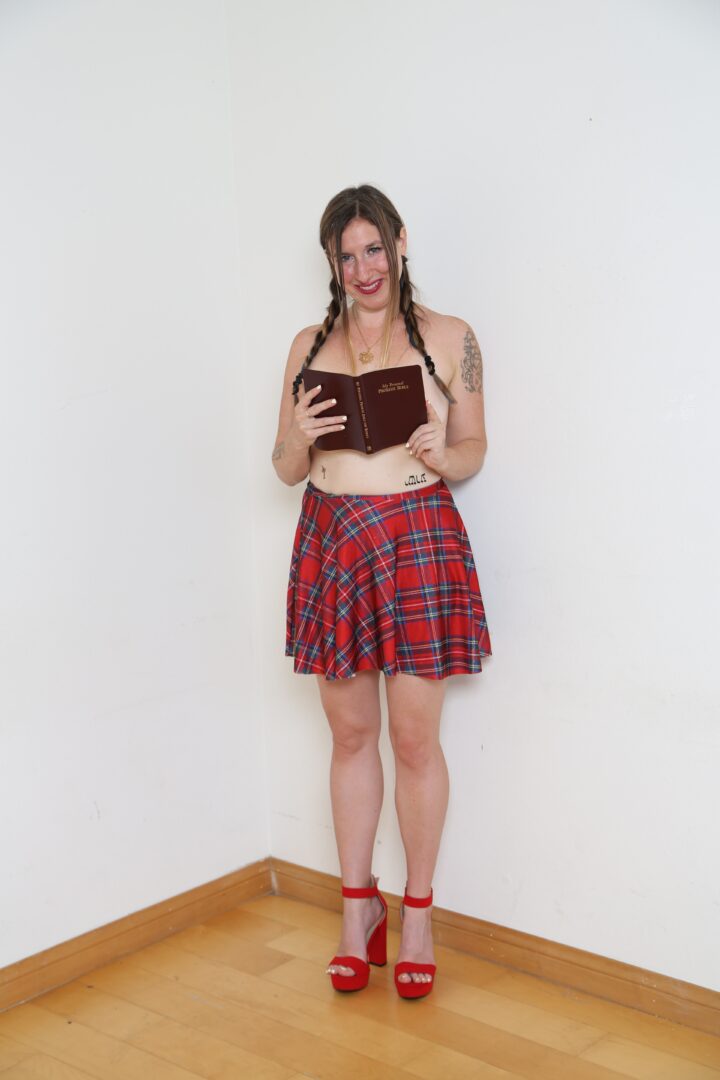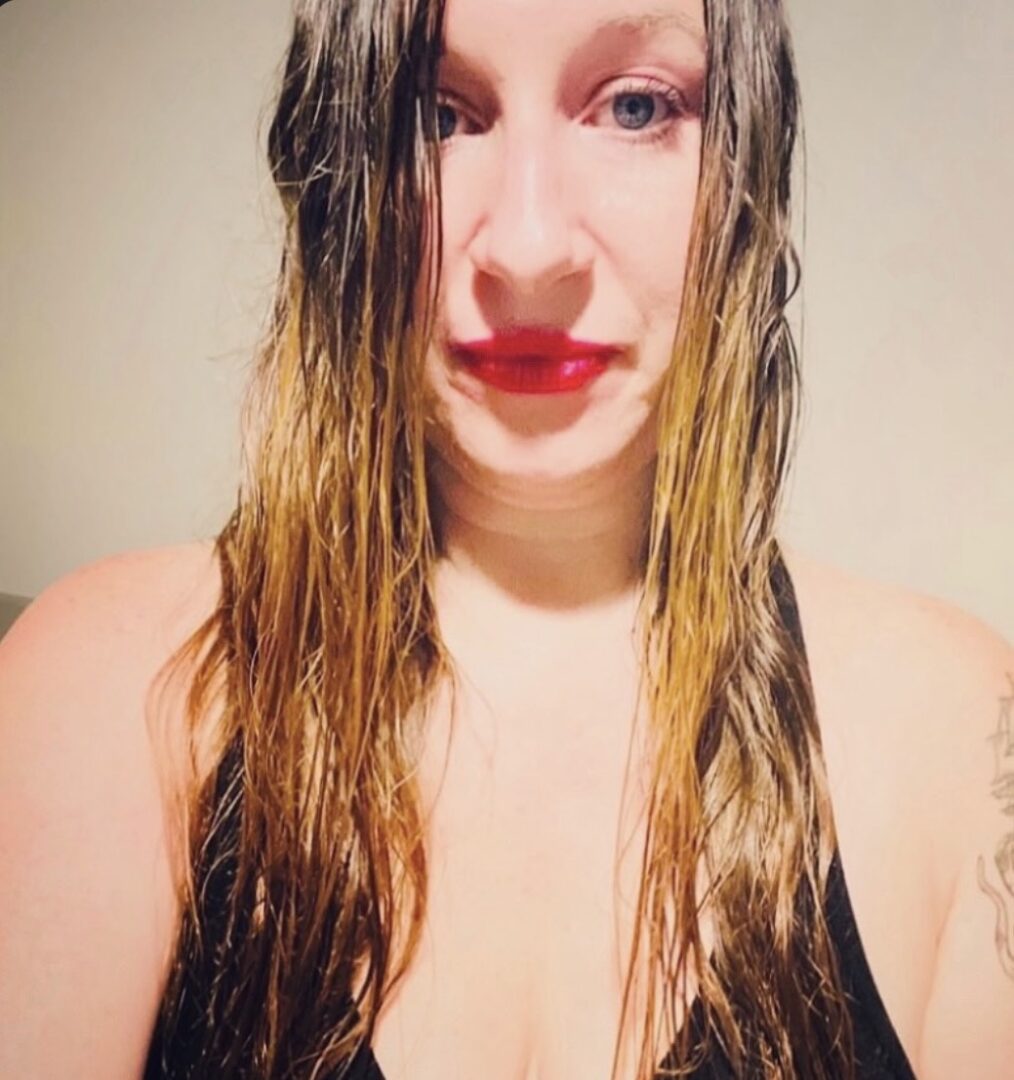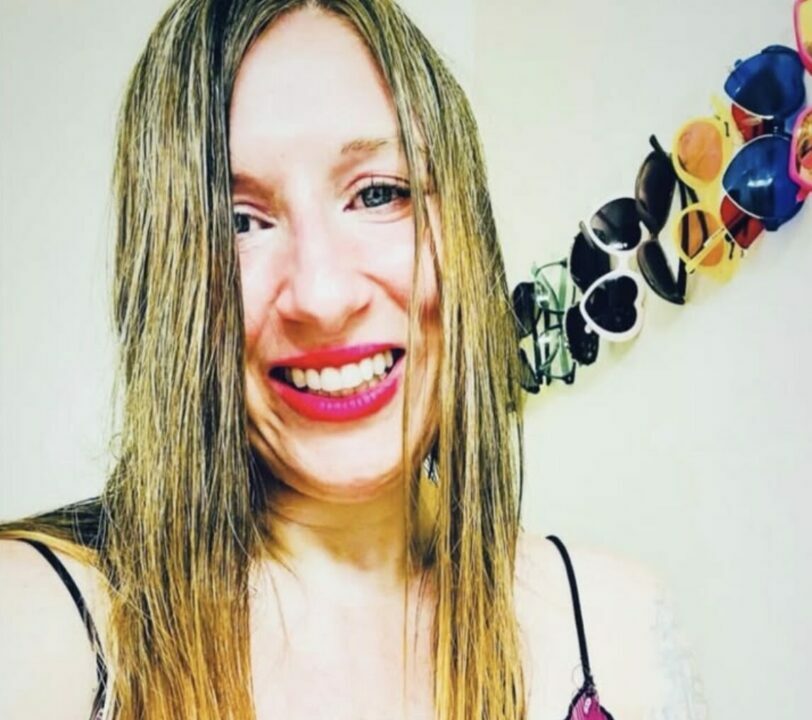
Shoshanna Blanca is pushing boundaries through a deeply personal and provocative body of work that blends spirituality, sexuality, and creative expression. Drawing from transformative psychedelic experiences and her evolving relationship with religion, she uses visual platforms and storytelling to question long-held narratives around purity, shame, and embodiment. By confronting cultural taboos head-on, Shoshanna aims to open more compassionate, honest conversations — encouraging others to embrace self-expression, redefine spiritual identity, and reconnect with their bodies as sources of both power and divinity.
Shoshanna, your project blends spirituality, sexuality, performance art, and religious commentary in a very provocative way. What inspired you to explore these themes through creative expression rather than traditional writing alone?
I am a psychonaut. I gain divine inspiration from psychedelic journeys. I developed an interest in religion after my first Jesus visitation on iboga in 2021: Jesus appeared as a ball of light, anointed me the daughter of God, and encouraged me to read the Bible so I could rewrite it one day. A few months later, I was telling a Tinder date about my trip when the man at the table next to us slipped me his card and said he was a pastor. I started attending his church, and my life changed for the better. I could feel God’s love for me; I saw my light and innocence. The people there were so kind and compassionate. However, church wasn’t a place where I could fully be myself. I was a sex writer and educator and had an OnlyFans, which they believed God would disapprove of. I took three years off camming to figure out what I really believed. Then during another iboga journey in 2025, I awakened to my calling to bridge these two worlds. I’d just published a book, Eve’s Blessing: Uncovering the Lost Pleasure Behind Female Pain, which challenges the normalization of women’s pain and the notion that we are divinely cursed. I created a new OnlyFans, Uncovering Eve, to visually illustrate concepts from the book and celebrate my body as something holy. There is a common misperception that those who are naked on the internet don’t respect themselves. But it’s because I respect my body that I see it as something to share, not hide. It’s a way to reverse the results of the fall: Adam and Eve became ashamed of their nakedness. This need not be a permanent predicament. You can see in the header photo, I rewrote the curse on Eve: “Unto the woman he said, I will greatly multiply thy orgasms. In joy thou shalt bring forth children. And your husband will be your dom, and you’ll be wet for him.” I believe this is the less-acknowledged flip side of ‘Unto the woman he said, I will greatly multiply thy sorrow and thy conception; in sorrow thou shalt bring forth children; and thy desire shall be to thy husband, and he shall rule over thee.” This positive meaning was there from the beginning. I started my other OnlyFans The Second Cumming to share more about my psychedelic journeys and paint a vision for a sex-positive Jesus. I think that’s what the world needs.
Through The Second Cumming and Uncovering Eve, you challenge ideas around shame, purity, and the body. What conversations are you hoping to open up around sexuality and spirituality?
I would like to redefine purity. The quest for purity itself is not a negative thing. It’s purity culture, which defines purity as sexual abstinence and sartorial modesty, that does harm. Purity culture is deeply intertwined with rape culture: It blames women for their sexualization and abuse by implying they must be “pure” to be respected. Real sexual purity means being true to yourself. It means listening to your body and heart when making sexual choices. It means communicating your desires to partners and letting them know if anything ever feels off. This is a perfect way to guard your sexual energy that doesn’t involve judgment or unnecessary rules. I also believe in keeping our thoughts around sex pure—not by repressing sexual fantasies or desires, but by thinking kind thoughts about our sexuality. For instance, if we have internalized shame around casual sex, we may think we have degraded or debased ourselves for having one-night stands. A kinder thought is: “Even if I never see this person again, I learned how to communicate better/explored a new kink/had a new type of orgasm/whatever it is, and I’ll take that knowledge with me everywhere because I love myself.”
Your work has sparked strong reactions from both supporters and critics. How do you navigate creating art that intentionally pushes against cultural and religious norms?
A few people openly hated on me when I began these projects. I dated a man with misogynistic, whorephobic attitudes for a brief period. He and his friends ganged up on me and derided my work behind my back. He tried to “reform” me by getting me to stop making porn, saying it went against Jesus’s teachings. I put out almost no content during our relationship and took a lot down because I was scared of his anger. I remember recording my first “Church in Bed” video post-breakup—where I sang the Christian song “I Have Decided to Follow Jesus” naked from my bed—and feeling like I’d reunited with a long-lost friend: myself. So many people directed hatred toward the woman in the videos, I forgot how much I loved her. I found her so creative, intelligent, sexy, cool, and witchy in a hot way. It was other people who said otherise—or did they? Sometimes I think the people who hate on me are really jealous or covetous of me. Some of them described “watching all my videos,” which is days’ worth of content. If they’re that obsessed with me, they should probably tip me. After going through this, I want people to know they cannot lose people who love them by being themselves. So many of us live in fear of losing the love of our parents, our relatives, our partners, our friends—but love can withstand the test of you making controversial choices. Your family and friends want you to be happy and healthy however you can, even if that means doing something that makes them uncomfortable initially. They may actually feel left out and want to know more about your process, and they may grow more accepting once they learn more. And even when others are brutal, I find the gold in their feedback. I learned to spend time around more supportive people, get clearer in my mission and messaging, present myself in ways that make me feel beautiful and holy, and think hard about what content I want available for free vs. monetizing. I also became an even more outspoken advocate for sex-positivity and acceptance of freaks of all sorts. Sometimes it’s the harshest people who push us to grow the quickest.
You’ve spoken about your spiritual experiences and evolving relationship with Christianity and Judaism. How have those experiences shaped your identity and creative direction?
Something I’ve spoken out about in my videos is antisemitism and beauty standards. I am half Jewish and internalized lots of negative stereotypes about Jewish people growing up. Many people aren’t aware of the stereotypes, but you feel them if you are Jewish: that you have a big nose, frizzy hair, or other unattractive traits; that you are awkward or nerdy; the comedic sidekick rather than the leading lady. This is one reason porn and modeling are meaningful work to me. I spent much of my life feeling bad about my body and questioning my desirability, so this has been a journey to learn to think for myself. For instance, I like my nose and I don’t think it’s big. I’ve noticed a lot of Jewish people say they have a “big nose” when they actually do not; it’s just a lie that’s been repeated again and again to the point that we almost start to see it. I did some research and found out a lot of conventionally beautiful celebrities are Jewish, such as Scarlett Johansson, Mila Kunis, and Natalie Portman. Yet for some reason, we’re just taught to think of Barbara Streisand as the quintessential Jewish actress because she supposedly has a “big nose.” Jewish people also face pernicious stereotypes about being liars or cheaters when in general, we are hardworking, honest people. I strive to represent the best of who the Jewish people are by embodying beauty, light, compassion, wisdom, creativity, and innovation. The tribe is in desperate need of a rebrand, which I’m happy to be the face of. I record many of my videos in a messianic necklace, with a Jewish star and a cross, to represent my loyalty to the Jewish faith and Jesus, who gained much of his divine intelligence and strength through his Judaism. It’s taboo to speak out against antisemitism because we’re a privileged population in some ways. But based on the trolling comments I’ve gotten online (using such amusing phrases as “fat nose Jew whore”), I know it’s still needed.
At the core of your work is the idea of reclaiming innocence, embodiment, and personal agency. What do you hope audiences ultimately take away from engaging with your projects?
I hope to challenge conservative ideas around sexuality and spirituality. I am a PhD student in clinical sexology and am working on a dissertation on religious sex workers and how they reconcile their work with their faith. There’s also a growing movement of sex-positive religious leaders encouraging new interpretations of the Bible, whom I spotlighted in The Washington Post. Many Bible passages are misinterpreted due to the agendas of church fathers and politicians. For instance, nowhere in the Bible does it say to abstain from sex before marriage. When I asked my pastor where this belief originated, he pointed toward Hebrews 13:4: “Let marriage be held in honor among all, and let the marriage bed be undefiled, for God will judge the sexually immoral and adulterers.” What does it mean to “defile a marriage bed,” though? In my opinion, there are so many worse forms of “sexual immorality” than having previous partners: pushing a partner’s boundaries, criticizing their body, neglecting their pleasure. We should focus on those things. I’d argue, in fact, that slut-shaming is a form of sexual immorality that religious people encourage when they misinterpret passages like this. Mainstream Christianity has become anti-sex-work despite Jesus saying prostitutes will go to heaven. Myths are prevalent that Jesus “saved” Mary Magdalene from prostitution, but the Bible depicts Mary Magdalene as a follower of Jesus, not a sex worker. If Jesus were here today, his priority would be to grant everyone the freedom to choose their line of work. Not just sex workers, but anyone “prostituting” themselves working demoralizing jobs and getting burnt out. He would advocate acceptance of the growing population of sex workers who love what they do. I find sex work to be such a liberating profession because it lets me do what feels good in my body and get paid for it. When people call sex work anti-feminist, I think back to my own experiences. More traditional jobs have caused me stress, burnout, sleep deprivation, and body pain from being crunched over a desk—and these factors contribute to period pain and other female health issues. Receiving pleasure and connection and orgasms, on the other hand, makes my body feel happy and alive. For me, that’s feminist, and for that reason, it’s Godly. God wants women to be comfortable and safe. He wants us to live in pleasure, not in pain.
- https://linktr.ee/shoshannalovesjesus
- https://x.com/shoshannablanca
- https://onlyfans.com/shoshannablanca
- https://onlyfans.com/uncoveringeve